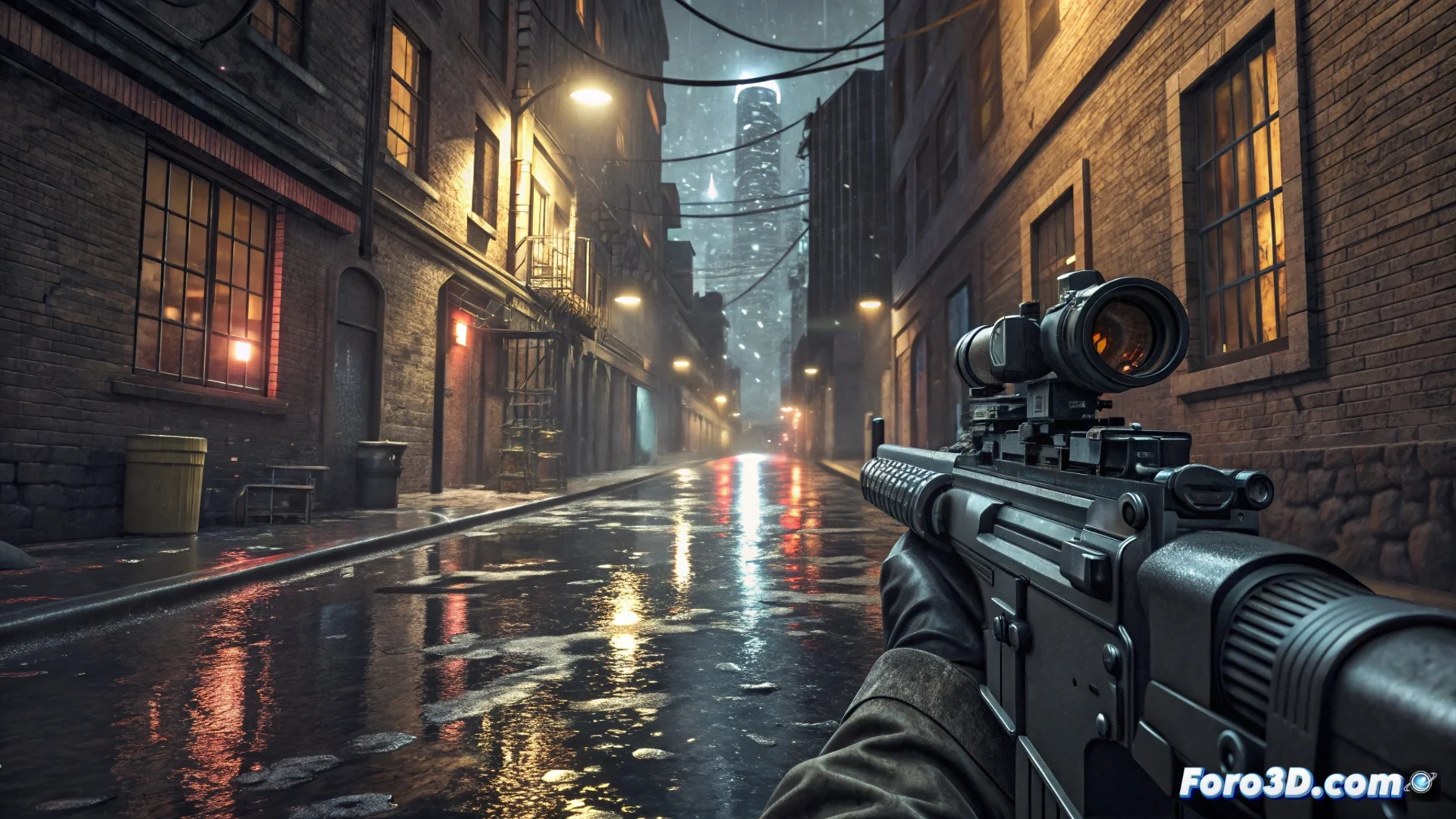
Bodycam Explores Photorealism with Unreal Engine 5
The indie project Bodycam stands out for making the most of the latest graphical tools from Unreal Engine 5. Its main goal is to achieve a level of visual realism that impresses, serving as a technical showcase of what the engine can do today. 🎮
The Key Technologies Behind the Realism
To achieve its look, the game relies on two fundamental pillars of UE5. On one hand, it uses Lumen, the global illumination system that calculates light and reflections dynamically and in real time. On the other, it employs Nanite, the technology that allows handling virtually unlimited geometric detail density without affecting performance. This completely transforms how environments are built and look.
Main Visual Features:- Real-Time Lighting: Lights and shadows that react instantly to any change in the scene.
- Micro-Polygonal Geometry: Objects with millions of polygons that display smoothly without issues.
- Dynamic Reflections: Surfaces that reflect the environment with high precision, enhancing immersion.
Bodycam is not just a game; it is a practical demonstration of the future of real-time graphics.
The Unique Aesthetic of the First-Person Perspective
The experience is defined by simulating the view of a camera attached to the character's body. To achieve this, the team implements optical lens distortion effects and a movement that mimics the natural sway when walking. The result is a representation that comes very close to the quality of real video footage, creating a sense of direct presence in the action. 🎥
Elements Defining the Camera:- Lens Effects: Chromatic aberrations, vignetting, and distortion that mimic real cameras.
- Organic Movement: The camera moves with a sway that simulates footsteps and breathing.
- High Fidelity: High-detail textures and materials that reinforce the illusion of reality.
Workflow and Development Tools
The team builds the project using the Unreal Engine 5 editor as the central base. For modeling 3D elements, such as weapons and scene objects, they likely use standard software like Blender or Maya. It is also common to integrate the audio system already included in the engine, which streamlines game production and maintains coherence in all its technical parts.
Although the achieved realism is stunning, some players might need a brief period to get used to the world moving as if it were attached to their chest. The possible motion sickness is optional, but the technical fidelity achieved with Unreal Engine 5 is undeniable and sets a visual benchmark. 🔝