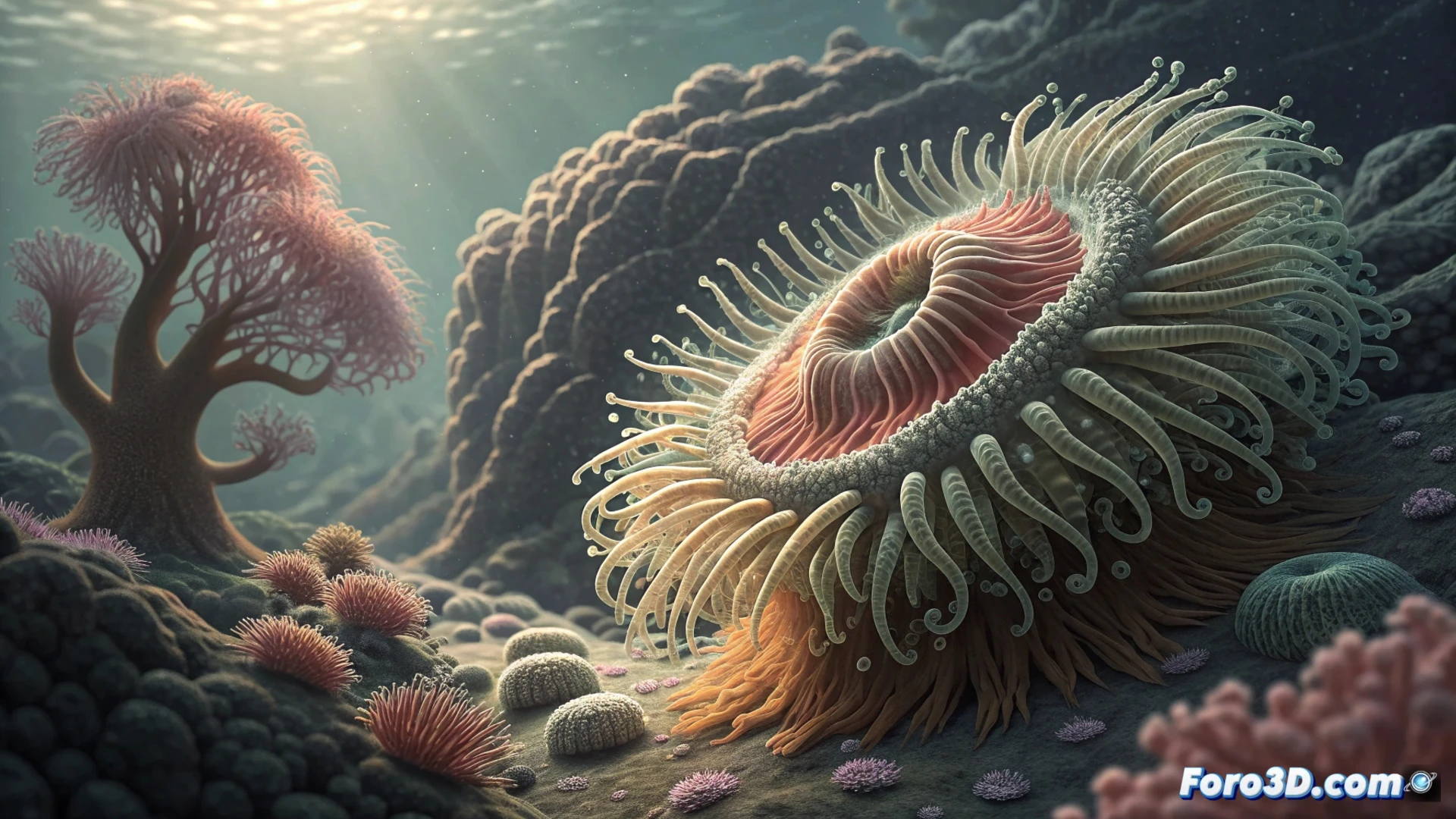
In the marine world, there are organisms that challenge our concept of aging. Sea anemones, animals related to corals, do not exhibit senescence. Their organism maintains a constant capacity for cellular renewal, allowing them to live for hundreds of years. Additionally, if fragmented, they can regenerate a complete individual from a small piece.
Cellular Mechanisms and Possible Applications in Biomedicine 🔬
The key lies in their population of stem cells, which maintain plasticity and a constant division rate throughout their lives. Genomic studies point to signaling pathways, such as Wnt, that control polarity and regeneration. Understanding these processes opens doors in regenerative medicine. It could inspire therapies for spinal cord injuries or tissue recovery by deciphering how to reactivate developmental programs in adult organisms without causing tumor disorders.
User Manual: How to Survive an Arm Cut (If You Were a Sea Anemone) ✂️
Imagine that, after an unfortunate incident with a lawnmower, your arm separated from your body starts generating legs, a torso, and finally a head. In a few weeks, you would have a clone of yourself looking at you reproachfully. While we keep old photos to remember, the sea anemone simply generates a physical backup. Its pension plan is, literally, to split in two and both continue collecting.