Bauhaus University of Weimar has set a benchmark in naval innovation with the presentation of a boat manufactured using 3D printing. This project, developed in the Netherlands, exemplifies the integration of additive manufacturing with traditional maritime construction methods. The advancement stands out for its focus on material efficiency and design flexibility.
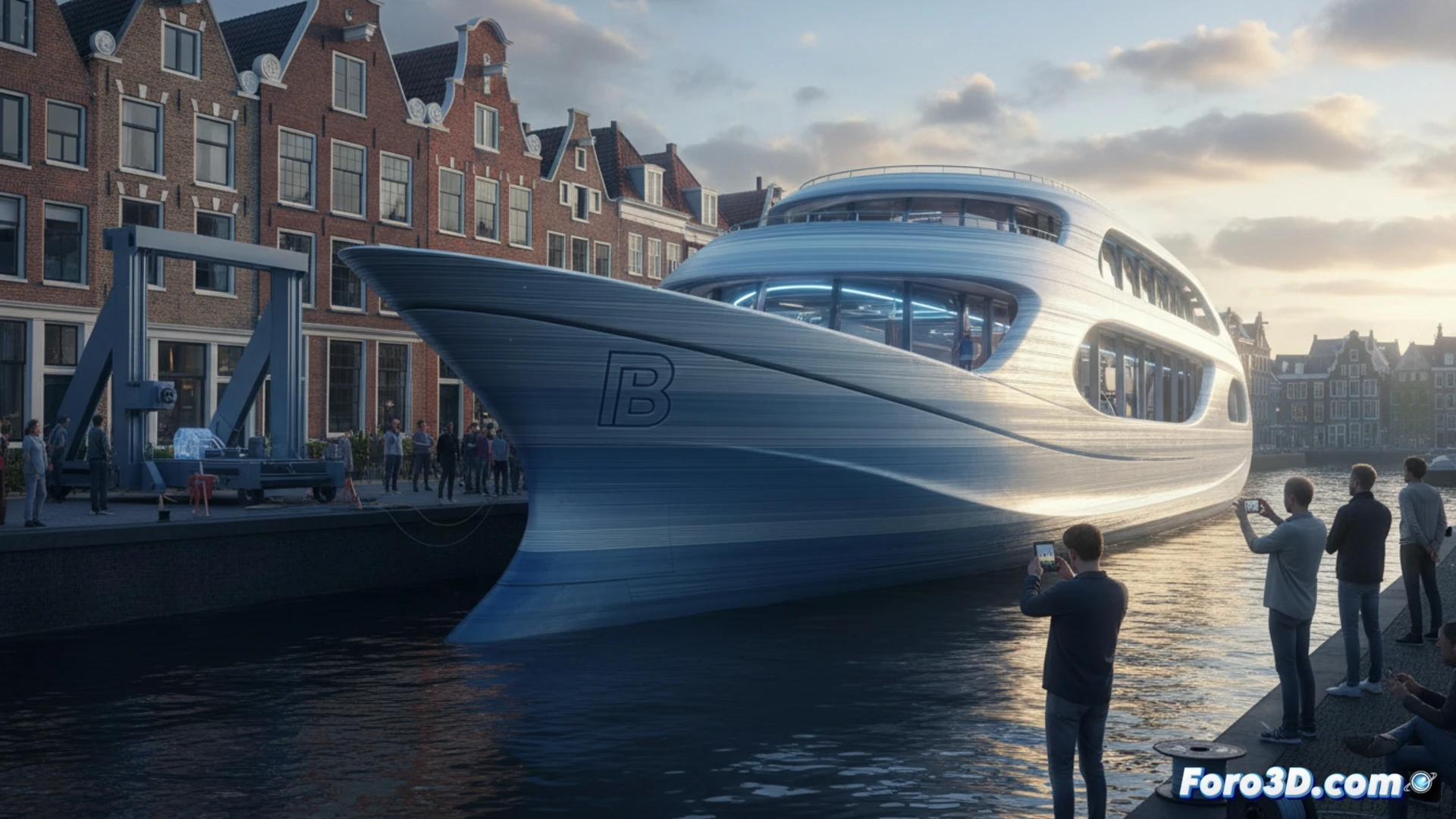
Integration of Additive Manufacturing in Shipbuilding 🏗️
The development focuses on producing the hull using large-scale 3D printing with a polymeric composite. This technique reduces material waste by depositing only what is necessary, contrasting with subtractive methods. The process accelerates the prototyping phase and facilitates the creation of complex geometries that would be costly with traditional molds. Subsequently, the printed hull is integrated and finished with conventional naval components and systems.
Sailing Toward a Future Where the Boat is Printed, But Seasickness Remains the Same 🤢
It is a notable achievement: we can print a boat layer by layer, optimize its design with algorithms, and fuse the digital with the physical. However, the technology has yet to solve the classic challenges of navigation. The hull may be a piece of modern engineering, but the novice sailor traveling on it will have to rely on the same old remedies to avoid spending their trip feeding the fish. Some traditions, unfortunately, are innovation-proof.