The probability of a catastrophic asteroid impact is low, but astronomers track thousands of near-Earth objects. Detection is not total, especially for rocks smaller than 1 km. In our community, this topic is a field for digital visualization. Recreating these cosmic events with 3D tools allows exploring the science and art behind an extreme phenomenon, combining real data with visual effects.
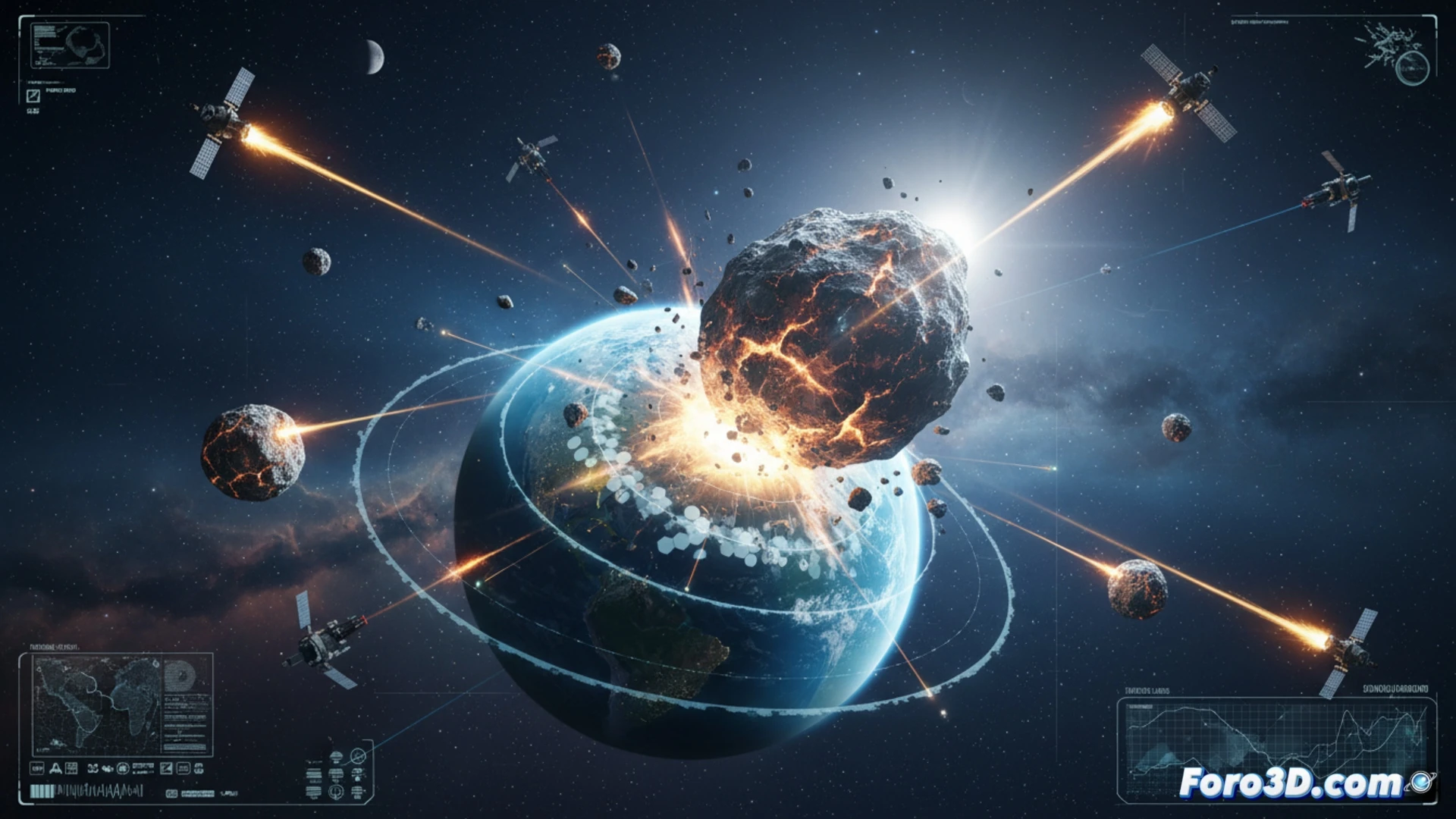
Technical Tools for Modeling a Cosmic Collision 💥
Simulating an impact with realism requires integrating several digital disciplines. Modeling the asteroid's geometry and terrain is the first step. Then, fracture dynamics and fluids simulations are applied for the explosion and crater. Massive particle systems generate debris and ejection, while HDR lighting and volumetric rendering capture the released energy. Software like Houdini, Blender, or Unreal Engine are key in this process.
Your Render Can Save the World (or at Least Scare the Neighbor) 😱
While space agencies design asteroid deflectors, we have a more immediate mission: make destruction look good. A poorly textured crater or a shockwave with few particles is a bigger failure than the impact itself. So, if an asteroid announces its arrival, we trust that the Foro3D community will have a library of renders so realistic that we can choose the most cinematic angle for the end of the world.