Artificial Intelligence Discovers a Hidden Roman Game Board on a Stone
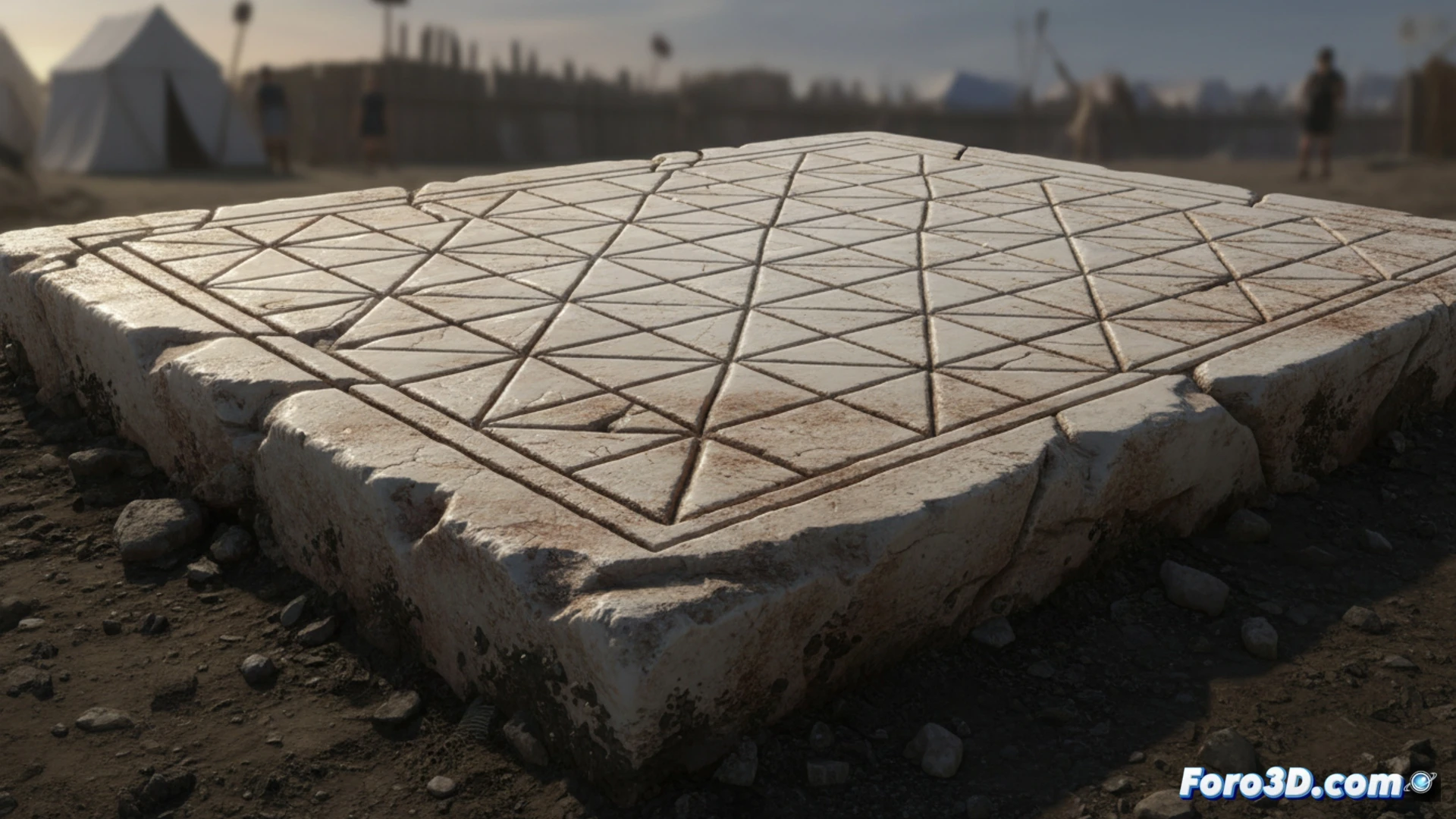
Sometimes, the most fascinating discoveries come from reinterpreting objects that have been stored for decades. A limestone slab found in the Netherlands, with an engraved line pattern, was considered a mere curiosity of little importance. However, by applying an artificial intelligence program to scrutinize its marks, its true nature was revealed: it was not a tool or an inscription, but the battlefield for an ancient Roman strategy game. 🧠
How Does AI Identify a Game on the Stone?
The key was not in what the stone showed, but in how it was used. The AI software analyzed the depth and distribution of wear on each engraved line, searching for patterns that the human eye might overlook. It compared this data with expected usage on a game board, such as that of the ludus latrunculorum, a popular Roman military board game. The machine identified that the wear was consistent with repetitive and playful use, similar to how the most used keys on a keyboard wear out, but over centuries.
The Revelatory Analysis Process:- The AI scanned and measured with micrometric precision the wear depth on all the lines.
- It compared the found pattern with usage models for different functions: tool, inscription, or game surface.
- It ruled out other options due to the absence of typical sharpening or cutting wear, or the distribution of writing.
- It concluded that the pattern matched pieces moving back and forth over the same squares.
"The machine saw a pattern of repetitive and playful use that the human eye could overlook."
The Everyday Life of Roman Soldiers, Engraved in Stone
This discovery directly connects to daily life on the edges of the Roman Empire. Soldiers, during their long watches in places as diverse as Scotland or the Sahara desert, carried these games with them or engraved them directly on any available flat surface. The find in the Netherlands is material testimony to those moments of leisure.
Historical Context of the Object:- Game boards were common among Roman troops to pass the time.
- They were engraved on various materials: stone, wood, or even on stair steps.
- This specimen demonstrates that, beyond building roads or forts, the Romans also sought to relax.
- Each wear mark represents hundreds of games played, leaving an indelible trace of their presence.
Rewriting History with Algorithms and Tiny Marks
This case exemplifies how modern technology is transforming archaeology. Sometimes, history is not told only by great monuments, but by the small marks that people left in their daily lives. Now, with the help of artificial intelligence, we can decipher these secrets hidden in plain sight, discovering that even a simple scratched stone can contain evidence of a millennial pastime. AI thus becomes an indispensable companion for reinterpreting our past. 🔍