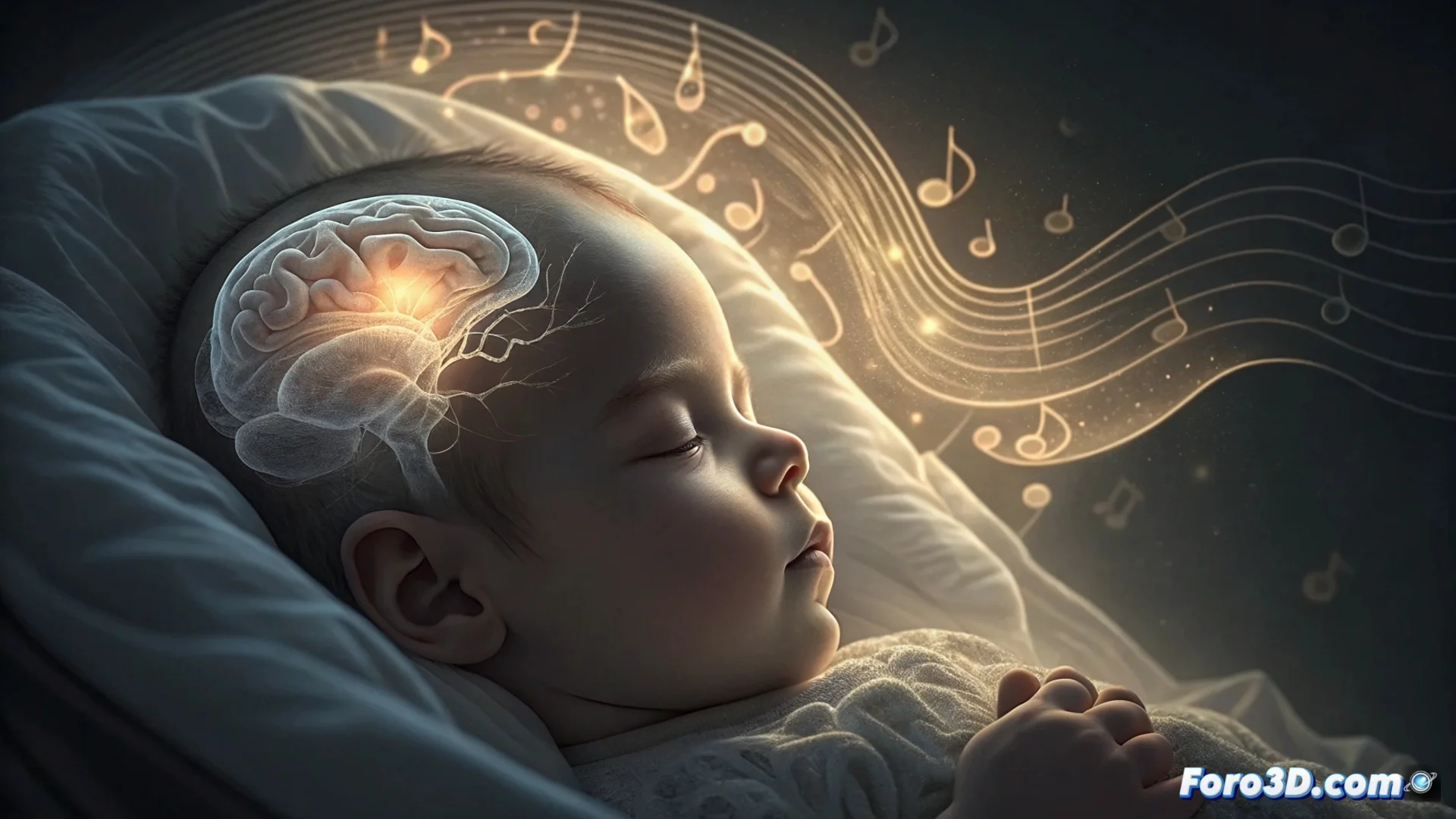
Are We Born with Rhythm or Do We Learn It? Science Answers
The question of whether perceiving rhythm is something we arrive in the world with or a skill we acquire later has a new scientific answer. An innovative study indicates that this ability might be innate and programmed into our brain from the first day 🧠.
The Study That Measured the Brains of Sleeping Babies
Scientists in Hungary designed an experiment with nearly fifty newborns. While the babies slept, they played them pieces of classical music and monitored their brain waves with an electroencephalogram (EEG). The goal was to see how their brain reacted to changes in the sound structure 🎵.
Key Findings from the Experiment:- The babies' brains showed a clear response when an expected rhythmic beat was omitted in the musical sequence.
- This reaction was similar to detecting an error, as if their neurological system anticipated a pattern that was not completed.
- In contrast, alterations in the melody did not generate such a marked brain response.
This suggests that identifying rhythm is a more basic and primary brain function than processing melody.
The Origin of Our Internal Metronome
Why would we have this ability innately? The researchers propose a direct connection with our first sensory experiences in the maternal womb. The constant and rhythmic sound of the mother's heartbeat would act as the first temporal stimulus we perceive, a biological metronome that tunes our brain 🫀.
Implications of This Discovery:- This ability to follow a rhythmic pattern is fundamental for learning to speak and for language development.
- It also constitutes the neurobiological basis for understanding and creating music later in life.
- Processing time and rhythm is prioritized over other more complex musical elements.
Conclusion: Programmed for Rhythm
The evidence points to humans being born with a sense of rhythm integrated into our brain hardware. Our first contact with a constant pattern is not in a concert hall, but in the womb, where the heart sets the beat. This early programming explains why a powerful rhythmic base feels so natural and attractive throughout our lives 🎶.