A team from the Bauhaus University of Weimar presents AnthroTek, an additive manufacturing method that allows creating objects with variable mechanical properties, like those of muscles or tendons. The innovation lies in achieving this complex behavior using a single material and in a single printing process, surpassing more limited traditional approaches. This opens paths in soft robotics and prosthetics.
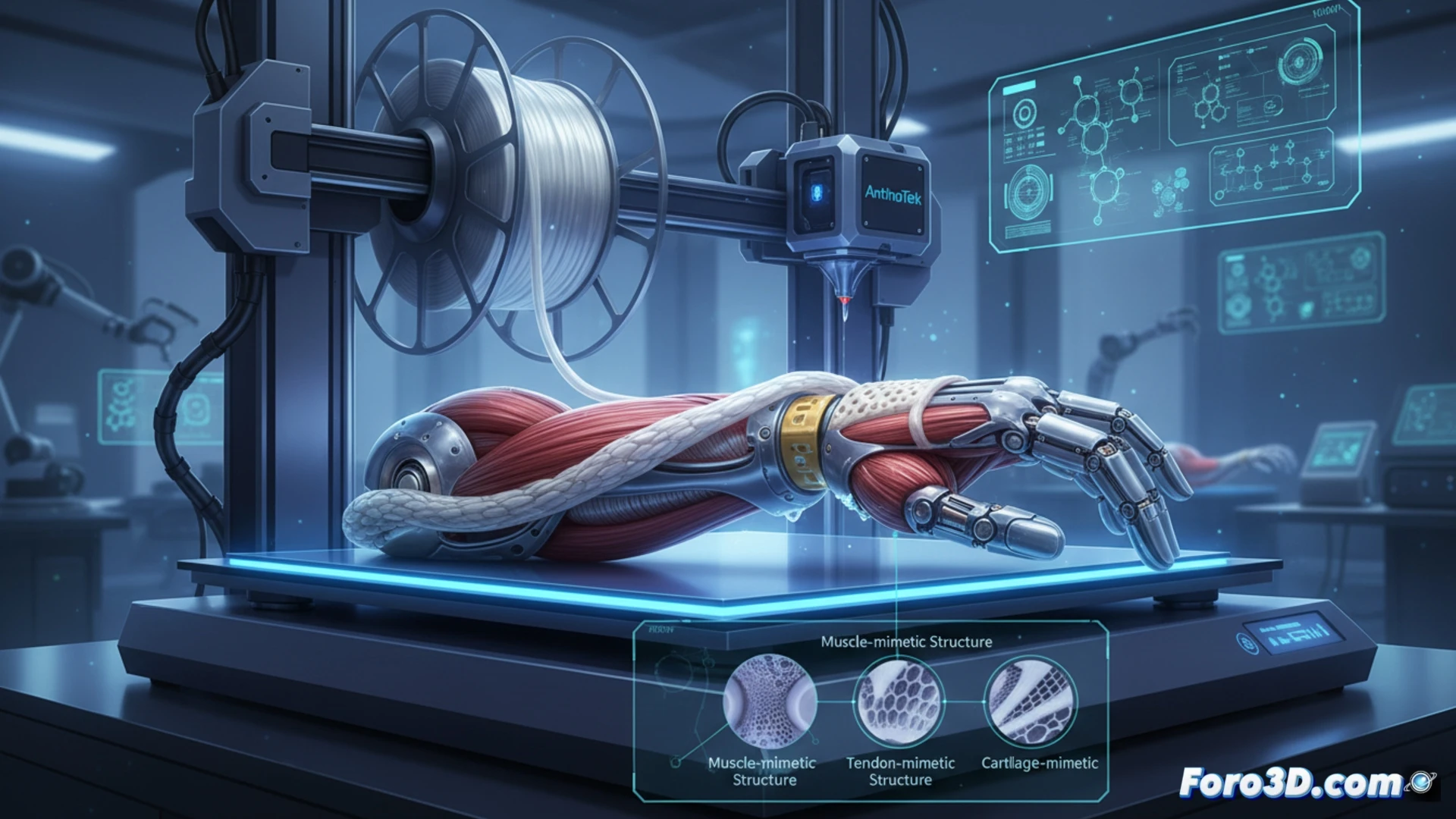
The secret lies in the algorithmic design of the microstructure ??
The technology does not rely on mixing materials, but on precisely controlling the internal geometry of the object during printing. An algorithm designs a variable porous microstructure that determines stiffness, flexibility, or impact absorption capacity in each zone. Thus, a monolithic piece can have rigid areas and others elastic, imitating the natural transition between different tissues.
Your future robotic hand will be more real than your personality on social media ??
It's curious to think that soon we will be able to have prosthetics with such organic texture and response that our handshake will be more authentic than our digital social interactions. While we strive to seem human on the internet, 3D printing works to make a robot capable of giving convincing physical comfort. The parody is served.