An international scientific project has recovered a key geological archive under the ice of West Antarctica. The sediments, which contain data from 23 million years ago, cover periods where global temperatures exceeded pre-industrial levels by more than 2°C. This record is fundamental for understanding the response of ice shelves to warming. Its analysis indicates past collapses, projecting a future risk that could raise sea levels by between 4 and 5 meters.
Deep Drilling Technology in Extreme Conditions ⚙️
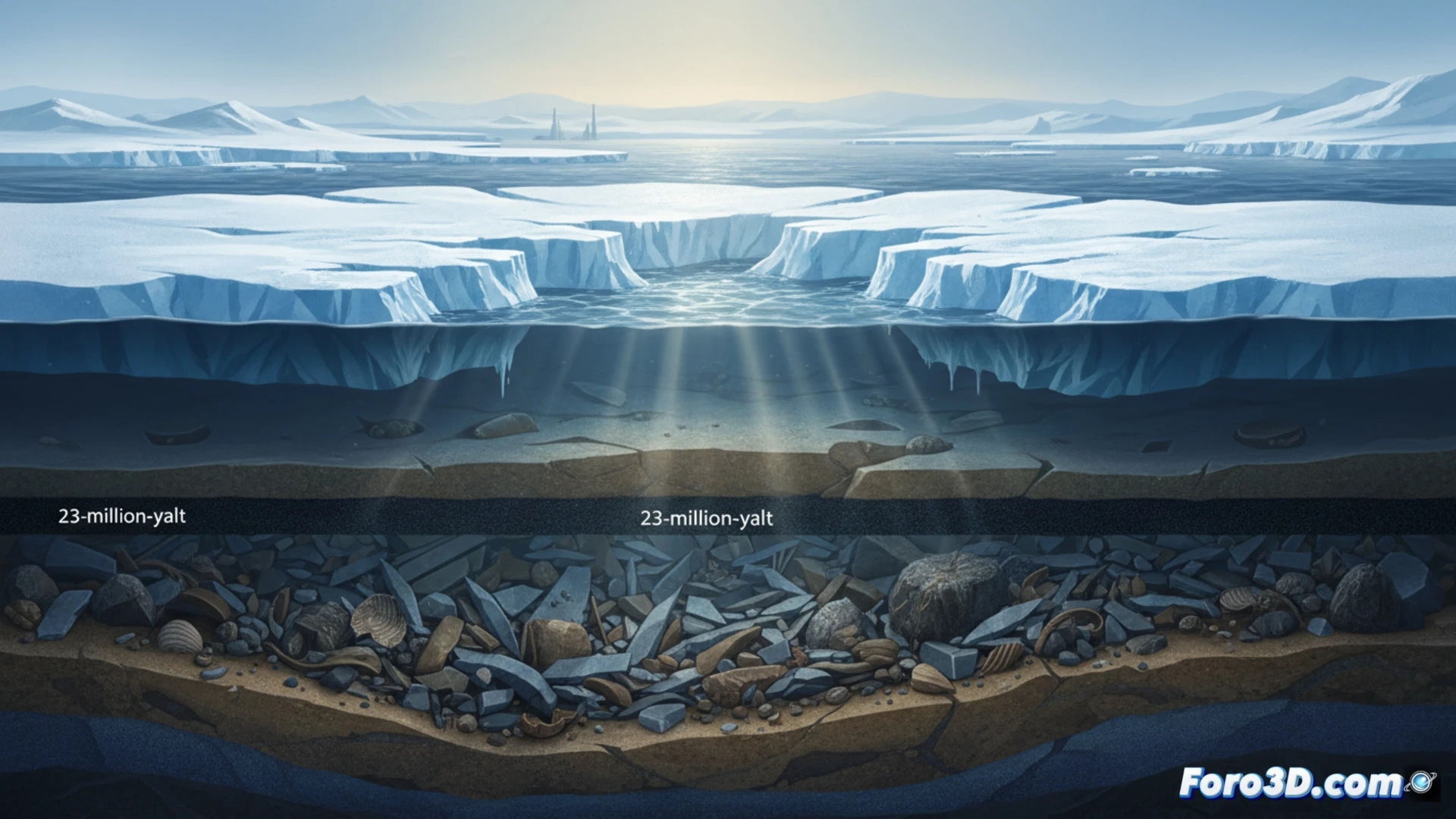
The extraction of the sediment cores required specialized drilling equipment capable of operating in the hostile environment of Antarctica. A hot-water drill system was used to access the depths under the ice sheet. Once the bedrock was reached, rotational drilling technology was employed to obtain intact sedimentary columns. Preservation and subsequent stratigraphic analysis allow identification of layers corresponding to periods of melting and stability.
Our Great-Great-Great-Grandparents Already Lived in a Beach World 🏖️
It seems that the idea of a dynamic coastline is not new. 23 million years ago, without factories or cars, the planet was already managing to melt colossal ice shelves. Perhaps Earth is just following a script it already has written, and we, with our emissions, are turning up the pace of the play. A lesson in geological humility: before the first human, Antarctica was already conducting its own experiments with sea level.