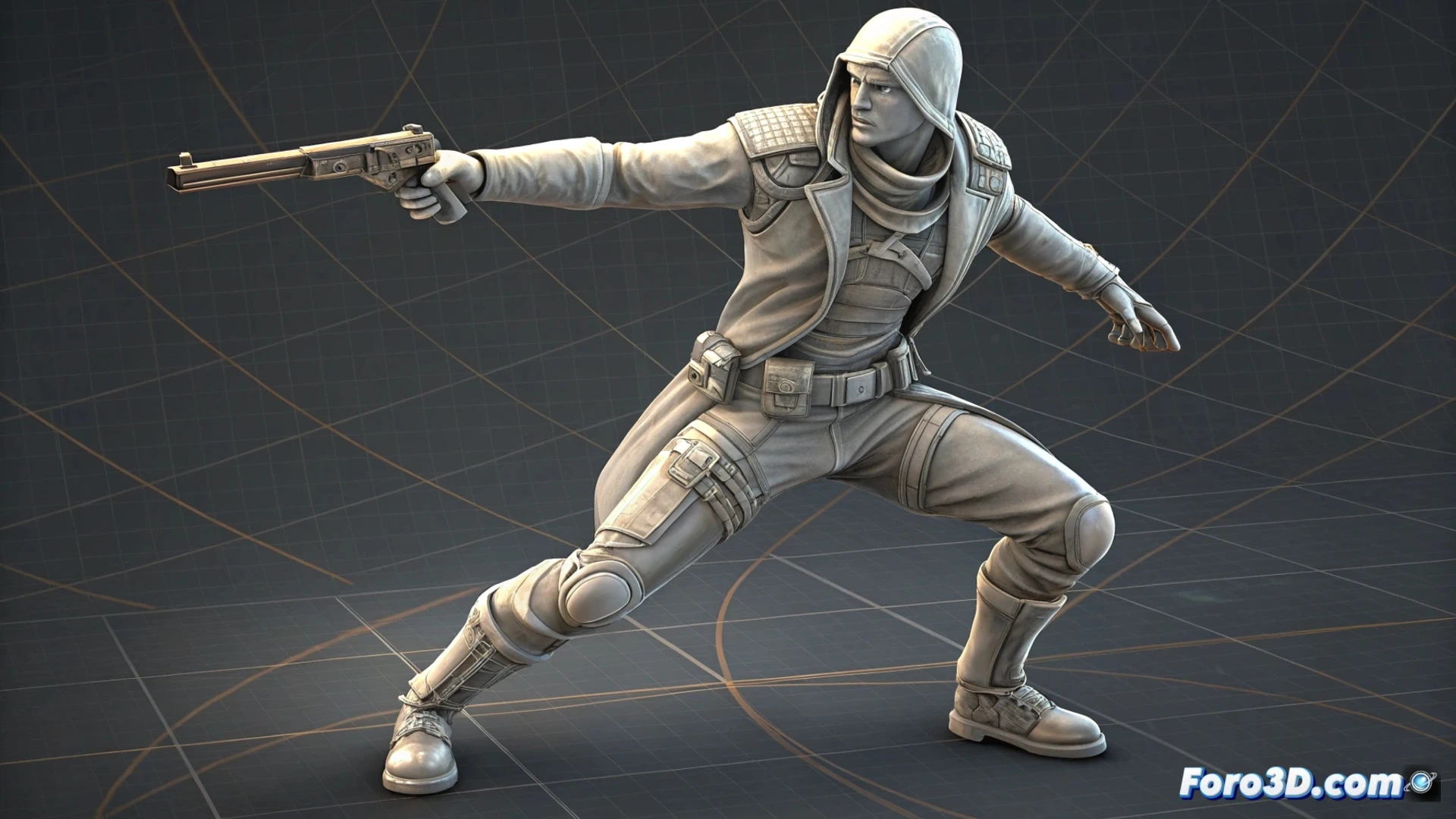
Animating Characters in the Counter-Strike Visual Style
When animating characters for a competitive shooter, the main goal is not to seek photographic realism, but to ensure that every movement communicates information immediately and unambiguously. Readability is the golden rule: poses must be exaggerated and cycles short and recognizable, so the player can read their opponent's intentions in a fraction of a second, regardless of the camera perspective. 🎯
Establishing Fundamental Movement Cycles
The first step is to define the essential states that every character will execute constantly. These cycles form the basic vocabulary of animation and must be created with visual clarity above all else.
Basic states to prepare:- Idle Stance: Usually a low pose, with the center of gravity ready to move in any direction. It conveys alertness.
- Walking: The weapon remains stable in the center of the screen, while the body has a rhythmic and pronounced sway that indicates direction without obscuring the sight.
- Running: Arm movement is exaggerated and a slight bobbing of the view is added to simulate speed, but without impairing the player's aiming ability.
- Jumping: A clear and predictable arc, with a landing pose that is easily identifiable.
Animation in competitive games is a visual language; if the character moves like in a complex choreography when taking a shot, you're speaking a language that distracts, not informs.
Bringing Essential Combat Actions to Life
Animations that occur during a confrontation are critical. They must provide clear feedback to the player executing them and, at the same time, be interpretable for the observer.
Key combat animations:- Shooting and Recoil: The weapon recoil must be visible but not annoying. A common technique is to animate the view to recoil and return to its original position quickly, giving a sense of power without impairing control.
- Reloading: This action should be divided into clear phases: eject the empty magazine, insert the new one, and chamber a round. Adding a brief final gesture, like a sharp tap on the magazine, offers satisfying feedback without extending vulnerability time.
- Hit Reaction: When a character takes a shot, the animation must communicate it clearly but briefly—a slight jerk of the head or torso—without becoming an exaggerated distraction that prevents seeing what happens next.
The Final Balance: Communicate, Don't Distract
The ultimate purpose of animating in this style is to create a fluid visual dialogue between players. Every movement, from running to reloading, must convey a specific intention. If an animation is so extravagant that it steals attention or confuses, it has failed its mission. Remember: in a competitive environment, every frame communicates. Prioritize functionality, keep poses readable, and avoid the temptation to overload with details that don't provide useful information to the game. ✅