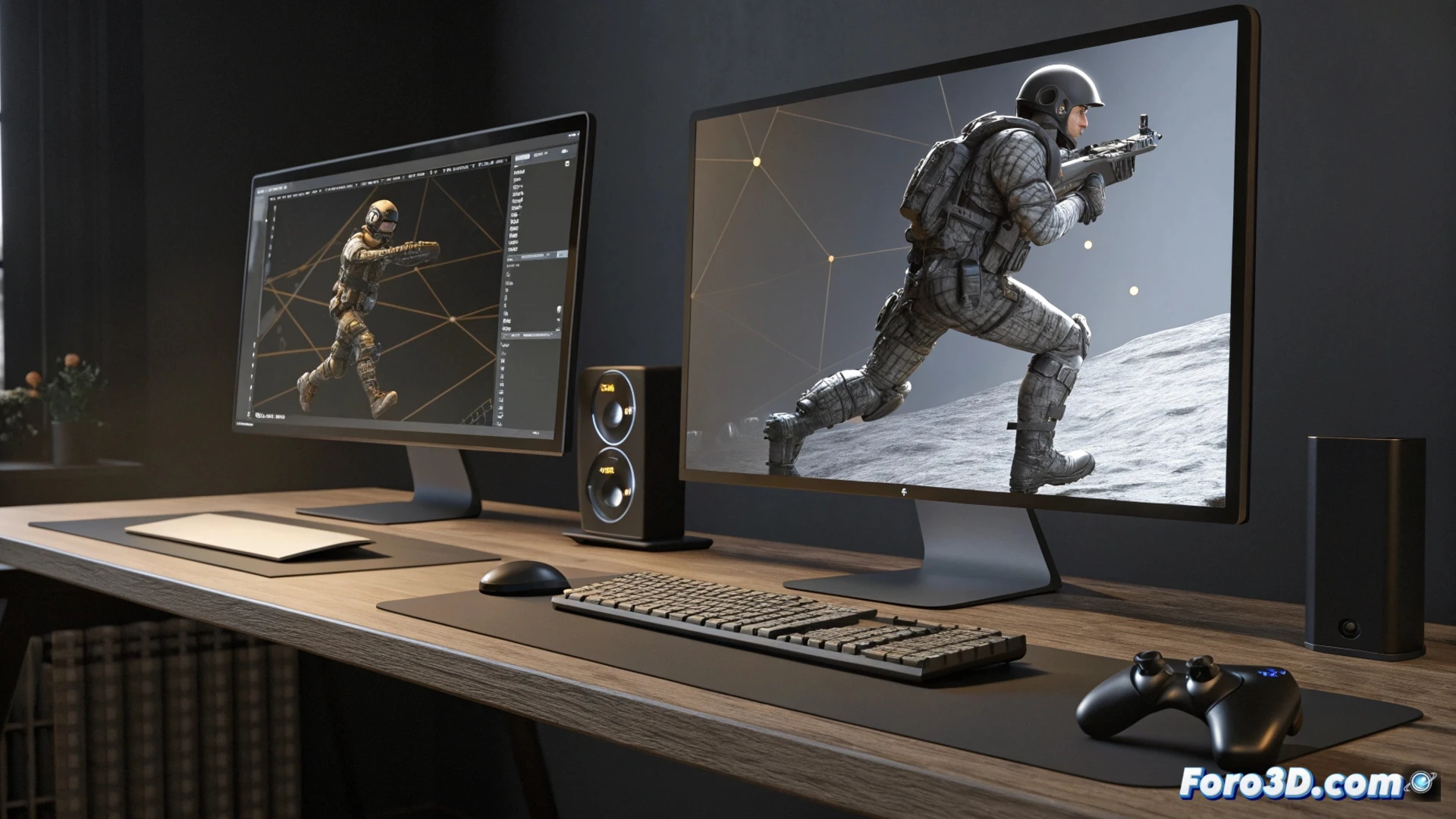
Animating Characters in the Counter Strike Style with Houdini
Generating fast and effective movements for video game characters requires a different approach. Houdini, with its powerful procedural animation system, is an excellent tool for emulating the agile and direct style of games like Counter Strike. The focus should be on achieving functionality and speed over elaborate details. 🎮
Prepare the Rig and Essential Controls
The first step is to build the skeletal structure within Houdini's Character context, using the KineFX rig. It is crucial to import or model a mesh with low-poly geometry that maintains the game's iconic silhouette. Define the main bone chains for limbs, torso, and head, adjusting their rotation limits to simulate a human range of motion but simplified.
Key elements to set up:- IK controls for the legs: Essential for animating actions like walking, running, or crouching in a reactive and precise manner.
- Pose nodes: Use tools like Pose Library or Motion Clip to save and combine base postures, for example, the position for aiming a weapon.
- Simplified hierarchy: Organize the controls clearly to manipulate the character quickly during animation.
In this style, the primary thing is that the character feels fast and lethal, leaving elegance for other projects.
Create the Walk Cycle and Blend States
The characteristic movement is defined by sharp and fast transitions. For the basic walk cycle, animate the character with a slight forward lean, conveying urgency. The Cycle node allows you to repeat this pattern, while Blend Pose is used to switch seamlessly to a run or idle state.
Flow for action animations:- Animation layers: Work on shooting and reloading sequences in separate layers that you can activate or deactivate according to the game's logic.
- Abrupt transitions: Don't fear sharp cuts between animations; they contribute to the feeling of immediate response.
- Prioritize clarity: Although a sprint may show legs moving intensely, the reading of the movement must always be clear and functional.
Philosophy of Functional Animation
The ultimate goal is not to create the most polished animation, but the most effective one for a fast-paced game context. Use Houdini's power to automate and blend poses, allowing you to iterate quickly. Remember that every movement, from a jump to reloading a weapon, must communicate intention and speed instantly. The procedural system is your ally for testing and refining these states efficiently. 💨