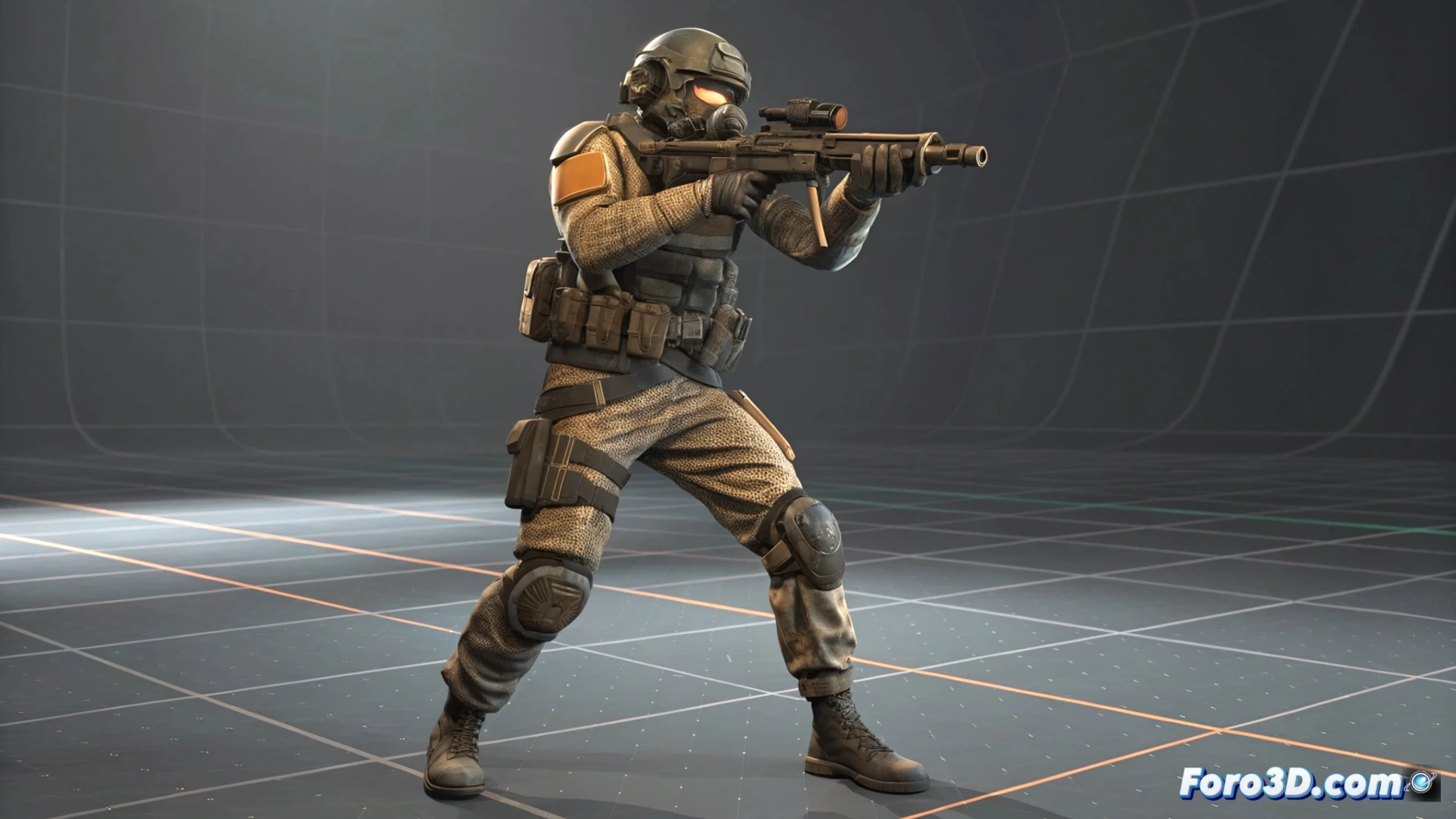
Animating Characters in the Counter-Strike Style in Cinema 4D
Achieving a character that moves like in classic first-person shooters requires a specific approach. The key lies in prioritizing efficiency and a tangible weight in every action, avoiding exaggerated or superfluous movements. Start by preparing a basic rig with clear controls to quickly manipulate limbs and torso, the fundamental base for the FPS style. 🎯
Prepare the Base and Essential Cycles
Once the rig is ready, it's time to define the fundamental cyclic movements. Create separate loops for when the avatar is idle, walking, and running. In the walking cycle, incorporate a slight hip and shoulder sway, keeping the arms close to the body. To simulate running, increase the forward torso lean and arm swing, but always maintaining a compact silhouette. Use the curve editor to give the interpolation a more mechanical and direct character, eliminating excessive smoothing.
Key Elements for Cycles:- Hip and Shoulder Movement: Subtle and opposite for walking, more pronounced for running.
- Animation Curves: Adjusted to be more squared and with less 'ease' than in organic animation.
- Poses: Direct and functional, avoiding any adornment that slows visual reading.
The goal is not to surprise with complex choreography, but to convey the efficiency of a veteran who knows every pixel of the map.
Integrate the Camera and Polish the Animation
The camera is the window to the game world and should be animated as if it were the character's head. Add a slight movement when walking and a sharp jolt when simulating a shot. The shooting and reloading animations must be quick, sharp, and free of flourishes, prioritizing clarity and response speed. This functional realism is the essence of the style. 🔫
Final Steps for Export:- Export Format: Use FBX or Alembic, verifying that the scale and FPS match the target engine.
- Test in the Engine: It is crucial to import the animation into the game environment (like Unity or Unreal) to validate the rhythm and feel.
- Iterative Adjustments: Based on the test, return to Cinema 4D to refine timings or poses.
Conclusion on the Workflow
Animating for this style is an exercise in creative restraint. It's about communicating functionality and weight through a limited but highly effective vocabulary of movements. From the initial rig to the final test in the engine, every decision must serve to reinforce first-person immersion and the agile response that defines the gaming experience. ✅