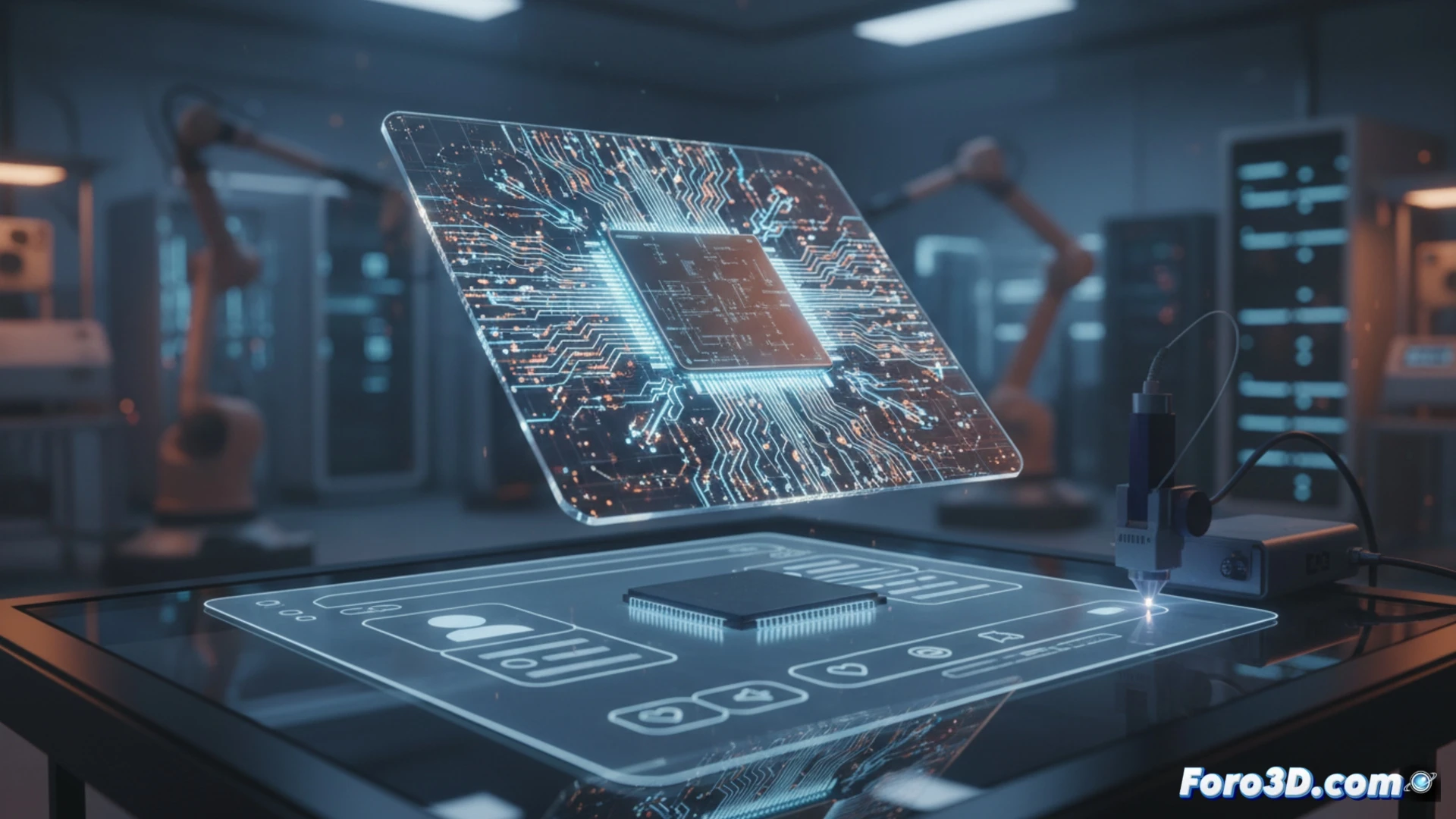
What if Your Favorite App Designed Its Own Brain
Think about the algorithm that chooses the videos you see. Now imagine that same system had a physical chip created solely to run its tasks. This is no longer science fiction. Major artificial intelligence firms are moving away from generic processors to manufacture their own. It's like an F1 driver building their engine from scratch to gain thousandths of a second. 🏎️💨
The Battle to Manufacture Silicon
This strategy is not just a simple experiment. Developing your own AI accelerators provides a huge advantage in performance and energy consumption. Compare rendering a complex graphic on a standard CPU with doing it on a card specialized for that purpose. The gap is immense. According to reports, ByteDance has already tested a prototype and Samsung might be the one producing it, with the first units ready in a short time.
Key advantages of this approach:- Absolute control: Companies can optimize every aspect, from the algorithm to the hardware that runs it.
- Extreme efficiency: Processing time for data and energy expenditure are reduced, which is vital for large-scale services.
- Technological independence: They stop depending on external suppliers like NVIDIA or Intel, gaining autonomy.
The ultimate goal is clear: to have total control, from the algorithm that decides what you see to the physical silicon that performs that calculation.
A Game-Changing Shift in the Industry
This movement isn't started by ByteDance. Giants like Google with their TPUs and Amazon with their Graviton chips have already paved the way. The novelty is that now software and social media companies are joining the competition. A new dynamic is created where the boundary between programming and manufacturing blurs.
Companies that already have their own chips:- Google: Develops Tensor Processing Units (TPUs) for its cloud and AI services.
- Amazon Web Services: Manufactures Graviton processors for its data centers.
- Meta (Facebook): Works on its own chips for metaverse and AI tasks.
The Future is Built with Silicon
This technological race in the background is what defines how we interact with the digital world. The result will be faster searches, more precise recommendations, and more immersive user experiences. Every millisecond saved in processing adds up to create more powerful products and, possibly, more engaging ones. The future of technology is not only written in code, but also etched onto silicon wafers. 🔮