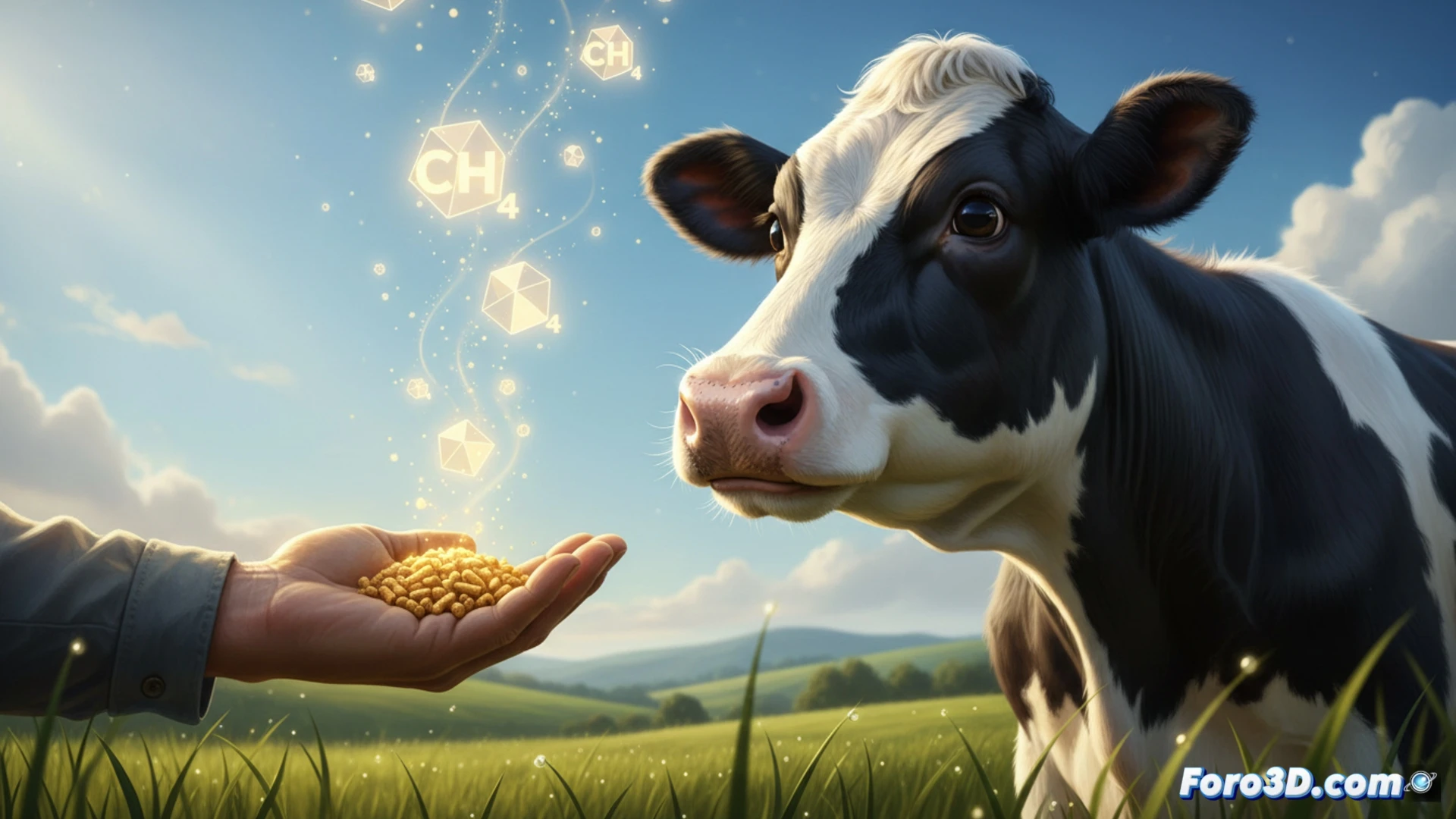
What if I told you the future lies in a cow's diet
Think of a hidden superpower of cattle, but with a harmful effect on the planet. When digesting, these animals produce methane, a gas that traps heat much more potently than carbon dioxide. The solution to this challenge might lie in modifying their feed with surprising ingredients. 🐄
A compound that acts as a chemical switch
Science has developed a molecule called 3-NOP. Its function is specific: it works as a molecular blocker inside the rumen, the first cavity of the cow's stomach. There, certain enzymes are responsible for producing methane during food fermentation. The 3-NOP intervenes to stop that specific reaction, without altering the rest of the digestive process. It's like turning off a switch in a complex circuit.
Key characteristics of 3-NOP:- Acts as a selective enzymatic inhibitor, targeting only the pathway that produces methane.
- Allows the cow to digest nutrients normally, maintaining its well-being.
- Represents an approach of metabolic engineering applied to livestock farming.
It's hacking an animal's digestive process for everyone's benefit.
The potential emerging from the ocean
Another line of research points to a natural supplement: red algae, especially the species Asparagopsis. Incorporating a small amount of this alga into cattle feed can reduce methane generation by percentages exceeding 80%. The mechanism is different from 3-NOP, but the result is similar: the cow processes its food, but the gaseous byproduct is drastically reduced.
Aspects of the algae supplement:- Requires a minimal dose, making it viable on a commercial scale.
- Does not negatively affect the animal's health or milk or meat production.
- Offers a solution inspired by marine biodiversity.
From theory to practice in the field
These proposals have gone beyond the laboratory phase. They are currently being implemented and evaluated in real livestock farms, collecting data on their efficacy and adaptation. Mitigating methane emissions from the agricultural sector is a crucial piece in combating global warming. This strategy demonstrates how scientific innovation, applied to a basic biological process, can have a significant environmental impact. In the end, transforming the cattle's menu could be an essential step to protect the climate. 🌍