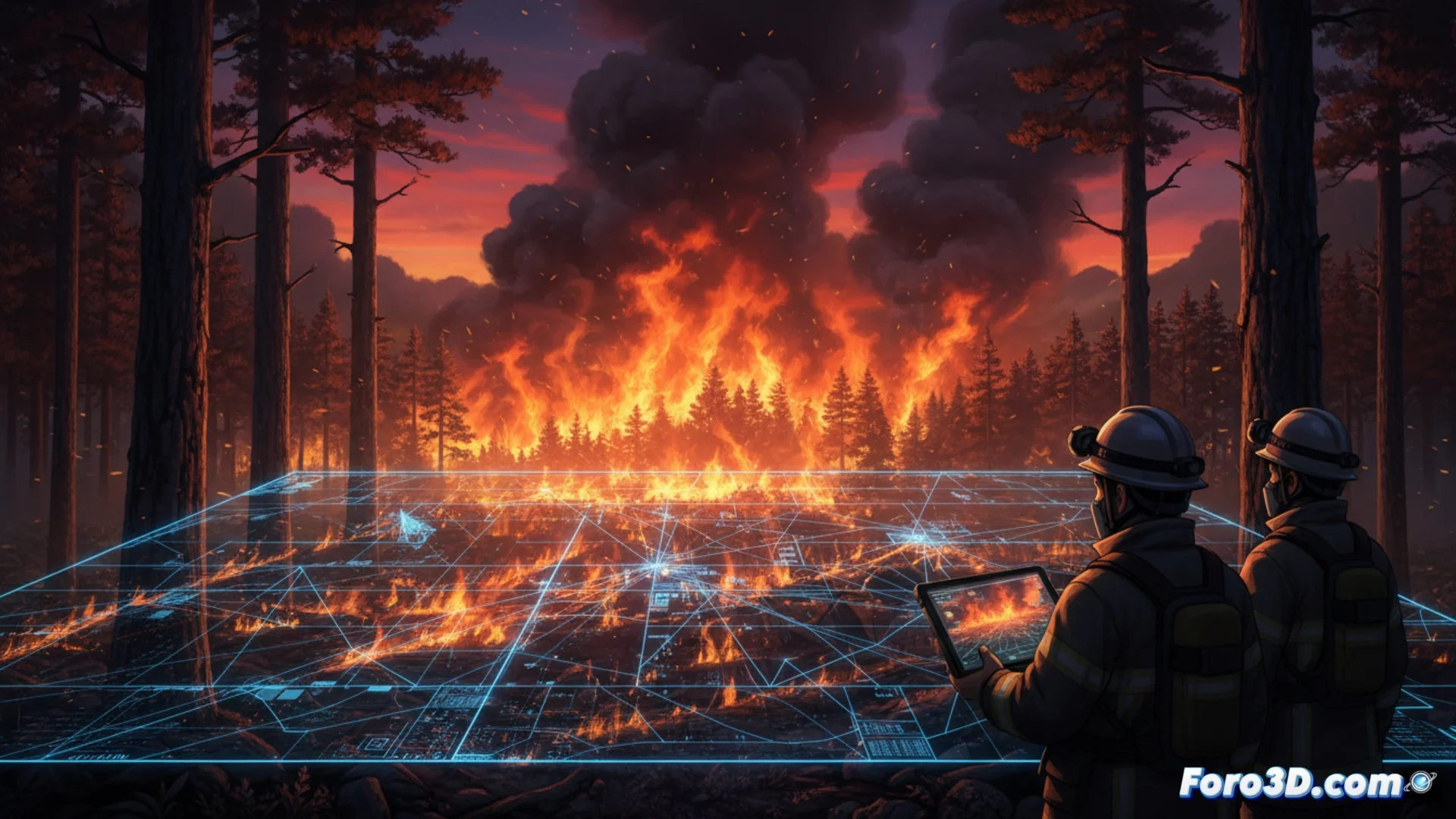
An AI System Anticipates How a Wildfire Progresses
A research team in Japan has created a new artificial intelligence model designed to process real-time information and generate forecasts on the expansion of a wildfire. This system integrates multiple environmental data sources to assist emergency services, enabling them to organize their operations more effectively. 🔥
Fast Simulations for Decision-Making in Emergencies
The tool stands out for its ability to produce several scenarios of the fire's probable trajectory in just a few minutes. This speed in calculating is crucial during a developing crisis, as it allows those in charge to evaluate and compare different intervention tactics almost immediately.
Key Features of the Model:- Generates multiple visual projections of the flames' advance.
- Allows testing different containment strategies virtually.
- Its speed helps make critical decisions under pressure.
The AI can anticipate changes in the fire's behavior, but it still cannot negotiate with it to choose a path more favorable for the firefighters.
Integrated Data Sources
To function accurately, the system combines information from various technologies. It uses satellite images to analyze the type and condition of vegetation cover, while simultaneously receiving live data streams from weather stations and sensors deployed on the ground that measure factors such as forest fuel dryness.
Sources of Information It Processes:- Satellite images detailing vegetation and its condition.
- Real-time data from weather stations (wind, temperature).
- Measurements from ground sensors on soil and plant material moisture and dryness.
Potential and Limits of the Technology
By fusioning all this data, artificial intelligence achieves predicting possible changes in the fire's dynamics. The ultimate goal is to improve the safety and effectiveness of response teams. However, it is important to remember that it is a decision support tool; the complexity and human factor on the ground remain irreplaceable elements. 🌳