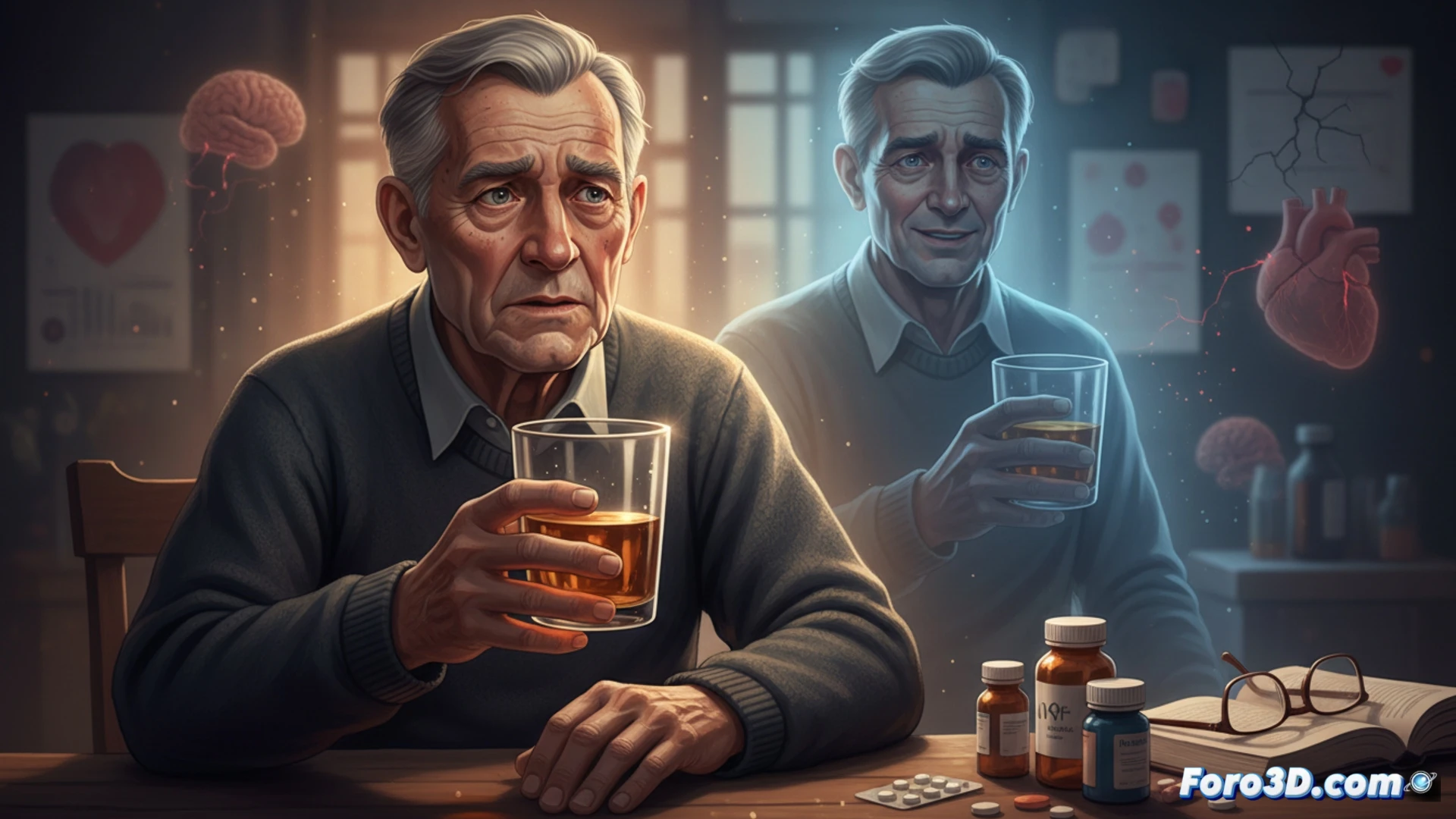
From the age of 65, alcohol consumption presents risks that did not exist in earlier stages. The physiological changes inherent to aging intensify its harmful effects. Science warns that what could previously be moderate consumption now becomes a danger factor for physical and cognitive health. Understanding this process is key to making informed decisions.
The Body's Hardware and Its Degraded Processing Capacity ⚙️
We can view the body as a biological system with hardware that degrades. With age, the RAM (muscle mass) and the heat sink (body water) decrease, which raises the ethanol concentration in the system. The main processing unit, the liver, reduces its clock speed and its efficiency in metabolizing toxins. This bottleneck makes the process take longer and the toxic byproducts remain in circulation longer, saturating the system.
The Neuronal Upgrade That Leaves You Without Memory 🧠
It seems that alcohol, at this stage, comes with an overly aggressive cache cleaning function. That disinhibiting effect that once seemed funny now executes an irreversible neuron deletion command. It's as if every glass were a defragmenter that, instead of organizing, permanently deletes system files. An optimizer so effective that it can leave you with a blank screen after tripping on the carpet.