At the crossroads between art, science, and technology, the figure of Ismail al-Jazari stands out brilliantly. This 12th-century polymath, known as the Archimedes of Islam, left a legacy that lays the foundations for robotics and mechanics. His masterpiece, a book of ingenious devices, is a testament to a mind that saw functionality as a form of beauty, long before the industrial era.
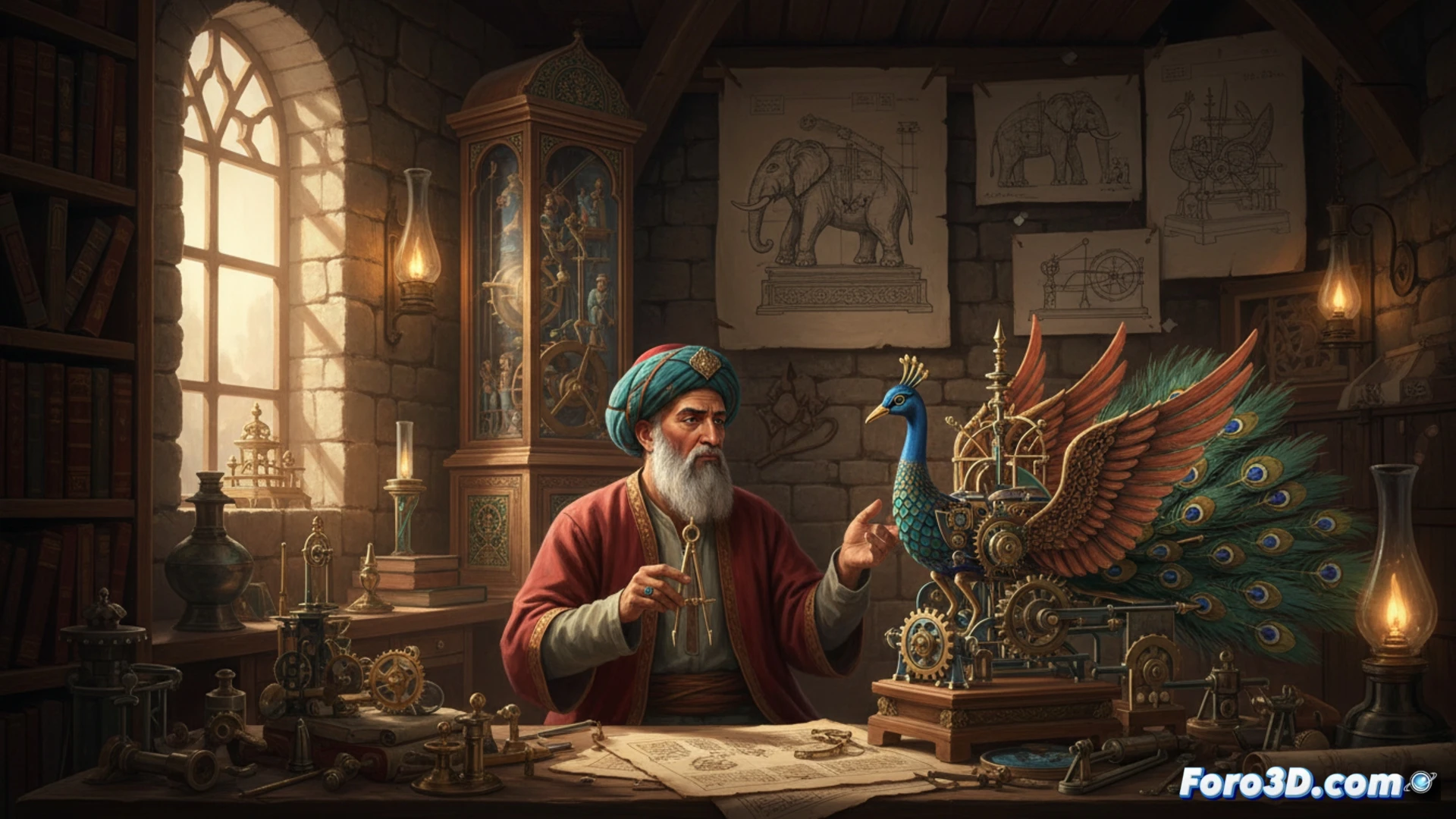
Precision Engineering in the Islamic Golden Age ?™ï?
Al-Jazari's work is characterized by a methodical and descriptive approach. His designs, from water-lifting mechanisms to complex automata, detailed not only the construction but also the assembly and maintenance. He employed cam systems, gears, and hydraulic controls with remarkable precision. His automaton servant that served drinks is an early example of mechanical programming using pegs and levers, a principle that would be used centuries later.
The First Technical Help-Desk Was in 1200 and Probably Didn't Have Coffee ??/h3>
Imagine Al-Jazari's workshop: a client, say a sultan, arrives with a complaint. The peacock in the fountain no longer wags its tail, he says. Al-Jazari, without online manuals or support forums, disassembles the hydraulic system, cleans a clogged valve, and reassembles it. His technical documentation were illustrated manuscripts. No firmware updates, but with the guarantee that if it broke, the inventor himself would come to fix it. A level of after-sales service that today would be considered legendary.