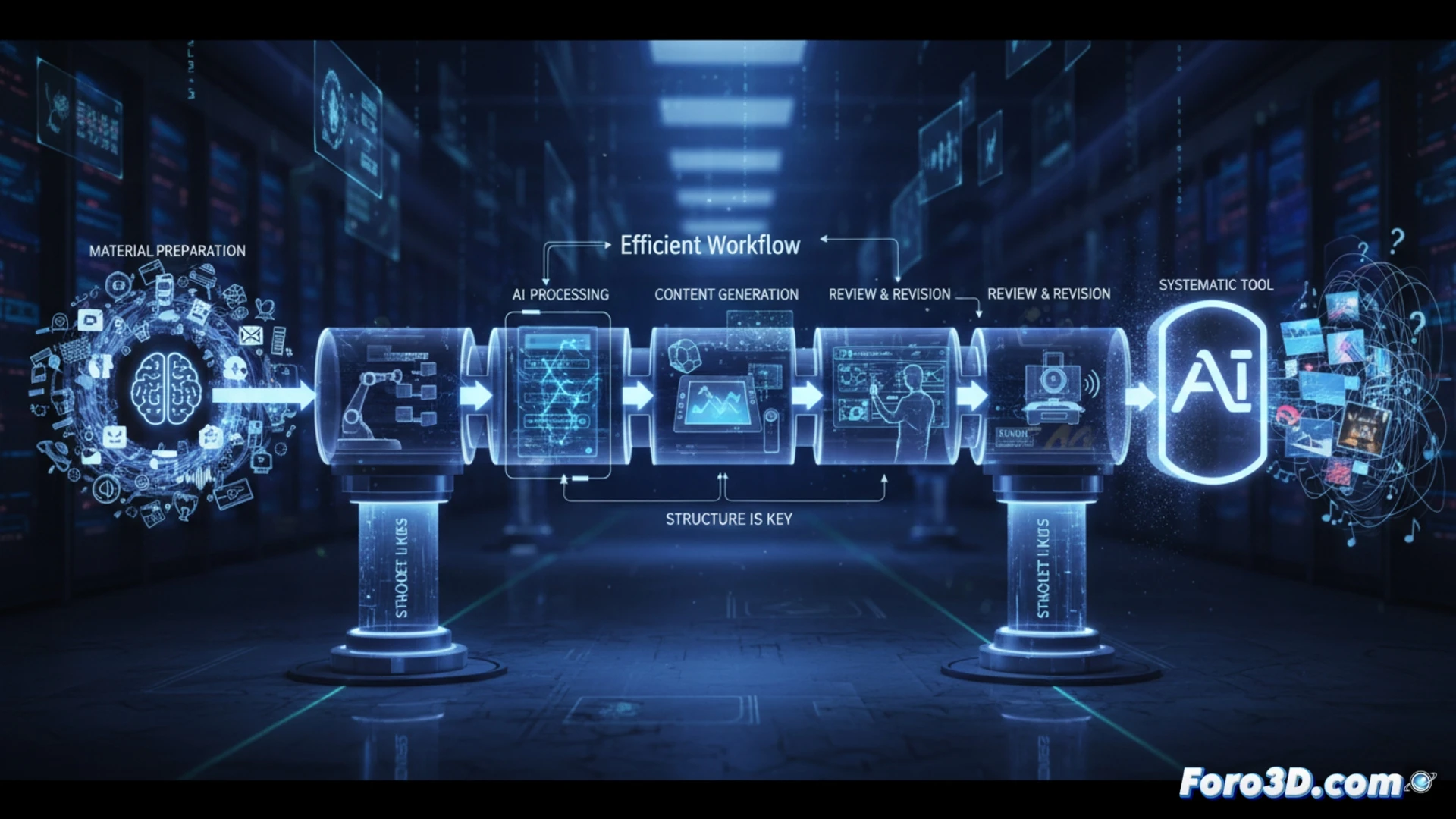
Studying with an AI requires a method to avoid getting lost in extensive responses or scattered topics. A work pipeline organizes the process, from material preparation to final review. This approach turns the AI into a systematic tool, not an oracle to consult chaotically. Structure is key to obtaining consistent results.
Technical Integration: APIs, Prompts, and Data Management ⚙️
The technical core involves designing structured prompts that guide the AI. Frameworks like Chain-of-Thought can be used for complex solutions. For an automated flow, tools like the OpenAI API or Ollama allow integrating the model into scripts that preprocess notes and postprocess responses in specific formats (Markdown, JSON). Managing conversation context and memory is essential to maintain coherence in long sessions.
When Your Study Buddy is a 175B Parameter Model 😅
It's curious to entrust your education to an entity that sometimes hallucinates historical dates with astonishing confidence. It explains a concept in detail, and when you ask for the source, it invents an academic paper that doesn't exist. You end up reviewing its citations with more care than you used for your own notes. In the end, you feel like you're not studying with a tutor, but auditing an enthusiastic intern with a tendency to fabricate.