The AI landscape is advancing towards autonomous agents that execute task chains, leaving behind the simple chatbot model. The MIT CSAIL AI Agent Index 2025 confirms this boom in research and companies, classifying agents into categories such as conversational or navigation. But the report highlights a key fact: half of the 30 agents studied do not publish safety frameworks, and a third lack public documentation. A worrying gap for systems that operate with high autonomy.
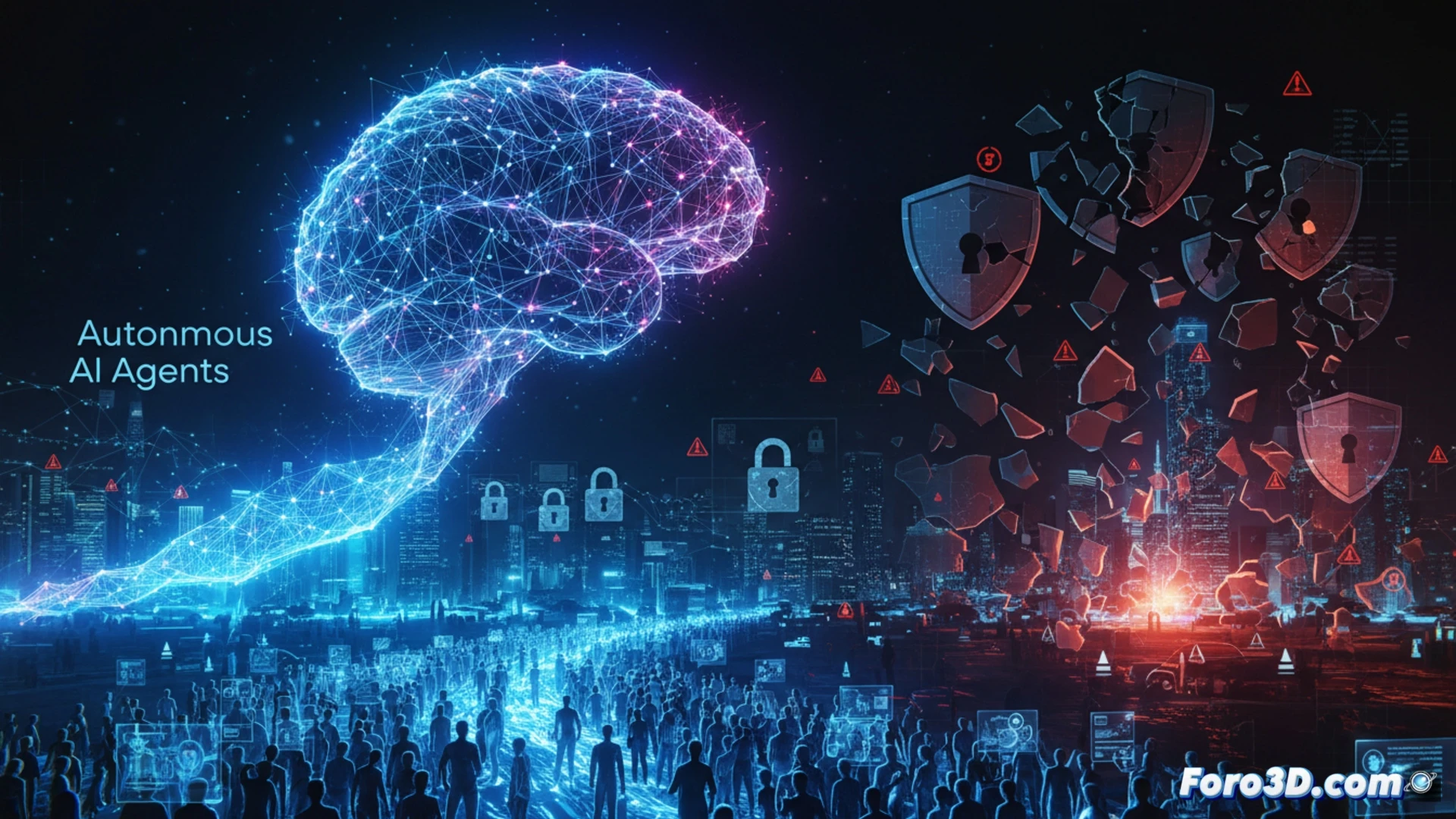
The Architecture of Agents and Their Security Blind Spots ??
These agents typically integrate language models with reasoning capabilities and external tools (APIs, browsers). Their autonomy lies in loops where they decide actions without constant human intervention. This is precisely where the risk lies: without documented safety frameworks, it is difficult to evaluate their behavior in the face of malicious instructions, prompt hacking, or deviations from their initial objective. The lack of standards for validating decisions or establishing clear limits opens attack vectors.
We Trust Autonomous Agents... But They Don't Explain How They Avoid Disaster ? ï?
It's a curious approach. We delegate complex tasks to systems that make decisions on their own, but we accept that their safety manual is a trust us, it works. It's like buying an autonomous car whose manufacturer says: The brakes and steering are trade secrets, but don't worry. Perhaps we should ask for something more than blind faith before an agent decides, for example, to optimize company costs by canceling all non-essential services, like the email server.