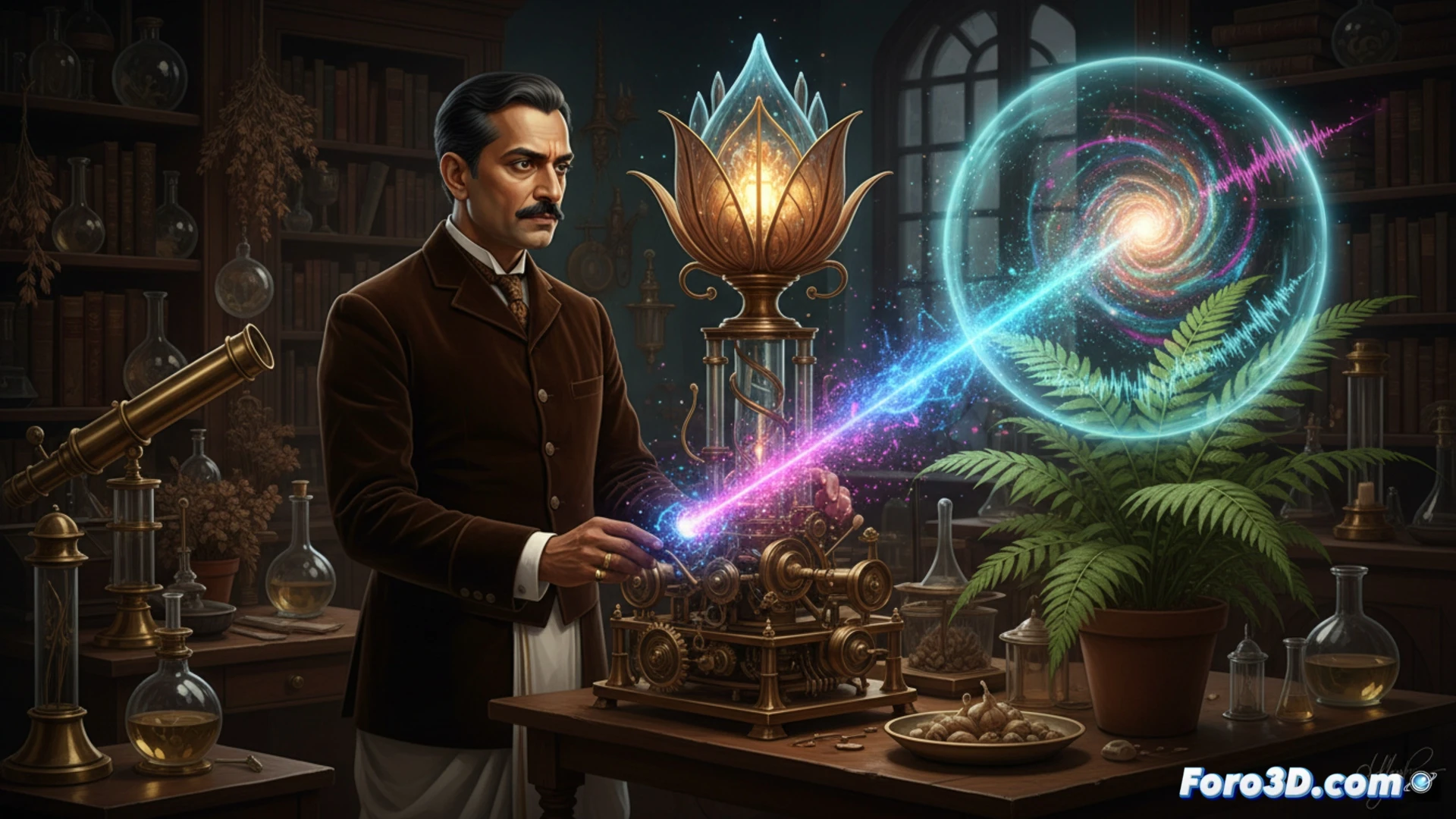
A Synopsis Explores the Connection Between Science and Nature in Colonial India
In a period where the Western scientific paradigm reigned supreme, a visionary in colonial India, Jagadish Chandra Bose, intuits that living beings hold mysteries that conventional instruments cannot capture. His quest leads him to build an extraordinary artifact, the crescograph, designed not only to measure plant growth, but to translate their vital pulsations into a language that humans can perceive. 🌿
The Crescograph: A Window into the Plant Soul
This ingenious device acts as a sensory translator, demonstrating that plants respond actively to stimuli from their environment. Through it, Bose discovers that they experience something analogous to pain with alarm signals and react with harmonious vibrations to music or kind treatment. The cinematic narrative employs 3D animation to materialize these reactions, turning pure data into an immersive visual and auditory experience.
What the device reveals:- Measurable reactions to aggressions, similar to a silent scream.
- Positive and complex responses to stimuli like music or light.
- A continuous bioelectric communication among all plant life.
Technology should not only quantify, but also allow us to feel. The crescograph is the metaphor for that union.
Animation: The Bridge Between Two Realities
The central conflict of the story pits intuitive and empathetic knowledge against the rigid materialist empiricism of the era. The film does not posit that one method invalidates the other, but proposes a necessary dialogue. Digital animation emerges as the perfect language for this purpose, giving visual and sonic form to processes that would otherwise remain hidden, collaborating with science to understand the invisible.
Narrative functions of 3D animation:- Visualize the flow of energy and emotions within plants.
- Create a sensory aesthetic that unites scientific data with emotional experience.
- Serve as a metaphor for the collaboration between art and science.
A New Perception of Life
The final proposal of this synopsis is to radically transform how we relate to the natural world. By demonstrating that plants perceive and react, it suggests that everyday acts like watering or caring for them can transcend mere maintenance to become a genuine exchange, a form of communication with a living universe that has always been there, waiting to be heard. 🌱