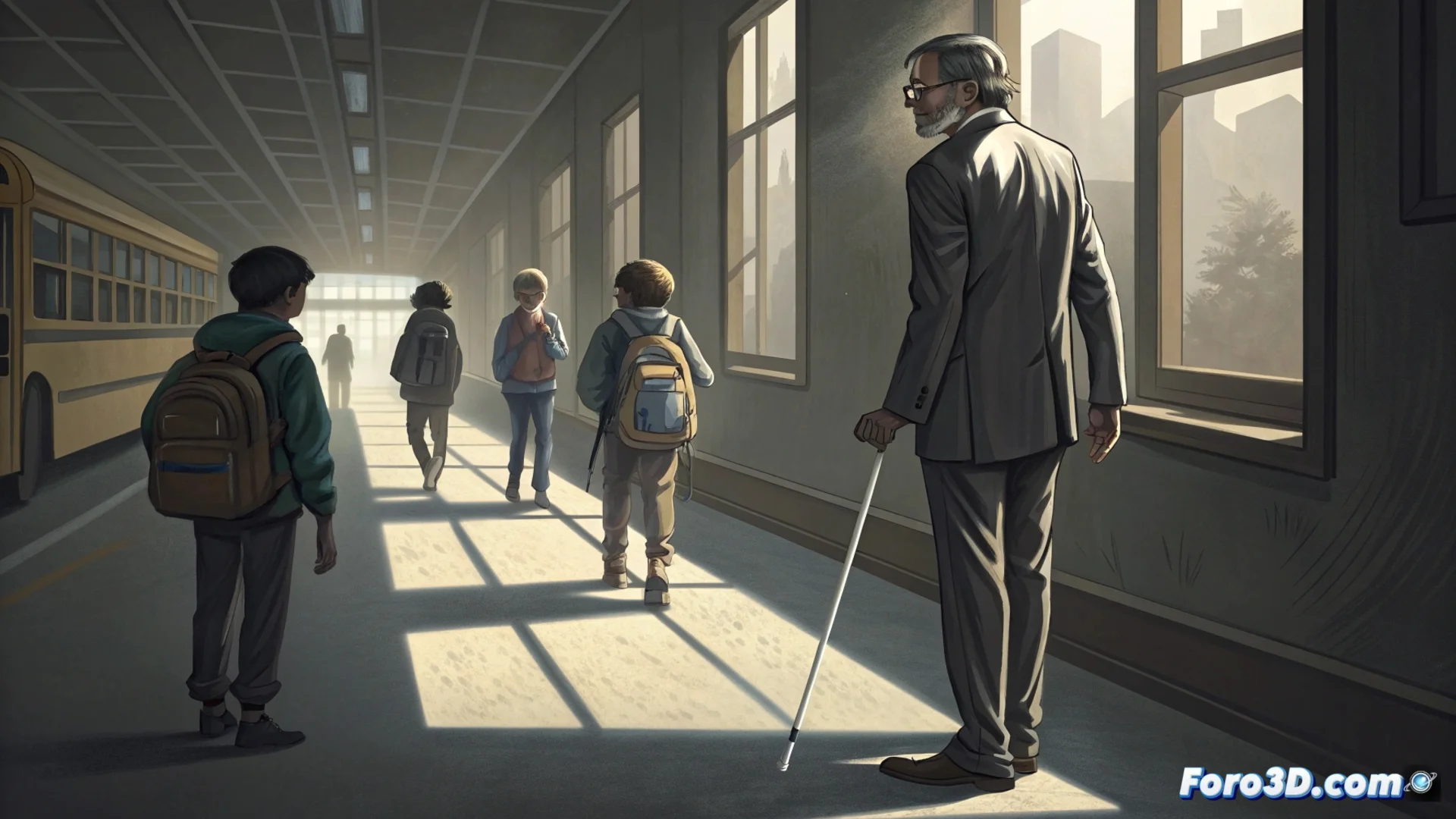
A Blind Teacher Excluded from a School Trip in Italy
A high school teacher in Italy, who cannot see, was left without the opportunity to accompany his class on an educational excursion. 🧑🏫 The administration of the classical high school where he works decided to exclude him, arguing that his blindness posed a potential danger to the group.
The Controversial Administrative Decision
This incident, which took place at a school in the province of Brescia, triggered a strong reaction from both the teachers' union and the community. Teacher representatives described the act as discriminatory and emphasized that the teacher leads a fully independent life. His ability to teach classes or supervise students in an environment outside the classroom is not impaired by his condition.
Key Points of the Controversy:- The teacher teaches philosophy and history and commutes daily using a cane and a guide dog.
- The school administration cited safety and risk reasons to justify the exclusion.
- The teacher expressed his deep disappointment, as he considered this activity an integral part of his work with the students.
It seems that for some, the greatest limitation is not being able to look beyond one's own prejudices, a lesson that, ironically, was not in the curriculum.
Educational Authorities' Investigation
In response to the complaint, the regional school superintendency initiated an investigation to clarify the facts. The purpose is to determine whether current regulations on inclusion and the rights of people with disabilities were violated. This process seeks to verify compliance with laws that protect against discrimination in the educational field. 👩⚖️
Actions Taken:- Opening of a formal investigation by the competent educational authority.
- Review of inclusion regulations and their application in this specific case.
- Assessment of whether the school's decision had a legal basis or was an act of arbitrary exclusion.
Final Reflection on Inclusion and Capability
This incident highlights the persistent gap between the theory of inclusion and its real practice in some settings. It underscores how prejudices can hinder the full participation of competent professionals. The demonstrated autonomy of the teacher on a daily basis challenges the foundations of the school's decision, inviting a deeper reflection on what truly defines capability and suitability in education. 🤔