4D printing is advancing toward practical biomedical applications. A recent development presents actuators that change shape inside the body through programmed degradation. These devices, made with sensitive materials, are activated upon contact with specific bodily fluids, deploying or modifying their structure without the need for integrated electronics or batteries.
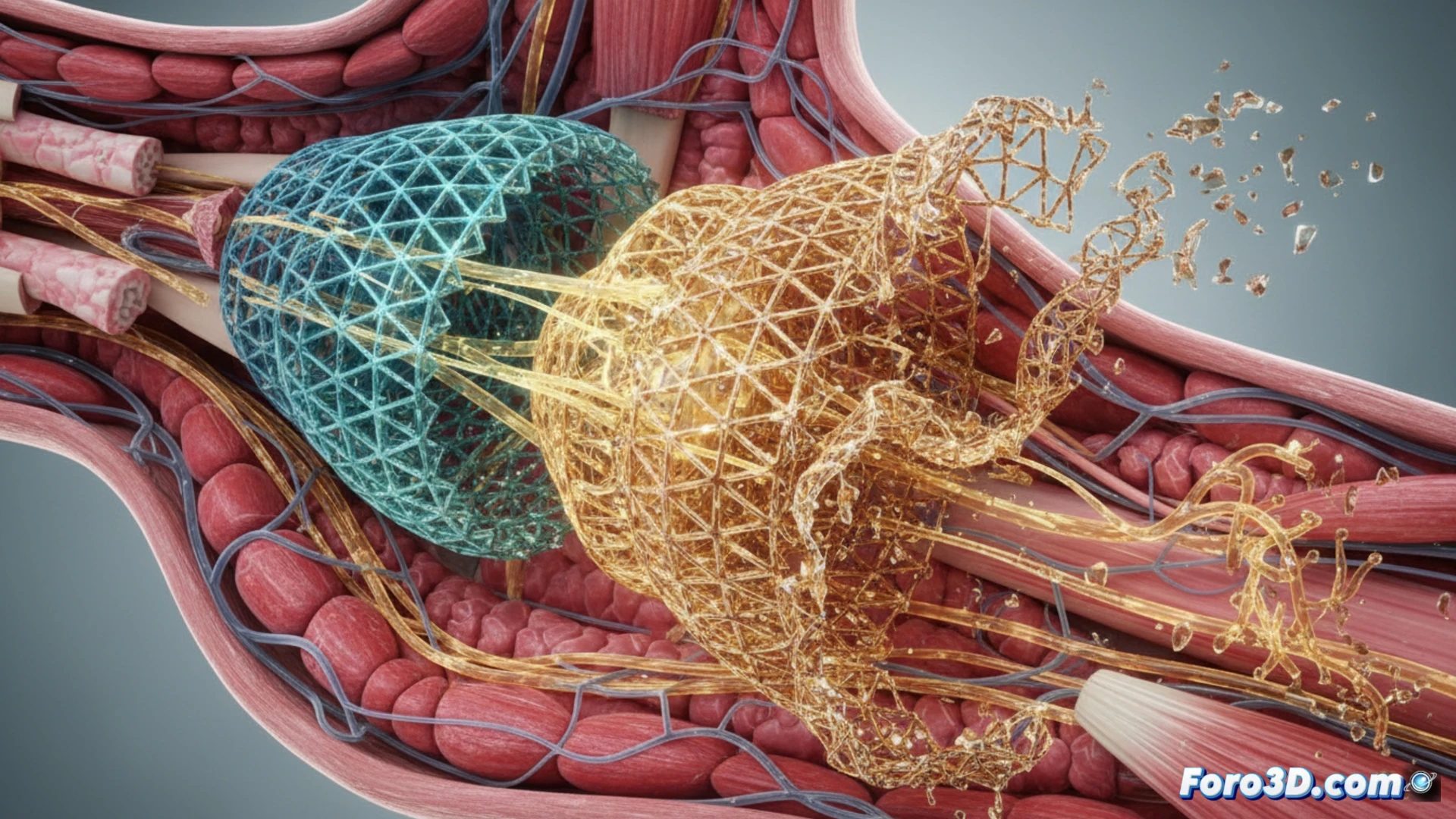
Activation Mechanisms by Controlled Dissolution ?—ï?
The technology is based on 3D-printed composite materials with a defined internal architecture. The key lies in the combination of polymers with different hydrolytic degradation rates. Once implanted, bodily fluids selectively dissolve certain parts of the structure. This process releases mechanical stresses stored during manufacturing, triggering predefined movements such as the deployment of a support or the opening of a compartment to release a drug.
Your Next Implant Will Come with Instructions "Add Body Water" ??
It's a concept that greatly simplifies the user manual. Instead of complex control systems, the design relies on your own physiological serum to do the job. We could say it's the first device that literally activates with sweat, or any other available fluid. An elegant solution, although perhaps unsettling for those who prefer their implants not to dissolve in a programmed manner.