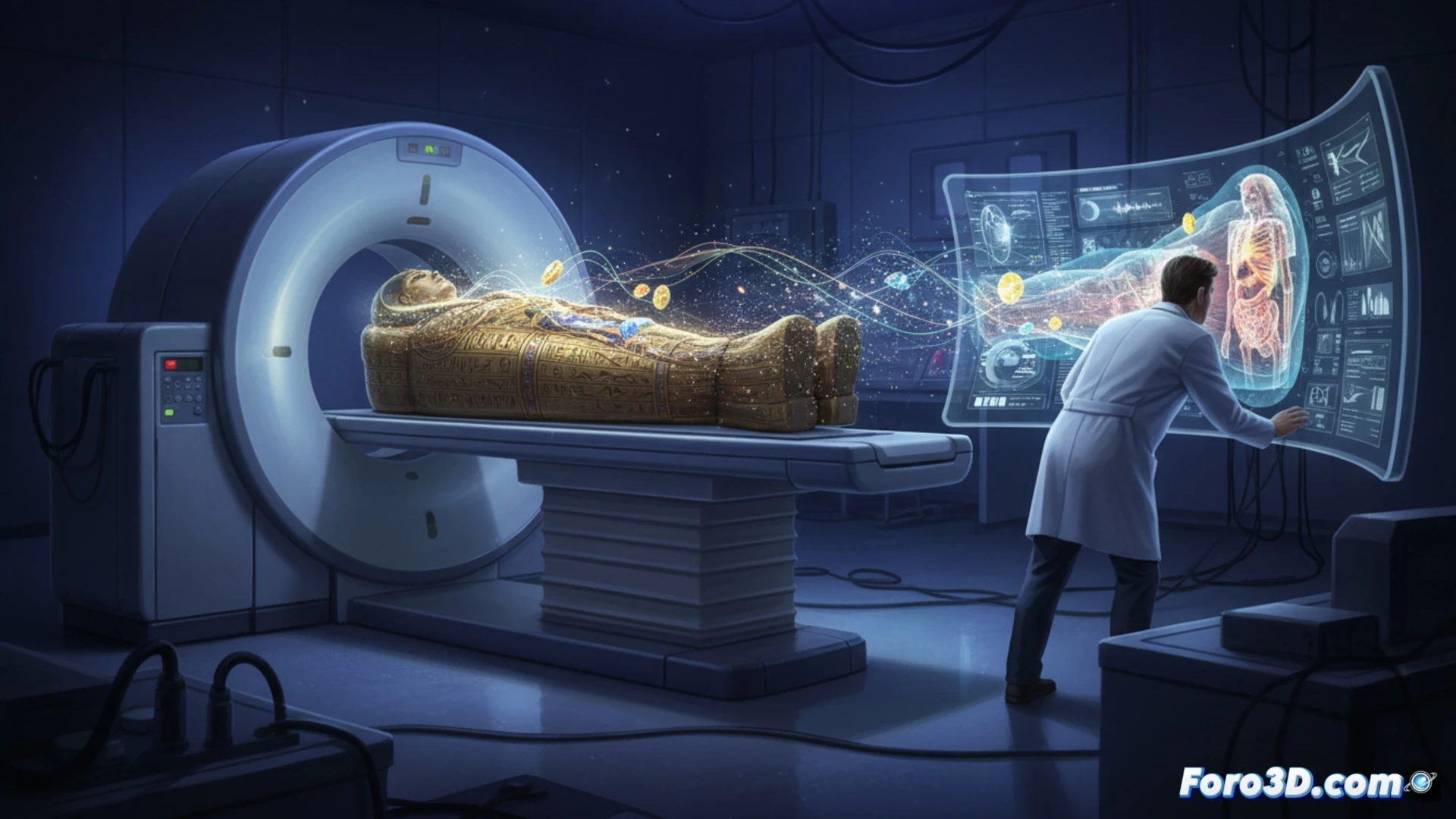
3D Technology Allows Studying Mummies Without Touching Them
How can we know how a person who lived millennia ago lived and what they suffered? The answer is no longer only in papyri, but in advanced scanning equipment. Computed tomography scanners of the latest generation act as a window to the past, allowing us to see inside the remains without unwrapping them or causing damage. 🕵️♂️
A Glimpse Inside History
This technique, known as computed tomography, builds an extremely precise three-dimensional model. It scans the object layer by layer, just like in medicine, but with a resolution adapted for archaeological objects. The data obtained is not just an image; it is a complete map that experts can analyze to discover hidden secrets.
What digital scanning reveals:- Pathologies and diseases that the person suffered during life.
- Bone wear, which indicates their daily activities or occupation.
- Funeral goods objects, such as amulets, placed between the bandages.
The medical technology that today saves lives can also tell stories of those who lived in ancient Egypt.
From Digital Data to Physical Object
The power of these digital 3D models goes beyond the screen. With 3D printing, it is possible to manufacture identical copies of specific elements, such as a skull or a ritual jewel. This step is fundamental for democratizing access to historical knowledge.
Advantages of creating exact replicas:- Researchers can manipulate and study the copies without risk to the original.
- Museums exhibit reproductions that the public can observe up close and even touch.
- Historical figures are humanized, bringing their reality closer to our time.
Connecting Eras Through Technology
Thinking that a high-definition scanner can be the most accurate biographer of a Nile priest is truly revealing. This fusion between archaeology and digital technology not only preserves heritage, but makes it understandable and tangible for everyone. The next time you contemplate a mummy, imagine the story that a beam of X-rays can tell. 🔬