Recent reports on the deceptive recruitment of African citizens for the war in Ukraine, with false job promises, highlight a serious disinformation problem. Countries like South Africa, Kenya, and Ghana have confirmed victims. This grim context reminds us, in our 3D graphics and VFX industry, that our work is not neutral. When creating infographics or assets for news, we have an ethical responsibility to represent conflicts with rigor and humanity, avoiding desensitization.
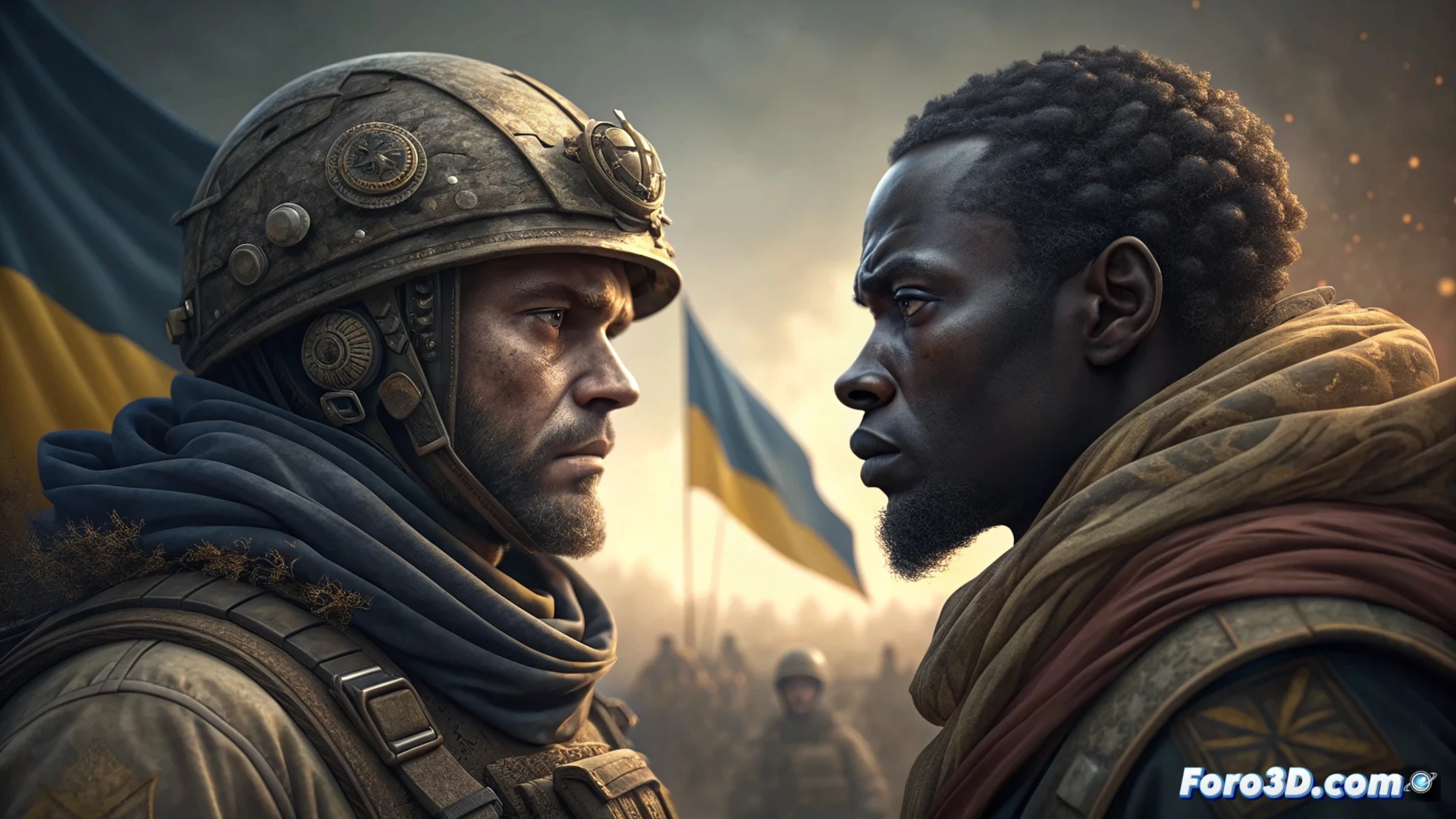
The Ethical Burden of the Geopolitical Data Pipeline ⚖️
Our technical process, from data acquisition to final render, must integrate a verification filter. When visualizing war or migration contexts, the choice of color palettes, environment modeling, and animation of narrative elements convey a stance. Excessive detail without context can trivialize pain, while rigorous abstraction can better communicate complexity. Precision in the geolocation of assets and faithful representation of scenarios are part of our task.
Because a low-poly tank can also be an ethical statement 💡
The next time you're asked for a hyperrealistic model of a conflict zone for a news motion graphic, consider the ironic option: what if instead of 4K textures of rubble, we use a deliberately schematic aesthetic? It's not laziness, it's philosophy. This way, the viewer doesn't get distracted counting the bricks in the destroyed building and perhaps pays attention to the victim figures. Sometimes, the best global illumination is the one that illuminates the context, not just the 3D model.