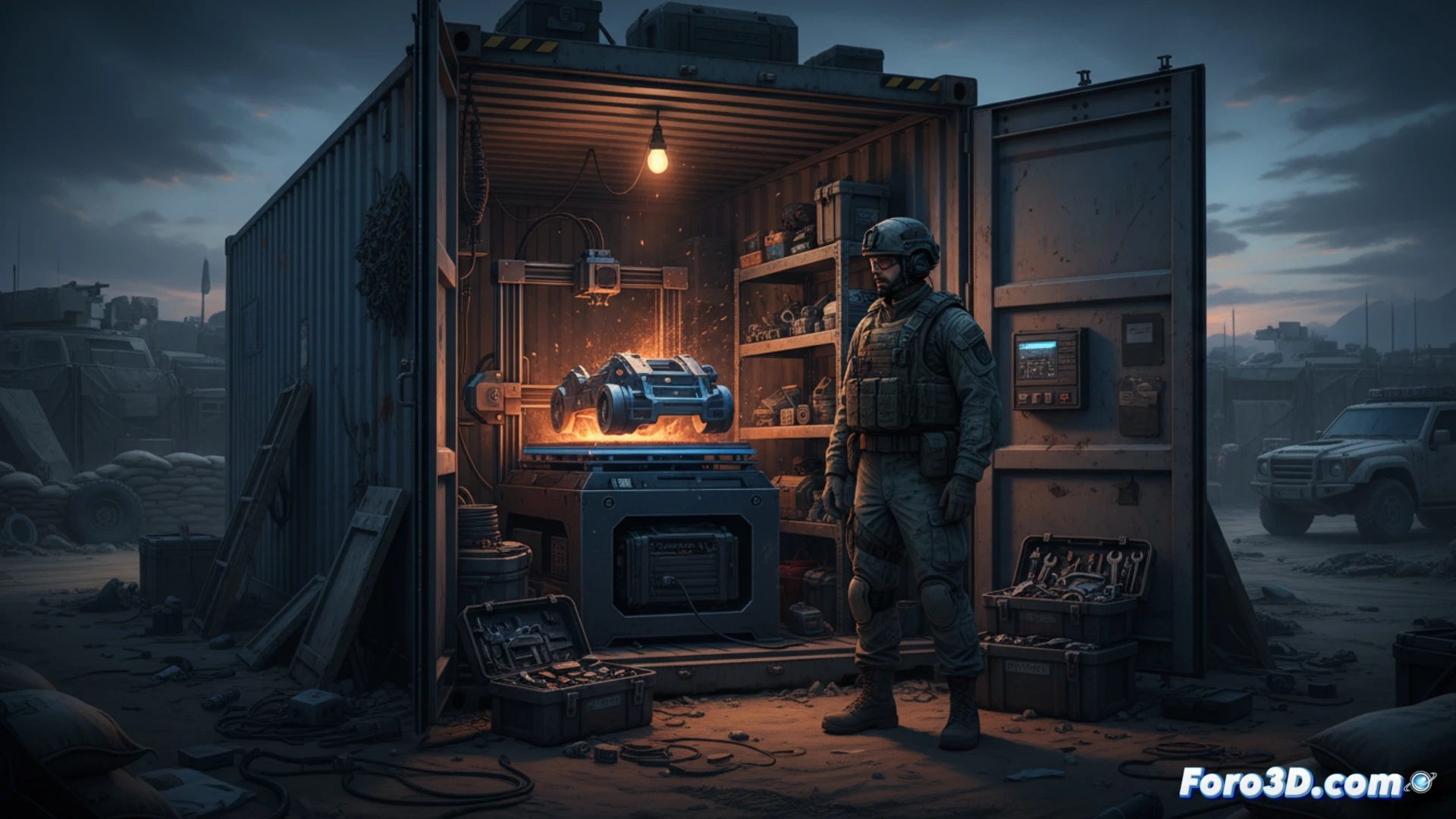
3D Printing in Combat: Manufacturing Spare Parts on the Battlefield
Imagine a high-risk situation where an essential component of military equipment fails. Instead of managing a shipment that takes weeks, a specialist can produce the part on-site with a 3D printer in just a few hours. This is the concept being evaluated by the U.S. armed forces along with their allies. It equates to deploying a mobile and extremely versatile manufacturing workshop that generates whatever is needed on the spot. 🛠️
Revolutionizing Frontline Logistical Support
The initiative focuses on making on-demand repairs directly in the operational zone. The goal is to minimize waiting times as much as possible, a critical factor in combat scenarios. Bringing robust additive manufacturing equipment close to the front lines allows for the immediate creation of tools, adapters, or non-structural components. This minimizes the logistics chain and the need for distant depots.
Key advantages of this approach:- Reduce downtime: Vehicles or systems are repaired in hours, not days or weeks.
- Decrease logistical footprint: Fewer physical spare parts are transported, optimizing space and transport.
- Increase autonomy: Units gain independence to solve technical problems without waiting for reinforcements.
The paradigm shifts from "waiting for the supply convoy" to "building it ourselves here."
Beyond Plastic: Materials and the Digital Challenge
The technology is not limited to printing with basic polymers. These advanced machines can process metal alloys and high-strength composites designed for extreme environments. However, the main obstacle is not the printer, but having the appropriate and protected digital design files. For this reason, a substantial effort is directed toward creating and maintaining a centralized digital library of certified components, where a soldier can access and "print" a spare part with the ease of downloading a file.
Critical elements for implementation:- Develop a secure library: A digital repository with validated blueprints for thousands of parts.
- Ensure quality: Guarantee that every manufactured component meets strength and functionality standards.
- Protect data: Implement cybersecurity measures so that files are not intercepted or altered.
A Strategic Mindset Shift
This adoption marks a profound transformation in how maintenance and supply are conceived in military operations. The same technology that popularized creating prototypes and decorative figures is now consolidating as a first-order tactical asset. The next evolution in the defense industry could very well wear camouflage uniform, demonstrating that innovation knows no boundaries. 🪖