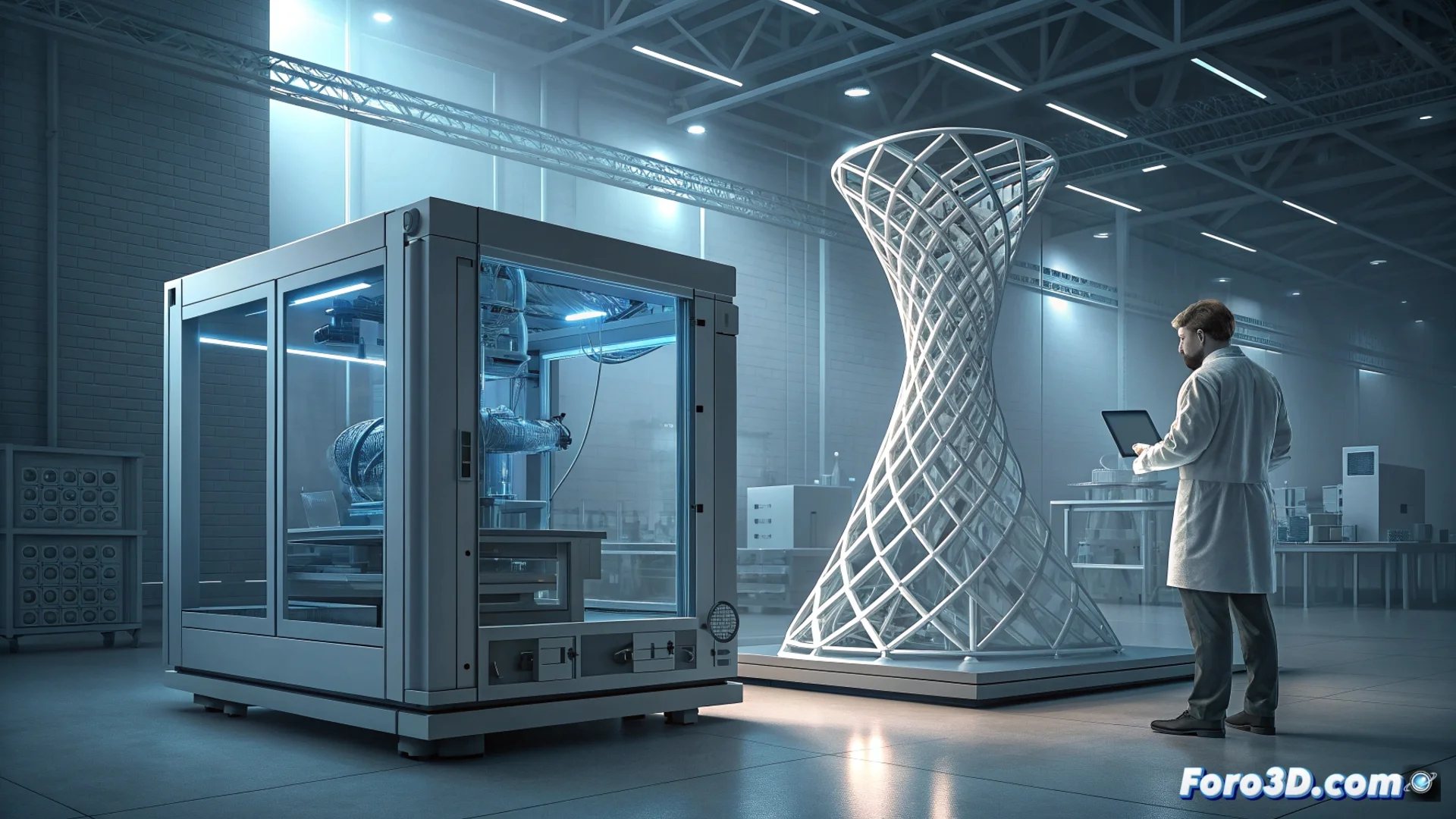
Metal 3D Printing Scales from the Lab to Military Aviation
The technology for printing objects in metal is taking a crucial leap, leaving its experimental phase to integrate into high-demand sectors. One of the fields driving this change the most is defense, where the need to produce lightweight and complex components is constant. 🚀
A Strategic Project with Military Funding
A research institute located in Dayton has received a grant close to half a million dollars. These funds, from a U.S. Air Force program and administered by the America Makes alliance and the NCDMM, have a precise goal: make metal manufacturing via 3D printing more economical and faster. The ultimate goal is to apply these advances in the defense supply chain, although the benefits will extend to industry in general.
The Pillars of the Research:- Reduce Costs: Seeking methods to make producing each part less expensive, a decisive factor for its mass adoption.
- Accelerate Timelines: Optimize processes to shorten the total time, from digital design to the final part.
- Validate the Technology: Demonstrate that it is a reliable alternative to conventional manufacturing methods like machining or casting.
The challenge is not just to print a part, but to ensure that the 100th part is identical and as reliable as the first.
The Real Challenge: Consistency and Trust
Beyond creating a prototype, the main obstacle lies in achieving uniform quality and ensuring the process can be repeated with absolute precision. It is similar to guaranteeing that every unit of a critical component, like a turbine blade, meets the same standards of strength and performance. For this reason, the study focuses on mastering the process parameters and material behavior so that every printed part inspires the same trust as one made traditionally.
Key Aspects for Certification:- Process Control: Monitor every variable (temperature, speed, atmosphere) to avoid deviations.
- Material Characterization: Understand how the metal behaves in each layer to predict its final performance.
- Inspection and Testing: Develop effective non-destructive methods to verify the integrity of parts without damaging them.
A Future Built Layer by Layer
This advance points to a clear direction: the manufacturing of the most sophisticated components could depend less on large industrial plants and more on specialized printers and digital design files. The evolution from home plastic printers to systems that build functional aircraft parts underscores the transformative potential of additive manufacturing. 🔧