A team from the University of Crete presents a biofabrication method that uses curcumin, the compound from turmeric, to print 3D hydrogel scaffolds. This substance acts as a photoinitiator in two-photon polymerization, enabling the creation of complex structures for tissue engineering. Its main advantage is a dual function: it initiates the curing reaction and provides inherent antibacterial properties without additional steps.
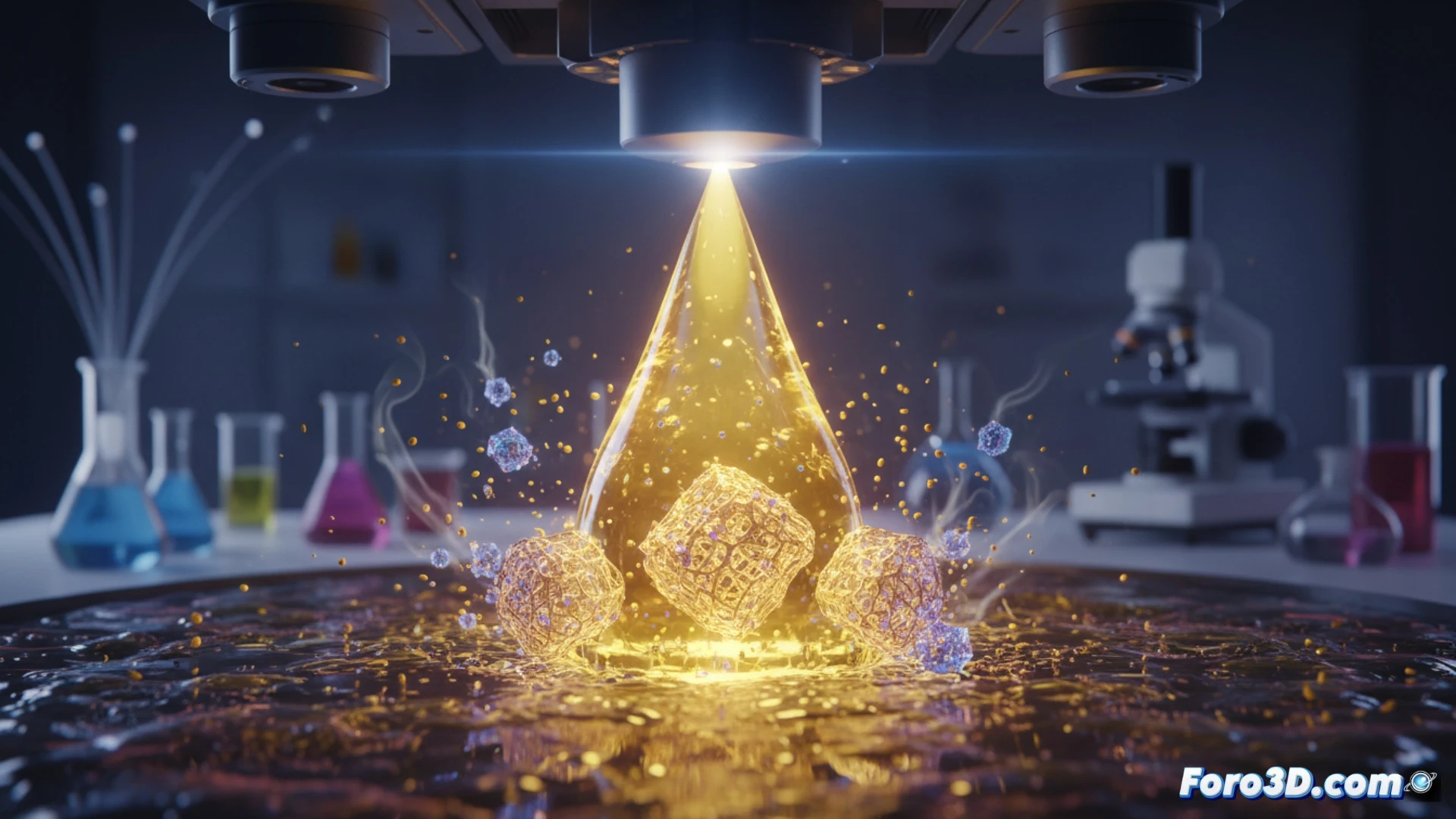
Polymerization Mechanism and Technical Advantages of the System ⚙️
The process uses GelMA (methacrylated gelatin) as the base biomaterial. The incorporated curcumin shows significantly enhanced non-linear absorption compared to laser light. This feature allows the use of lower laser intensities and increased scanning speed during printing, reducing the risk of thermal damage to cells. The technique demonstrated its precision by fabricating complex porous structures, such as TPMS (triply periodic minimal surfaces) geometries.
From Curry Spice to Lab: The Rise of a "Gourmet" Initiator 🌶️
It seems the secret to cutting-edge bioprinting was hidden on the spice rack. While others struggle with complex synthetic compounds, these researchers have found a partner in the kitchen. Now, a scaffold for tissue regeneration will not only be biocompatible, but it will probably smell like curry. One wonders if the next step will be printing structures with garlic to repel bacteria... and some colleagues.