The design of the first Pokémon is a study in visual effectiveness under strict limitations. The monochrome palette and limited Game Boy memory forced the creation of creatures with recognizable silhouettes and animations using few sprites. This discipline forged a solid foundation, where every pixel mattered. For the 3D artist, analyzing this evolution from pixels to complex models reveals timeless principles of readability and shape coherence.
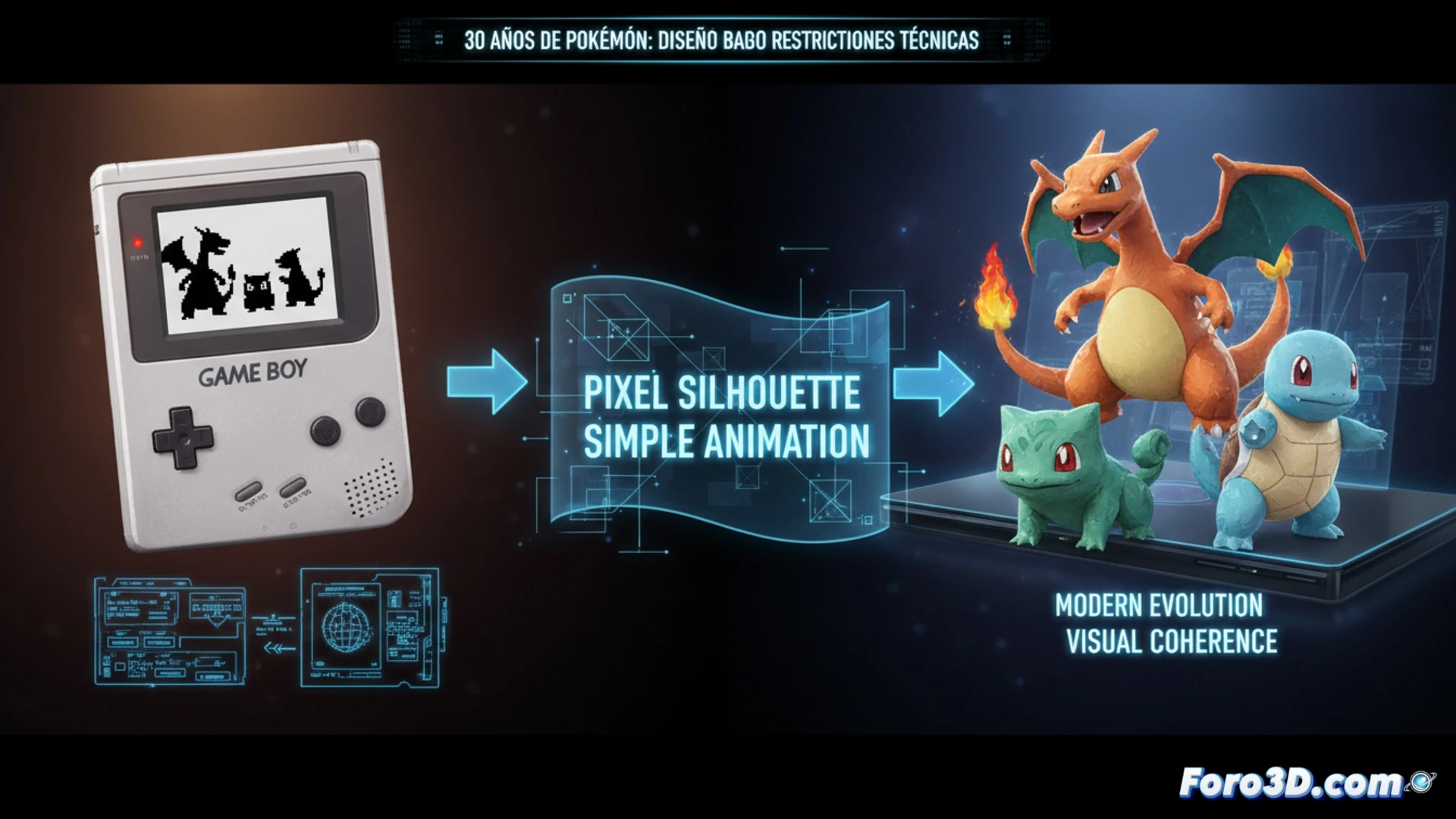
From 8 Bits to Polygonal Mesh: Lessons in Readability 🧩
Technical limitation was a creative engine. Without color or detail, a Pokémon's identity depended on its outline and a few clear animation frames. This translates directly to 3D: a good mesh must be recognizable from any angle, with a topology that allows clean deformations. The evolution to 3D models maintained those iconic silhouettes, demonstrating that a solid design works in any medium, whether for a game or for 3D printing.
When a Misplaced Pixel Gives You a Voltorb Instead of a Poké Ball 💥
Imagine the stress of the first designers: moving a single pixel could turn a friendly sphere into a bomb with eyes. Today, with millions of polygons and 4K textures, the risk is different. A vertex out of place in your ZBrush and your adorable 3D pet ends up with the expression of an angry Gyarados. The constraints of yesteryear remind us that, sometimes, having all tools freely available is the real challenge to not lose focus on the essential form.