The National Gallery in London presents an exhibition of fifty works by Francisco de Zurbarán, the 17th-century master. The show reveals his most innovative side, moving away from religious themes to explore still lifes and portraits. His ability to capture textures, lights, and shadows offers an almost tactile realism that defies the passage of time.
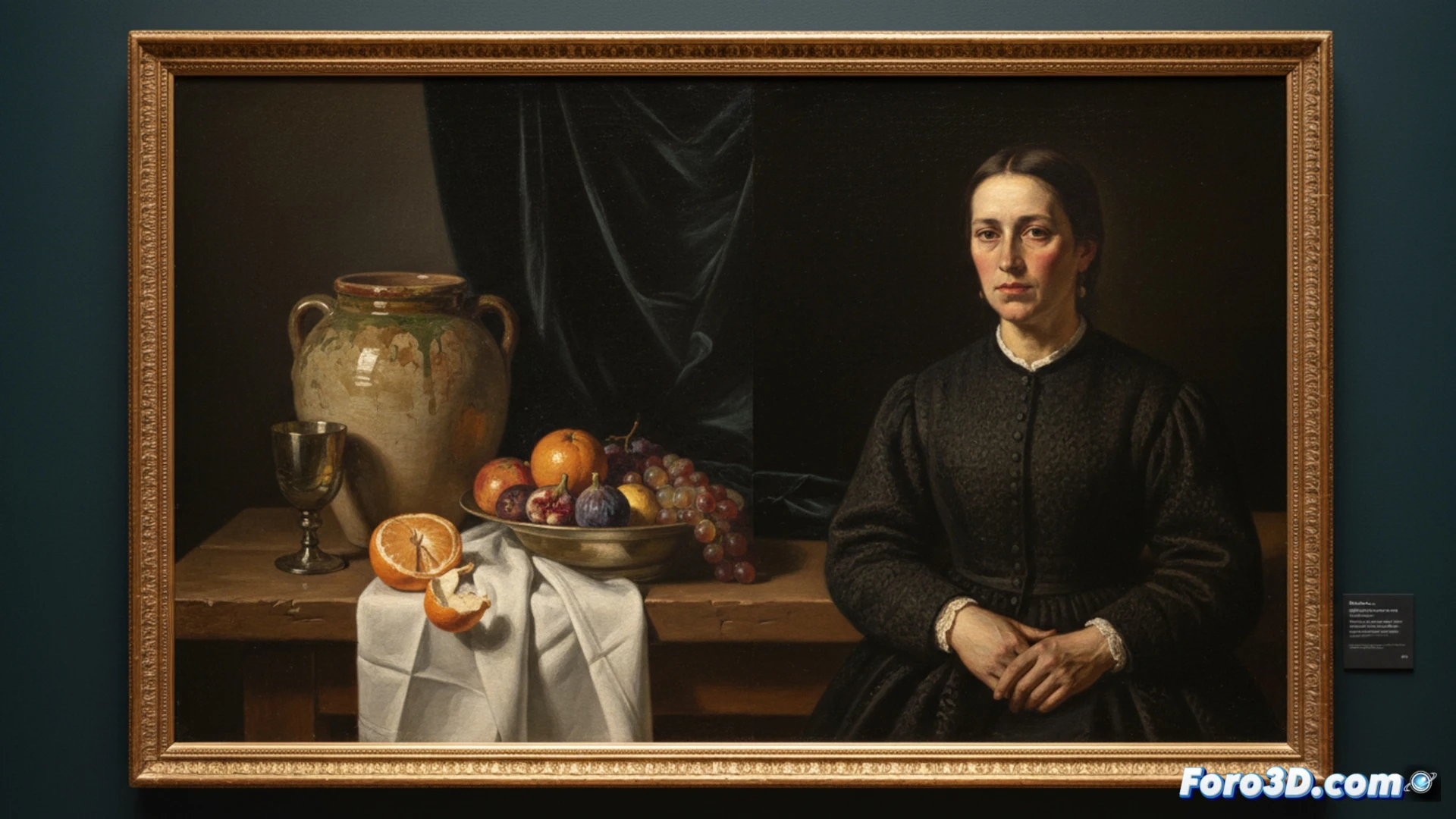
The Baroque pixel: how Zurbarán anticipated texture rendering 🎨
Zurbarán's technique anticipated modern concepts of lighting and texturing. His use of chiaroscuro creates a contrast similar to shadow mapping in 3D graphics. Every fold of a habit or the roughness of a still life applies principles of reflectance and diffusion that we now replicate with algorithms. The painter achieved that realism without a GPU, only with a brush and the patience of an ox.
The saint who went still life and never came back 🍋
It turns out that Zurbarán, the king of saints and martyrs, also painted quinces and lemons with the same devotion. The exhibition shows that the Extremaduran was an obsessive perfectionist: if he were alive today, he would surely be tweaking the shine of an apple in Photoshop until all hours. Good thing he didn't have access to Instagram filters, or he would never have finished a painting.