In visual effects, creature creation demands a complex balance. On one hand, scientific precision is sought to achieve naturalistic behavior. On the other, artistic freedom is key to bringing purely invented beings to life. This dual process defines the final credibility of the character, where every animation decision must serve both biology and narrative.
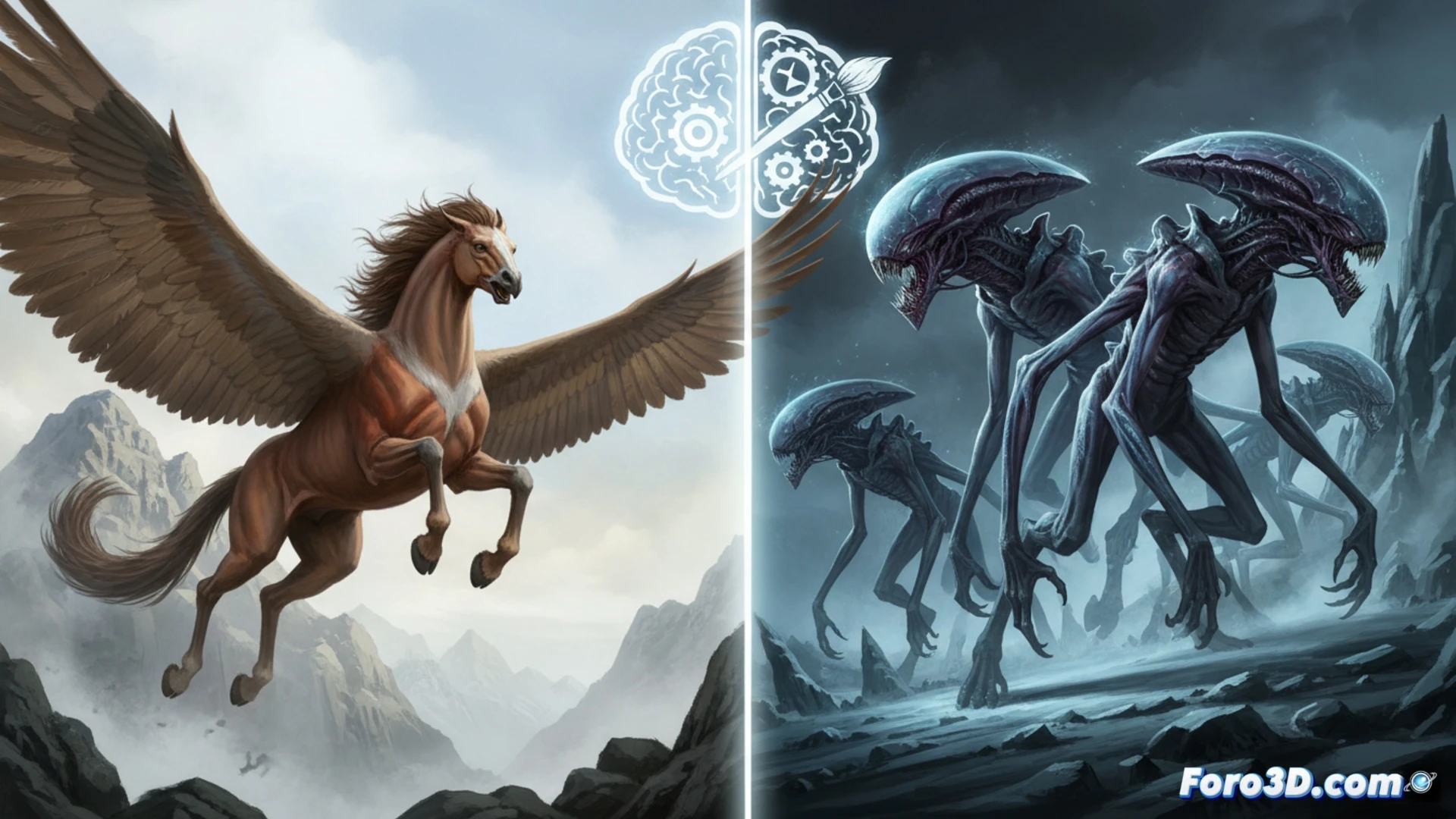
From Functional Anatomy to Emotional Arc: A Dual Pipeline 🦴
The approach varies depending on the creature's basis. For beings with real-world analogs, like the hippogriff, zoology is studied to mimic believable movements and reactions. For original creatures, like the Creepers from Mickey 17, the process is reversed: it starts from the story and tone. A logical anatomy is designed from their environment and function, mixing traits from various animals to build a personality and an emotional arc that the audience can follow.
When the Rigging Department Needs a Biologist on the Payroll 🧬
It's curious to think that an animator must be a bit of an ethologist, a bit of a surgeon, and a bit of a storyteller. They spend hours discussing the muscle insertion of an alien that doesn't exist, or the feather-light weight of a dragon that, of course, flies in an aerodynamically questionable way. In the end, the greatest challenge is not making the creature seem real, but preventing it from attracting the attention of the bioethics committee for its excessive realism.