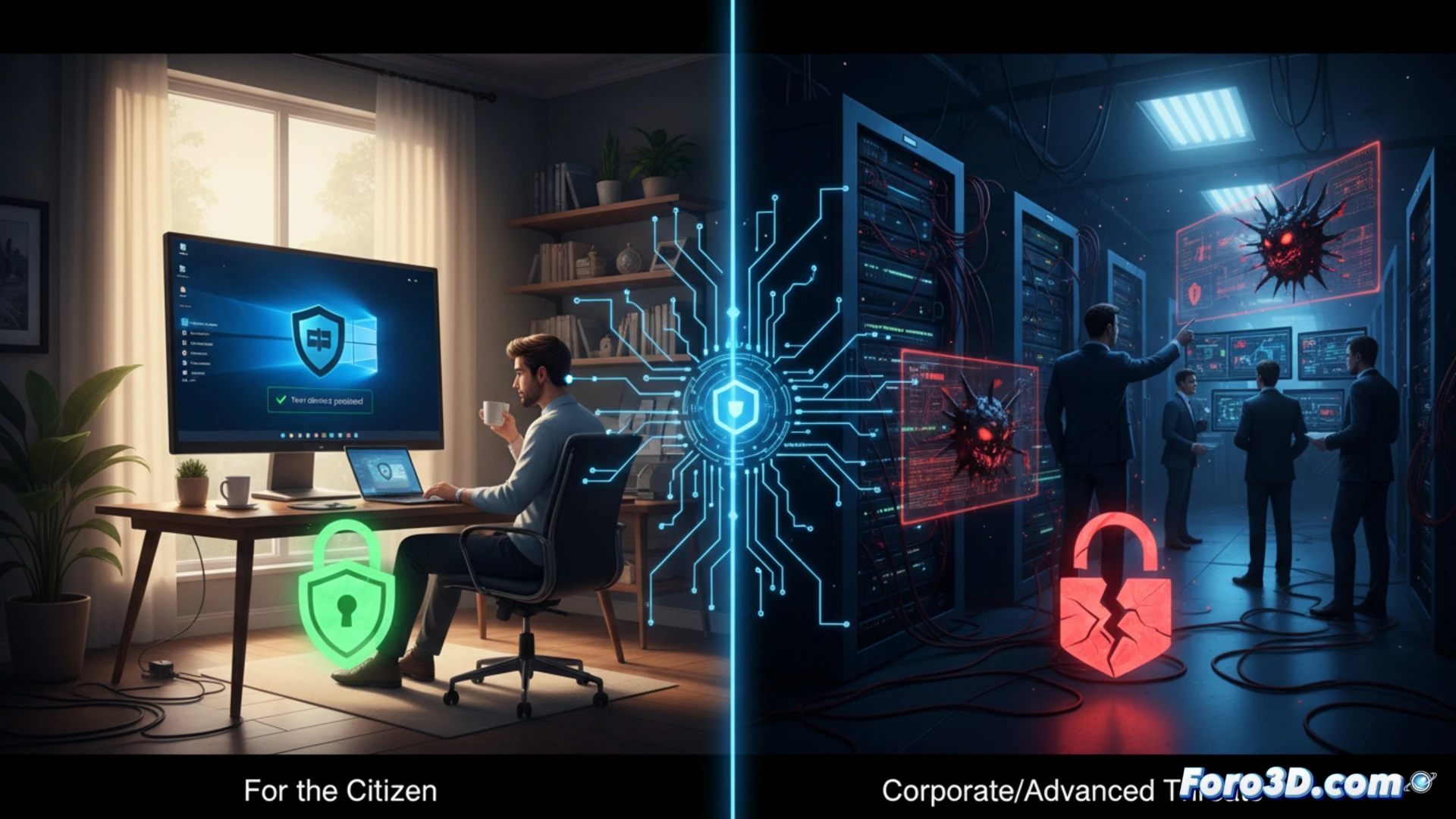
Microsoft Defender comes integrated in Windows 11 promising basic security sufficient for the home user. Microsoft's proposal is clear: with an updated and well-configured system, you don't need to install anything else. This simplifies life and saves money, but raises doubts about its real effectiveness against more complex threats.
Defender Under the Hood: Analysis of Its Protection Engine 🛡️
Defender uses a cloud-based analysis engine and machine learning to detect malware in real time. Its integration with the system allows for lower resource consumption compared to third-party suites. However, in independent lab tests, its zero-day threat detection rate is lower than that of specialized solutions. For corporate use or exposure to advanced risks, it is still advisable to have additional layers of security.
The Antivirus That Doesn't Ask for an Appointment, But Still Lets You Down 😅
Defender is that friend who is always there, but when the real party arrives, he falls asleep on the sofa. It protects you from typical 90s viruses, but if a modern ransomware knocks on your door, you might have to dance with the ugliest one. At least it doesn't insist every month that you renew the license, which is already a nice touch.