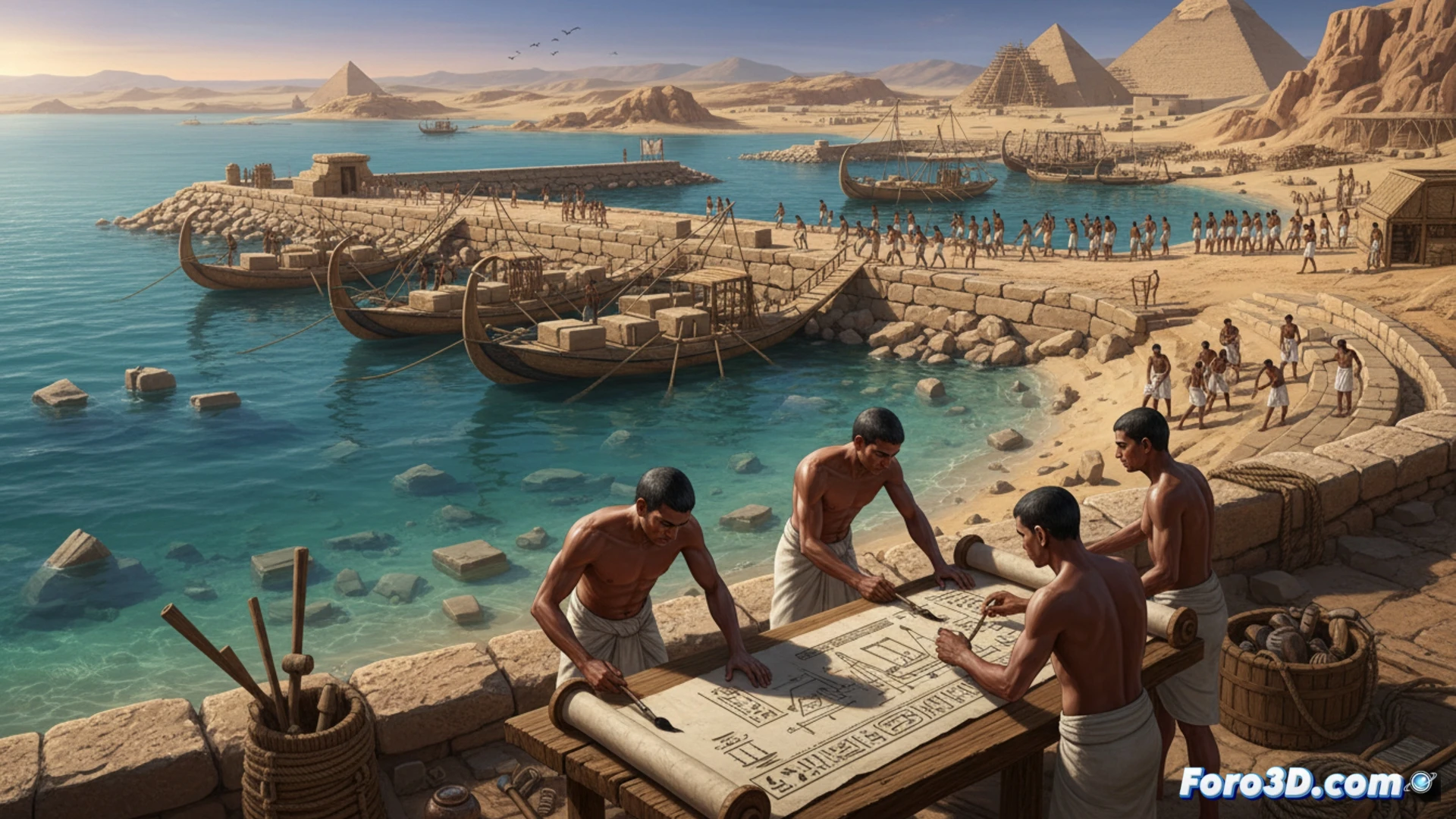
On the coast of the Red Sea, the Wadi el-Jarf site houses an artificial port from the 4th Dynasty. Its dating places it as one of the oldest known port infrastructures. Its relevance increased with the discovery of the Merer Papyri, administrative documents detailing the transport of materials for the construction of the Great Pyramid of Khufu.
Logistics and Administration in the Pyramid Era 📋
The port functioned as a key logistical node. The papyri, written by an inspector named Merer, describe operations for transporting limestone blocks from Tura to Giza using the Nile and canals. These records detail the organization of crews, the frequency of trips, and the provisioning system, showing an efficient bureaucracy. The port's infrastructure included warehouses and galleries carved into the rock.
The First 'Project Manager' Who Left His Paperwork 📝
Imagine Merer, a foreman in ancient Egypt, filling out expense reports on papyrus after a long day moving tons of stone. No email, just ink and reed. His meticulous accounting, intended to justify the use of ropes and bread, is now a window into the greatest pharaonic project. A reminder that, in the end, even the grandest projects depend on someone jotting down the numbers in a notebook.