A study in mice has discovered that respiratory syncytial virus (RSV), which causes a common cold, can delay the spread of breast cancer to the lungs. The mechanism is based on the immune response: by infecting lung tissue, antiviral proteins are released that accidentally block the anchoring of cancer cells. This finding opens the door to new therapies that mimic this protective effect without the need for a real infection.
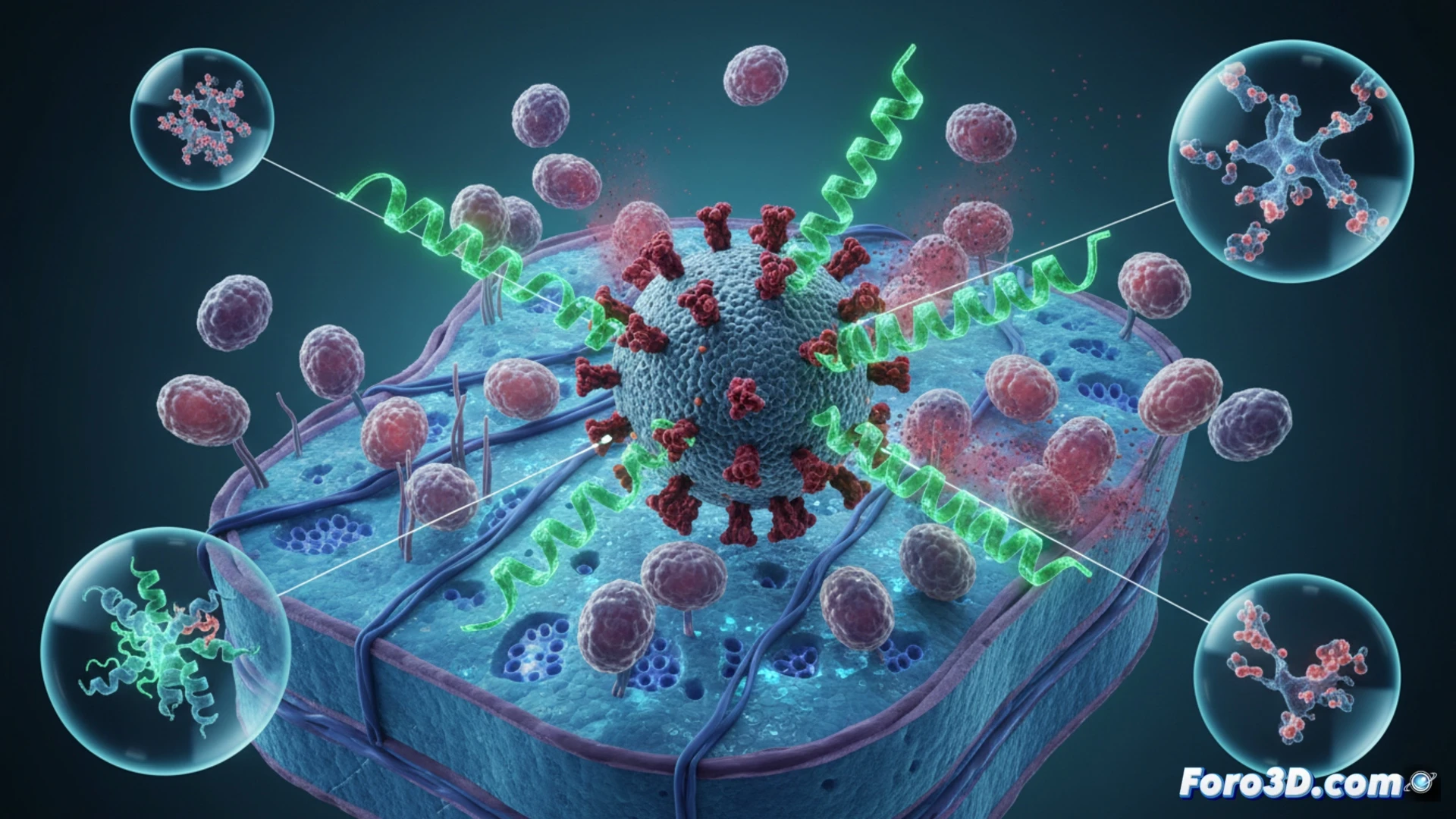
3D molecular visualization of the lung microenvironment 🔬
To understand this phenomenon, researchers turn to three-dimensional modeling of the tumor microenvironment. Through computer simulations and 3D bioprinting, it is possible to recreate human lung tissue and observe how antiviral proteins, such as interferons, interact with breast cancer cells. These representations allow for a detailed visualization of the physical barrier that prevents the formation of metastases. In the future, 3D models of RSV-infected lungs could be used to test drugs that activate that same immune response, accelerating the development of preventive strategies against metastasis.
From infection to prevention: the power of modeling 🧬
This study not only reveals an unexpected connection between a common virus and cancer but also demonstrates how 3D technology is essential for translating these discoveries. The ability to 3D print organs with tumor microenvironments and simulate immune dynamics allows scientists to explore therapies without exposing patients to risks. The key question now is whether we can design synthetic molecules that mimic those antiviral proteins, a goal that bioprinting and molecular modeling are bringing ever closer to clinical reality.
How can 3D models of tumor microenvironments reveal the immune mechanisms of RSV to halt breast metastasis in mice?
(PS: If you 3D print a heart, make sure it beats... or at least that it doesn't cause copyright issues.)