The Methana volcano in Greece had not erupted for over 100,000 years and was considered extinct. However, a study by ETH Zurich has revealed that beneath its surface, water-rich magma accumulated for millennia in deep chambers. This finding demonstrates that surface calm does not equal safety, and opens the door to new simulation tools for assessing real risks.
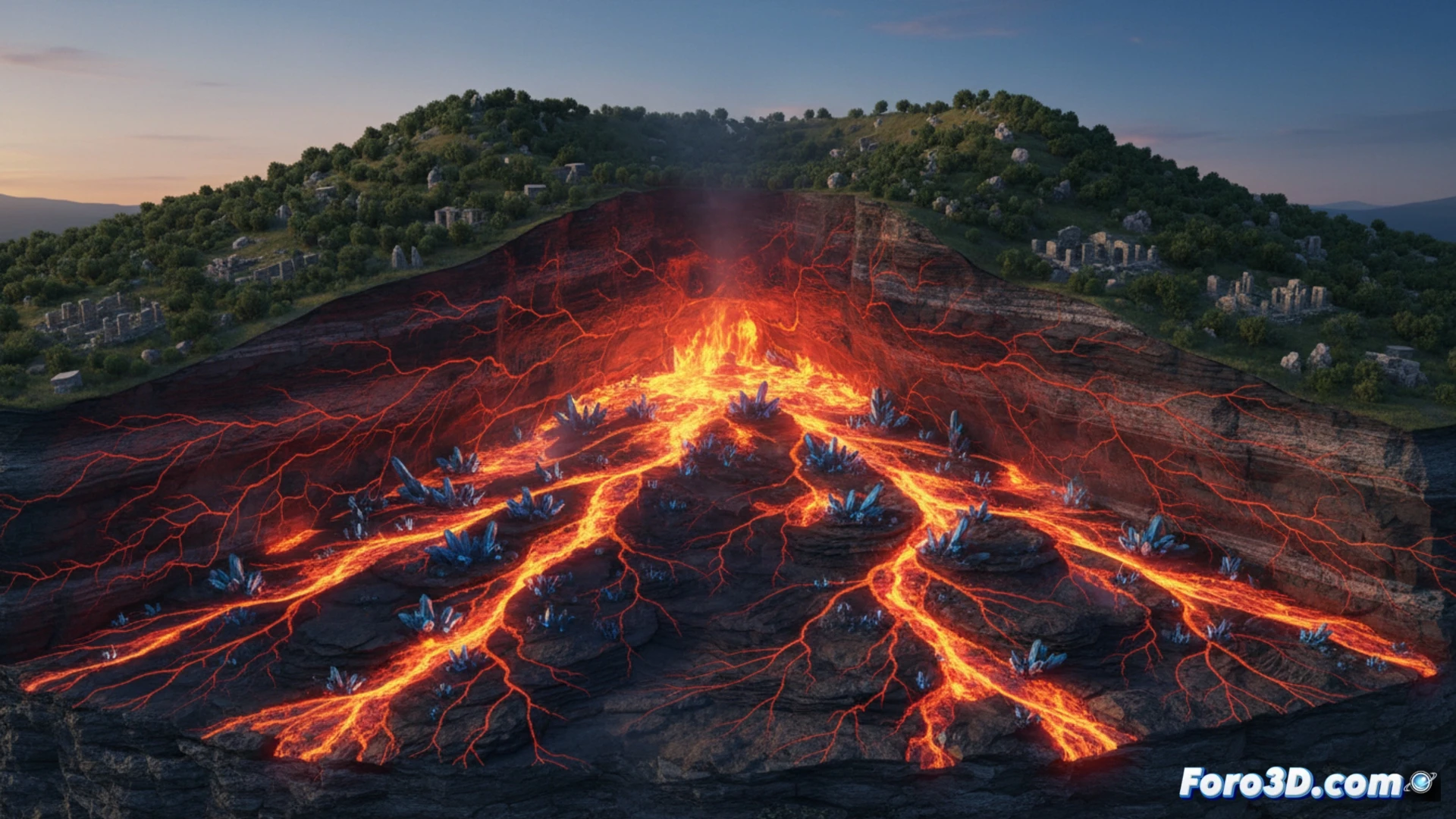
3D modeling of magma chambers and zircon crystals 🌋
The analysis of over 1,250 zircon crystals has allowed the reconstruction of 700,000 years of geological history. These crystals act as time recorders, indicating that water-rich magma crystallized at depth, slowing its ascent. Current 3D technologies allow simulating this process: from volumetric visualization of the magma chamber to fluid dynamics modeling the flow of water-rich magma. With these tools, volcanologists can recreate latent eruptive scenarios, identifying pressure points and potential ascent pathways that are not detectable with traditional methods.
Rethinking risk assessment with predictive simulations 🔍
The research shows that a volcano can breathe underground for millennia and reactivate with little warning. Here, 3D infographics and dynamic hazard maps are essential for communicating risk to authorities and the public. By integrating zircon crystal data into three-dimensional models, we can anticipate how an eruption would evolve after a long silence, improving prevention protocols in regions like the Mediterranean.
How can 3D modeling of latent magma in silent volcanoes like Methana help predict unexpected eruptions that could trigger global catastrophes?
(PS: Simulating catastrophes is fun until the computer crashes and you are the catastrophe.)