In 2001, a strange phenomenon stained the skies of southern India red. For weeks, the red rain of Kerala puzzled scientists and citizens, sparking a debate about its origin that swung between terrestrial and extraterrestrial. This event is a perfect case study for scientific visualization, where 3D modeling becomes a key tool to unravel, analyze, and communicate complex hypotheses in a clear and accessible way.
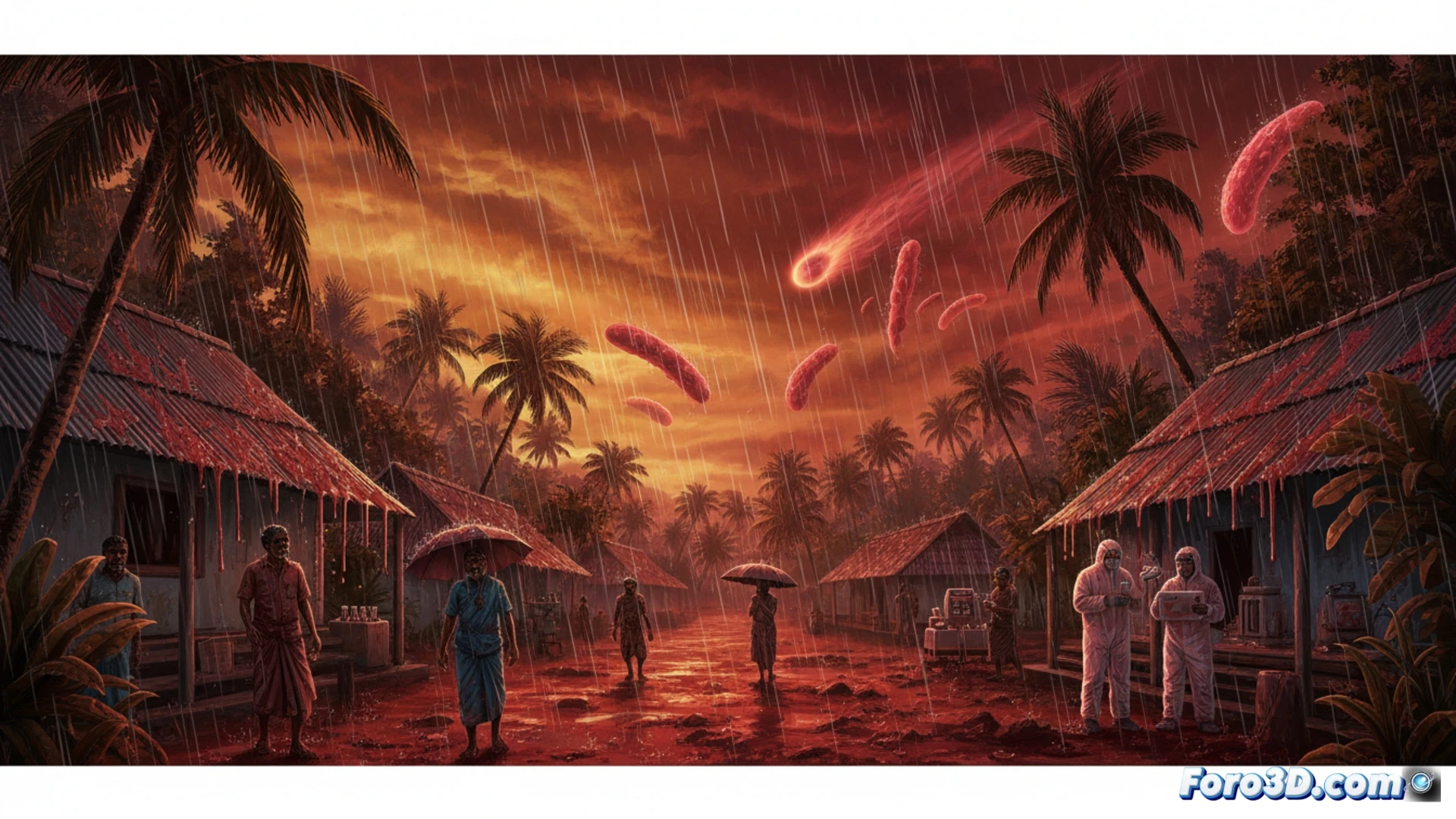
3D Modeling of a Drop of Mystery 🔬
The key to understanding this phenomenon lies in its microscopic composition. An interactive 3D model of a red rain droplet would be fundamental. We could dissect it into visual layers, representing each theory: one layer with red spherical particles simulating terrestrial algae spores, like Trentepohlia; another with more complex cellular structures for the hypothesis of unusual microorganisms; and even a layer with exotic geometries for the controversial extraterrestrial origin theory. This layered visualization would allow for comparing and contrasting the scientific proposals at a glance.
Beyond the Microscope: Context and Chronology 🗺️
The visualization must scale to encompass the entire phenomenon. A 3D infographic of the Kerala region, overlaying the density and intensity of the rain events, would provide geographical context. Integrating an interactive timeline that correlates the dates of rainfall with atmospheric data would help analyze patterns. Finally, a 3D nodal diagram could map the relationships between the different theories, evidence, and scientists involved, transforming a complex debate into an explorable landscape of knowledge.
How can the scientific visualization of atmospheric and biological data help validate or refute the hypothesis of extraterrestrial microorganisms in the case of the red rain of Kerala?
(PS: modeling manta rays is easy, the hard part is making them not look like plastic bags floating)