Cybersecurity analysts have identified a critical flaw in the VECT 2.0 operation. This malware, which attacks Windows, Linux, and ESXi systems, does not encrypt large files: it completely destroys them. The error in its encryption implementation prevents data recovery, even if the victim pays the ransom.
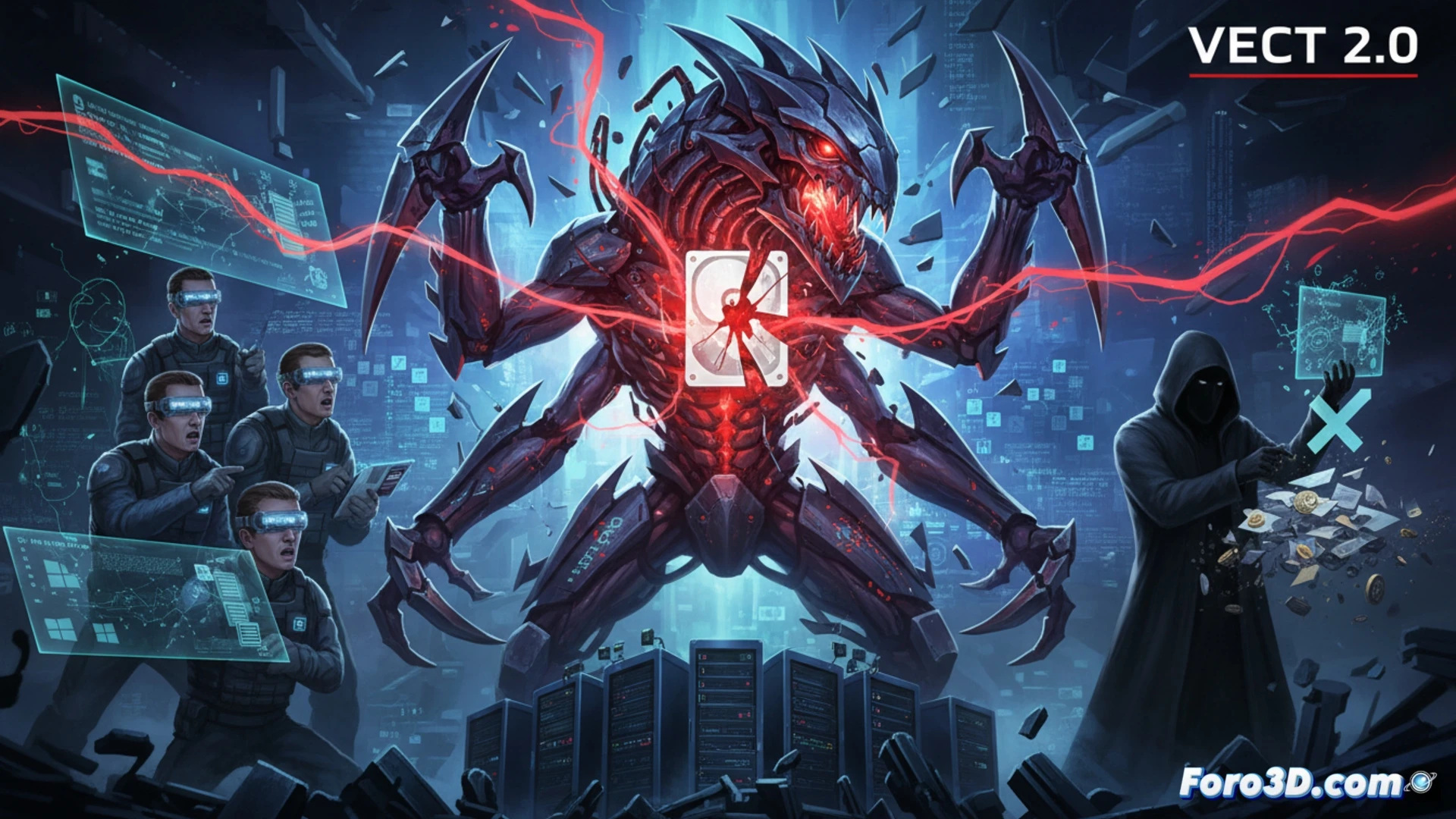
An encryption that only knows how to delete 💀
The flaw lies in VECT 2.0's encryption module. When processing files that exceed a certain threshold, the ransomware blocker skips encryption and executes an irreversible deletion routine. This turns the malware into a data destroyer, not a kidnapper. The developers did not anticipate this condition, leaving victims with no possibility of restoration, whether they pay or not.
Paying for a ransom that doesn't exist 🚫
The cybercriminals behind VECT 2.0 demand ransom for data that no longer exists. It's like selling a car without wheels: the buyer pays, but gets nowhere. At least the attackers save themselves the trouble of maintaining decryption servers. A sweet deal for them, a complete disaster for their victims.