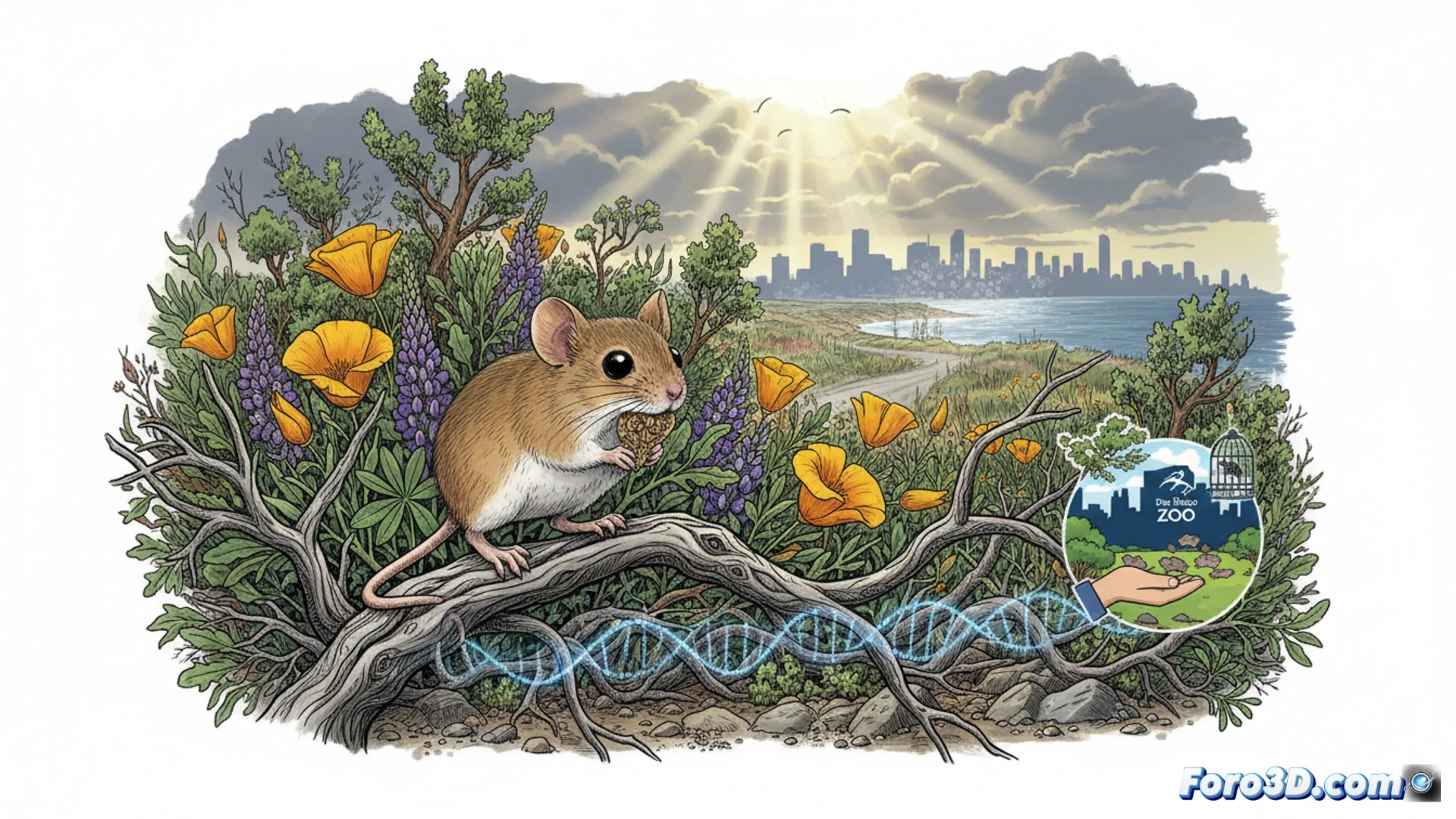
The Pacific pocket mouse, a critically endangered species on the California coast, faces an uncertain future. A recent study indicates that, despite its low numbers, it retains genetic diversity to adapt to the climate. The main problem is the fragmentation of its habitat due to urbanization, which isolates the three remaining populations. Captive breeding programs, like the one at the San Diego Zoo, aim to mix these lineages and reintroduce individuals.
Managing Genomic Data in Species Conservation 🧬
Genomic technology is key in this effort. Researchers sequence DNA from individuals of each isolated population to assess their variability. With this data, they model long-term viability and design pairings that maximize diversity in the offspring. This approach, similar to a biological database management plan, attempts to avoid inbreeding. Bioinformatics tools allow for simulating adaptation scenarios before releases.
A Rescue Plan with More Logistics Than a Startup Launch 🗓️
The operation has a level of detail that any tech project would envy. Coordinating the pairing of mice according to their genetic code, their controlled breeding, and their subsequent reinsertion is precision work. It looks like a product roadmap, but instead of features, genes are prioritized. They even have a pre-production habitat, the natural park, for field tests. A process where the MVP is, literally, a Minuscule Preserved Vertebrate.