Canonical has announced the integration of artificial intelligence features into Ubuntu, including accessibility tools such as speech-to-text and text-to-speech, as well as an agent to automate tasks and solve problems. The news has sparked concern among users who are requesting a switch to remove these features or a version of the system without them, fearing for privacy and system control.
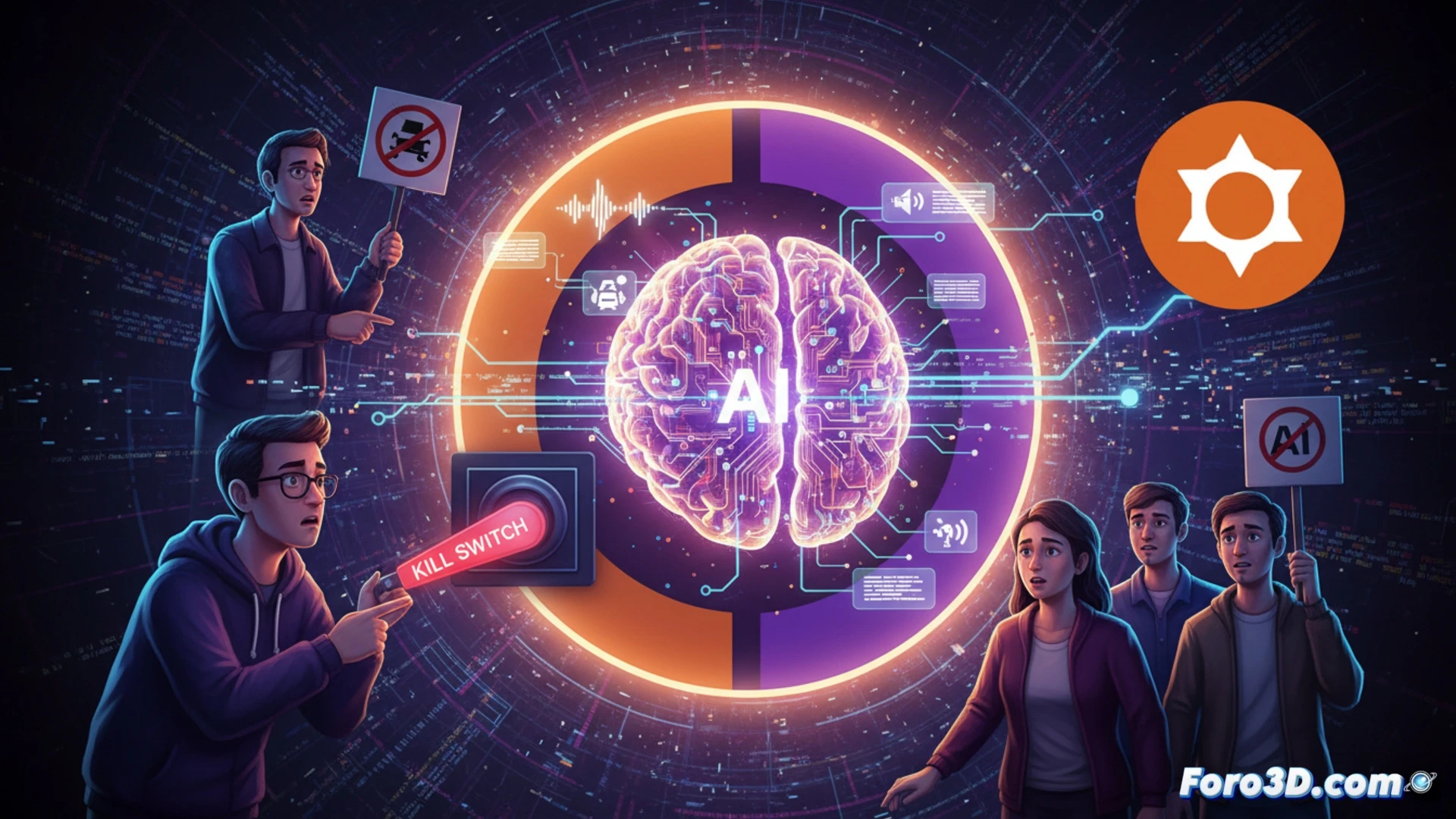
The inner workings of AI in the Ubuntu kernel 🤖
The new features rely on lightweight language models and libraries such as TensorFlow Lite, optimized to run locally on the user's hardware. The agent function uses system APIs to monitor processes and suggest commands, while the accessibility tools process audio and text in real time. Canonical assures that these modules are optional, but the community demands transparency regarding their default activation and resource consumption.
The assistant that tells you to turn off the fan 🌀
The best part is that, according to Canonical, its AI agent will be able to diagnose system problems. Imagine the dialogue: the agent detects that your CPU is at 90 degrees and suggests you manually turn off the fan. Or, upon not finding the trash, it recommends rebooting the kernel. Of course, if the AI decides your desktop is too slow, it might delete the graphical environment to save resources. This way, the user saves the time of thinking.