In the remote mountains of China, the mystery of the Baigong pipes has puzzled researchers and enthusiasts alike. These tubular structures, found in a cave and associated with the Baigong pyramid, are often cited as evidence of advanced ancient technology or even extraterrestrial intervention. However, beyond speculation, their rigorous scientific study has been limited. This is where digital archaeology emerges not as a tool of fantasy, but as the key methodology to transform mystery into an analyzable problem, documenting the evidence objectively and permanently. 🧐
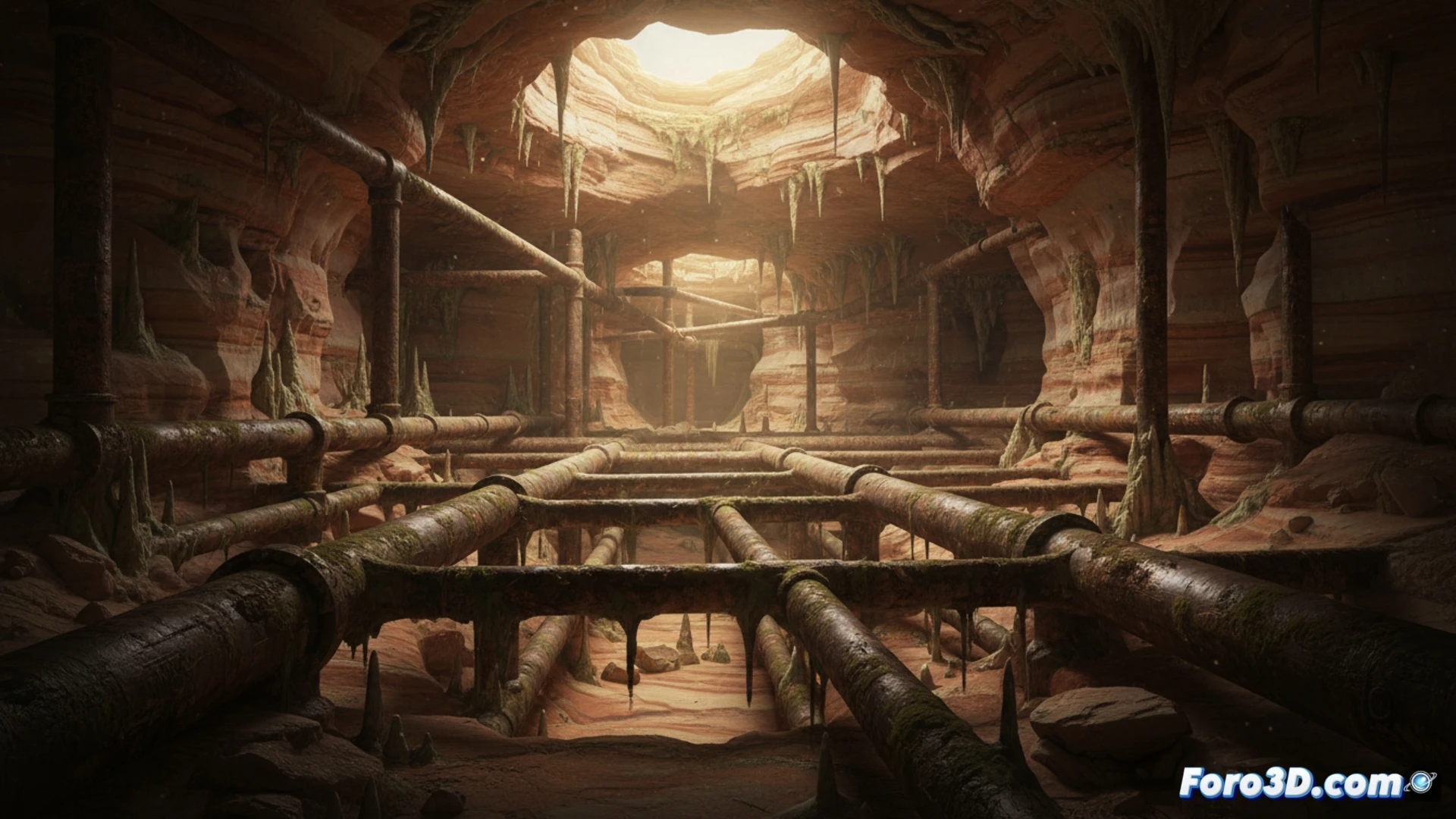
3D Scanning: Objective Documentation and Metrological Analysis 📐
The first fundamental contribution of 3D technologies is the capture of reality in situ. Using 3D laser scanners or high-resolution photogrammetry, an exact digital model of the cave and each of the pipes can be generated. This model not only preserves the current state of the find against any degradation but also allows for millimeter-precision measurements of diameters, thicknesses, alignments, and angles. A detailed 3D morphological analysis could reveal manufacturing patterns, such as tool marks or uniformities, impossible to appreciate with the naked eye. Comparing this data with 3D models of known ancient pipes, from casting or forging, would provide solid arguments to accept or dismiss a conventional human origin.
Beyond Capture: Simulation and Heritage Dissemination 🌐
The potential of the 3D model goes beyond static analysis. With precise volumetric data, flow simulations or structural resistance tests could be performed, evaluating hypothetical functions. Furthermore, these models facilitate global scientific collaboration, allowing experts from various disciplines to examine the same digital object without needing to travel. Finally, digital archaeology offers a path for responsible dissemination: instead of showing simple photographs that fuel the mystery, interactive and precise reconstructions can be shared, separating tangible evidence from speculative theories and fostering an informed debate.
How can digital archaeology, through techniques like 3D scanning and virtual material analysis, unravel the origin and function of the enigmatic Baigong pipes?
(PS: If you're excavating a site and find a USB drive, don't plug it in: it might be malware from the Romans.)