A study by ETH Zurich and the University of Wisconsin analyzed 30 global cities to decipher the relationship between urban development and traffic. Led by Yatao Zhang, the researchers correlated vehicle congestion with road networks, population density, and the location of services. The conclusion: public transport not only moves people, but also shapes cities.
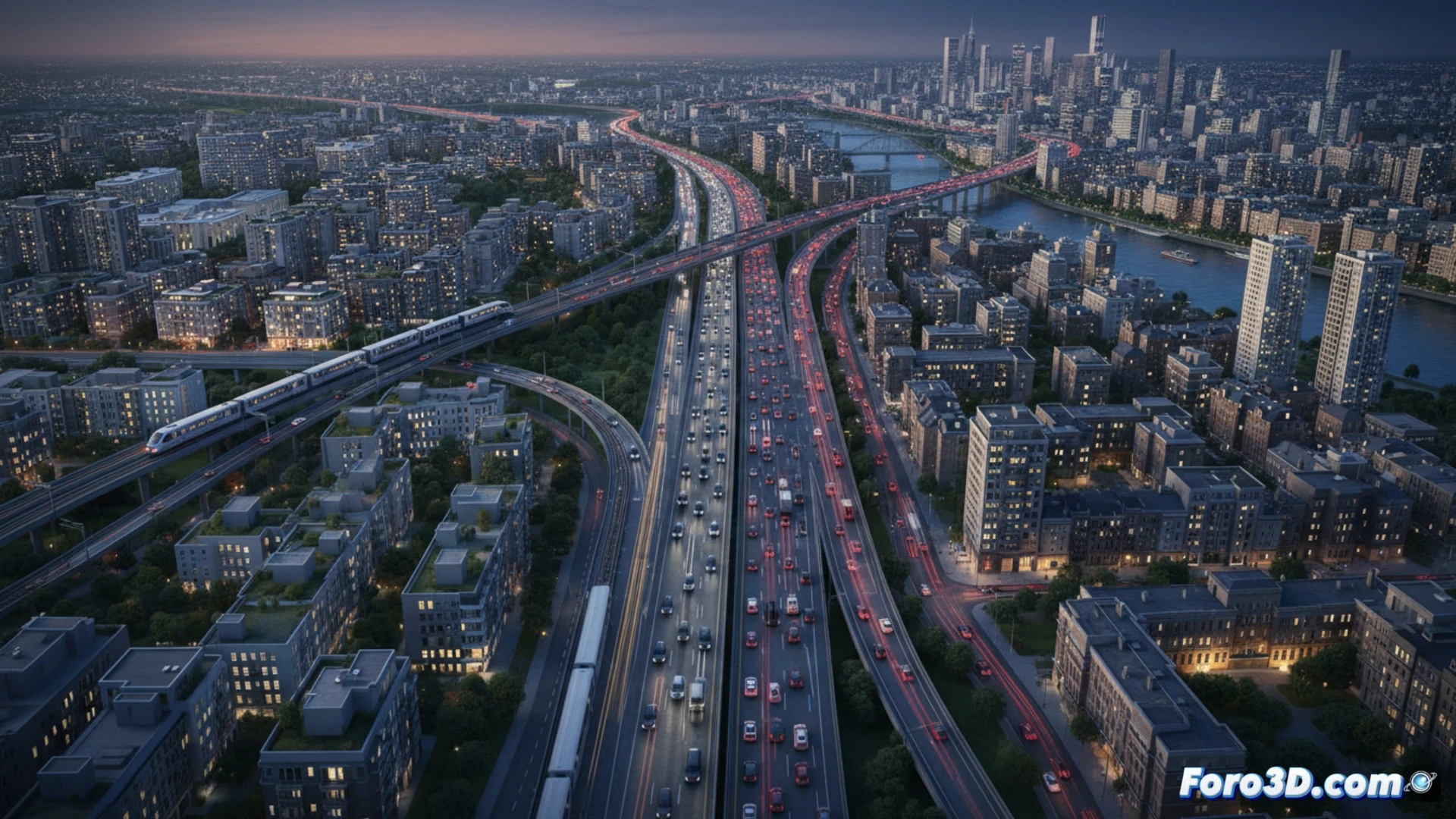
How suburban rail dictates urban growth 🚆
The study reveals that a suburban rail network encourages the construction of housing in well-connected peripheral areas, creating a cycle where public transport fuels expansion. In turn, each new residential development requires road improvements to avoid collapse. The data shows that cities with a higher density of services reduce car dependency, but the balance is fragile: if the train arrives, people move; if people move, the streets become saturated.
Traffic: the GPS nobody asked for to plan cities 🚦
In other words, to know where to build, you just need to see where there are more traffic jams. If the map turns red, it's time to lay roads; if it's green, it's time to bring the train. Urban planners could save on expensive studies: they just need to look out the window and count how many drivers are cursing. Of course, the study doesn't say what to do when the solution (more trains) causes the problem (more distant houses and more cars). Ironies of progress.