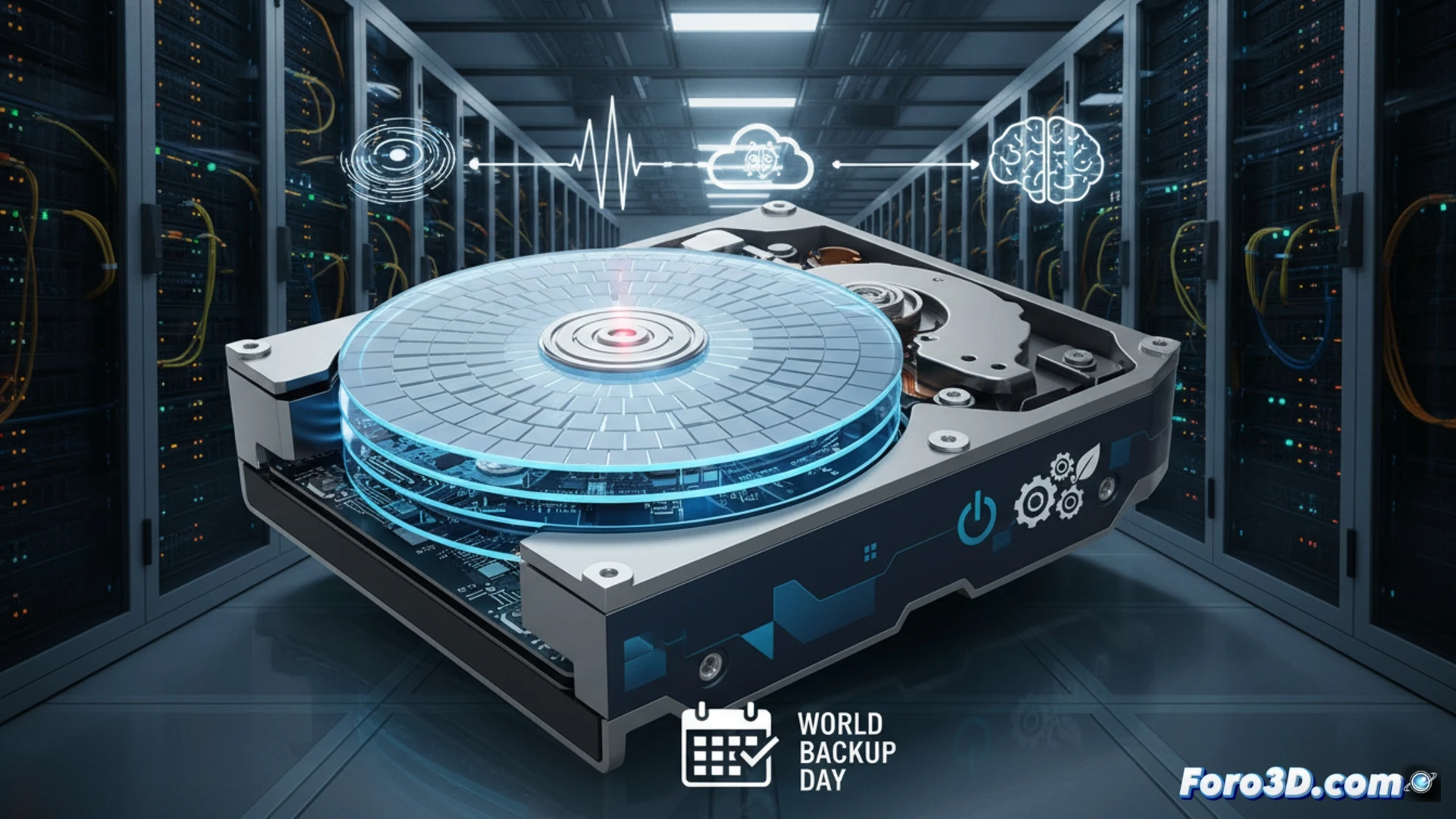
Toshiba has introduced its new 3.5-inch Nearline M12 hard drives, achieving record capacities of 30 and 34 TB. Designed for data centers, they use SMR technology and glass substrate to achieve this density. For the 3D professional, these figures are tempting for storing massive libraries of assets, textures, and completed projects. However, SMR technology involves write penalties that we must critically analyze for our specific workflow.
Technical Analysis: Massive Capacity vs. SMR Performance 📉
The key to the high capacity is Shingled Magnetic Recording (SMR). It works like overlapping shingles, maximizing data per platter, but rewriting sectors may require reordering adjacent blocks, slowing down random writes. In a 3D pipeline, this is crucial: writing thousands of small texture files would be slow. However, for sequential storage of large backup files, final renders, or video files, the impact is lesser. Energy efficiency is another strong point, reducing costs in always-on storage arrays. Compared to an NVMe SSD, it is much slower for active work, but its cost per TB is unmatched for cold or nearline storage.
Conclusion for the 3D Studio: Storage, Not Active Work 💾
These drives are not for active scenes or applications. Their ideal role in a studio is as secondary or tertiary massive storage. They are perfect for an automated backups server, to archive complete projects with all their assets, or for a central library of final renders and reference resources. If your need is pure capacity at low operational cost and the write flow is mainly sequential, they are a powerful option. For daily work, it remains essential to combine these HDDs with fast SSDs.
Do Toshiba's new 34 TB hard drives represent a significant change in managing large-scale 3D projects? 🚀
(P.S.: RAM is never enough, like coffees on a Monday morning)