The legend of the troubadour imprisoned in the tower of the Aljafería Palace is a persistent tale. This ghost, which according to tradition wanders the halls, offers a powerful emotional narrative. From the perspective of experience development, analyzing these folkloric elements is useful. They provide a rich narrative foundation for virtual reconstruction projects or augmented reality applications in historical settings.
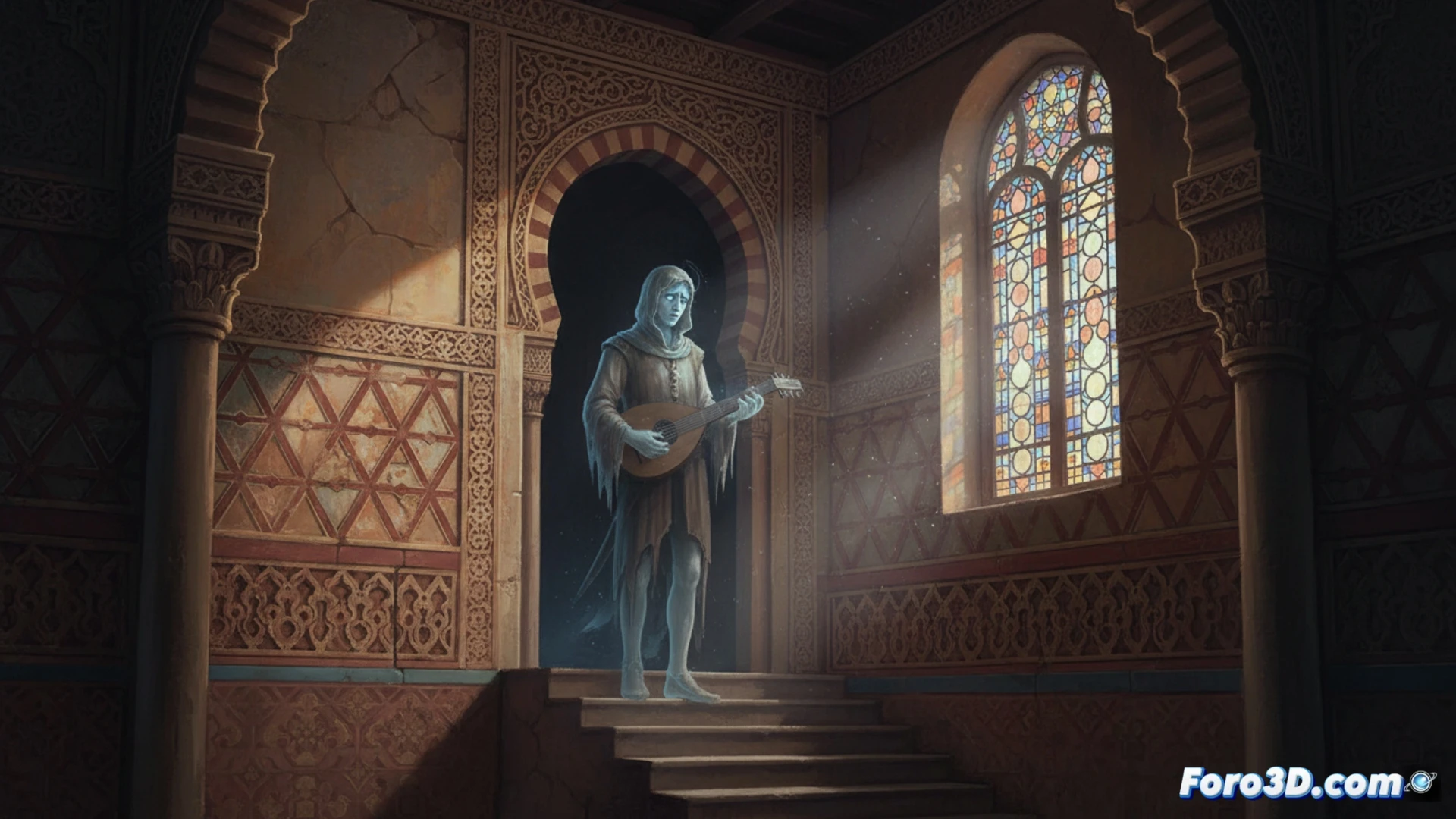
3D Reconstruction and Asset Management for Spectral Narratives 👻
To digitize a space like the Troubadour's Tower, precise laser scanning or photogrammetry of the rooms is required. The technical challenge lies in managing lighting and sound assets to suggest an invisible presence. Using particle systems for dust and fog, along with spatialized ambient sounds, creates the atmosphere. The integration of audio triggers in the engine, such as Unreal Engine 5, allows the sound experience to change based on the user's position, simulating the ghost's lament.
Debugging the Specter: When the Ghost Doesn't Respond to Triggers 🐛
Let's imagine the most frustrating bug: you've modeled the tower in detail, configured the audio systems and lighting effects, but the ghost doesn't appear where it should. You review the event code, the colliders, the state logic... everything seems correct. The conclusion is obvious: the problem is not with your software, it's with spectral compatibility. Perhaps the Medieval Ghosts SDK requires a spiritual communication protocol that your build does not support. Or simply, the troubadour is having a low-performance day and doesn't want to perform.