The food industry is about to undergo a radical transformation. Siemens engineers in Florida have presented what they call the first coffee of the future created through 3D printing. This milestone is not just a novelty, but a practical demonstration of how additive manufacturing can redefine personalization, efficiency, and the very experience of consuming food and beverages.
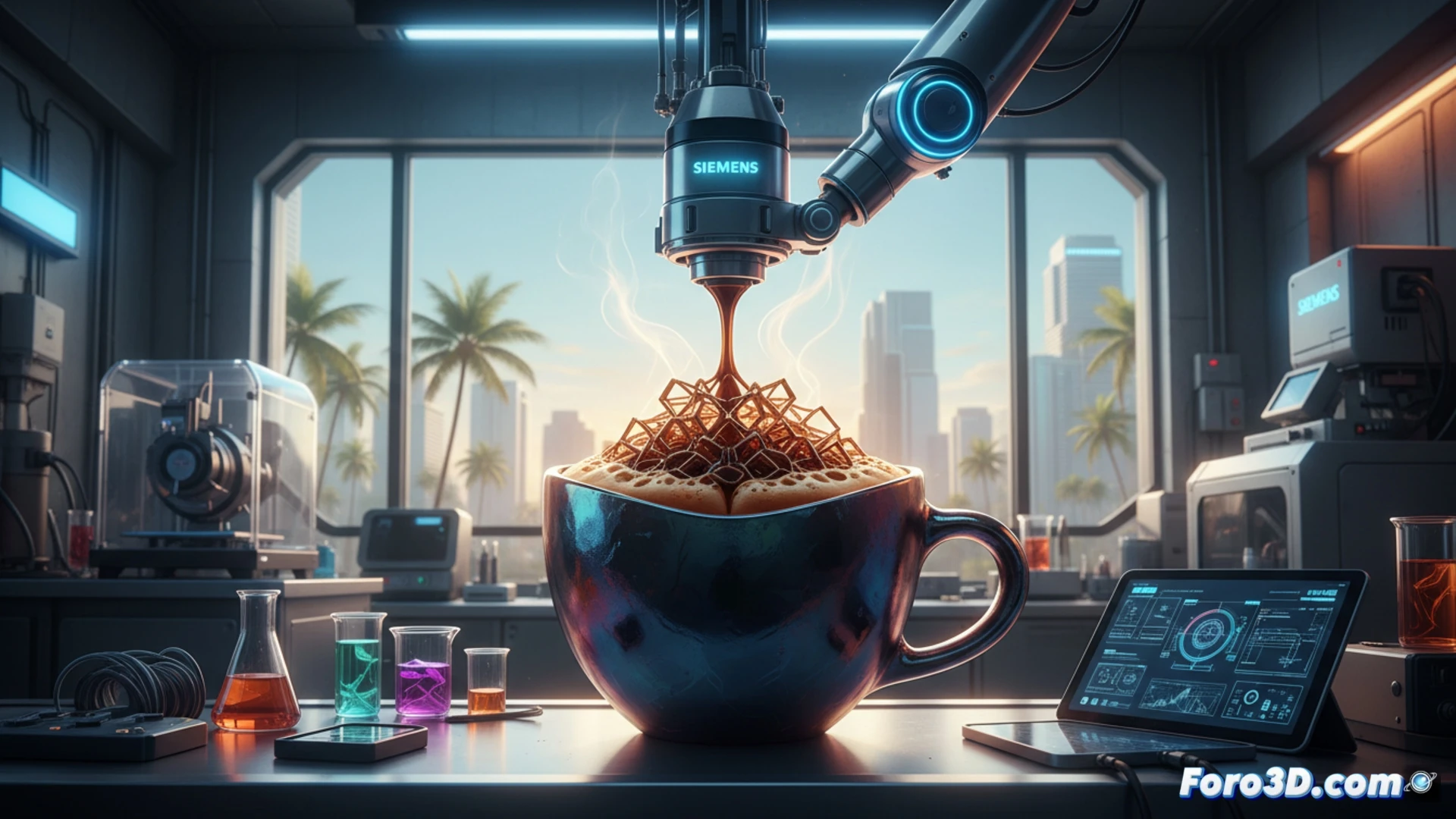
The technical process behind the printed coffee cup ☕
The development does not involve printing solid coffee beans, but rather using the technology to create and assemble the coffee components precisely. It works with extracts, concentrates, and possibly other ingredients in the form of food inks. The 3D printer deposits these materials layer by layer, controlling with millimeter precision parameters such as the coffee ratio, intensity, additions like milk or sugar, and even nutritional supplements. This allows for extreme personalization per cup, adjusting flavor, texture, temperature, and composition to the user's demand.
Implications for nutrition and future production 🧪
This advancement opens up a range of possibilities. Beyond coffee, the technology promises personalized nutrition, where each portion can be adapted with specific vitamins or minerals. It also reduces waste by using only the exact amount of raw material. Although its mass adoption is far off, projects like Siemens' mark the roadmap toward more sustainable, efficient food manufacturing focused on the individual needs of the consumer.
How could 3D food printing, exemplified by the first coffee developed in Florida, redefine concepts of portioning, personalized nutrients, and interactive food education?
(P.S.: at Foro3D our diet is based on pixels and coffee, but at least we render vegetables)