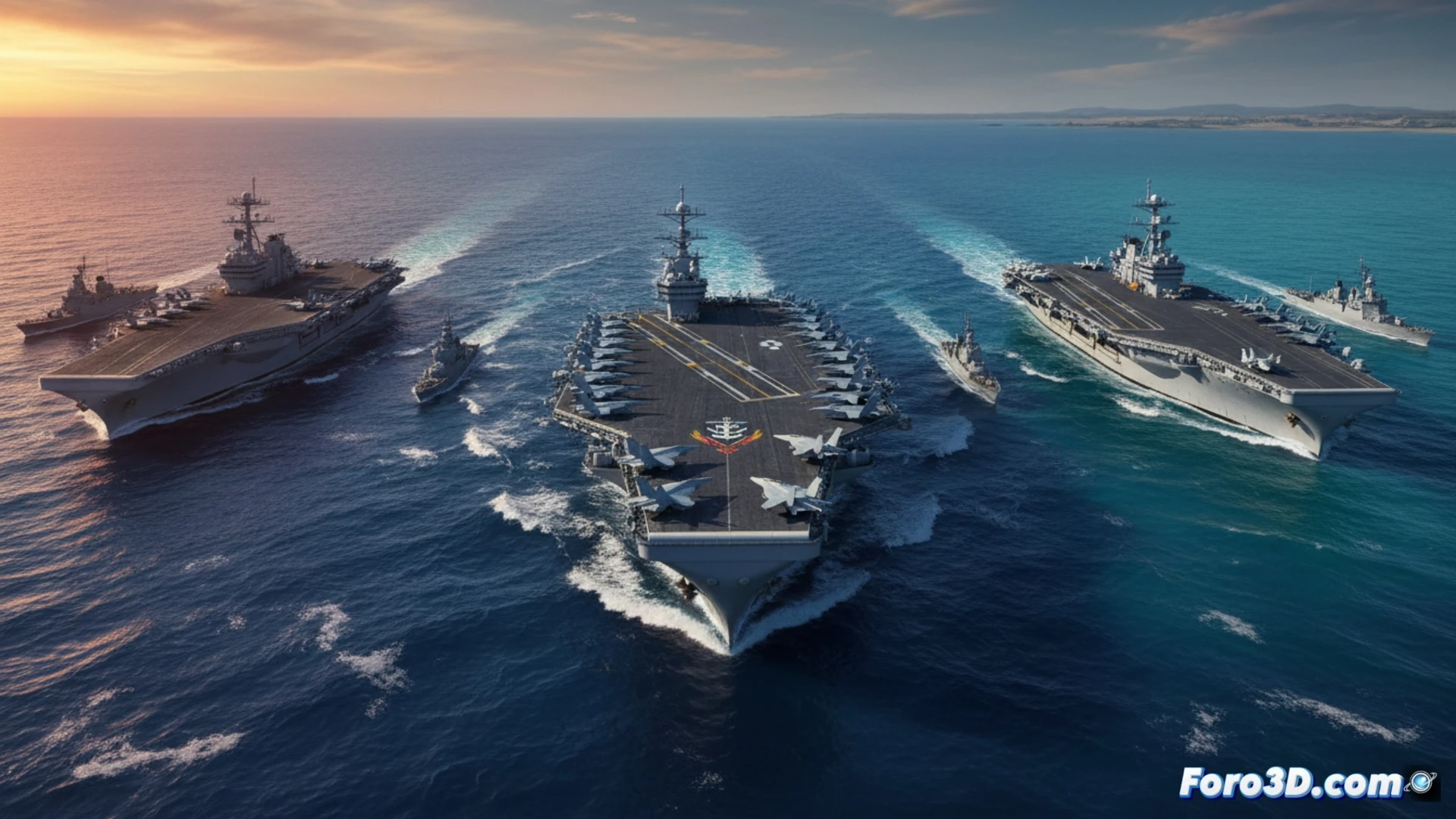
The USS George H.W. Bush, a Nimitz-class aircraft carrier, is now sailing in the Indian Ocean under CENTCOM command. It joins the USS Gerald R. Ford in the Red Sea and the USS Abraham Lincoln in the Arabian Sea. Washington seeks to reinforce the naval blockade on Iranian ports while the April 8 ceasefire holds, albeit with latent tensions.
Naval deployment: projection capability and technological blockade 🚢
The three aircraft carriers deploy carrier strike groups with F/A-18 fighters, AEGIS systems, and Tomahawk missiles. The Bush, launched in 2009, features steam catapults and capacity for 90 aircraft. Its presence in the Indian Ocean allows coverage of the Gulf of Oman and the Strait of Hormuz. The blockade is supported by satellite sensors and MQ-9 drones to track merchant vessels with possible Iranian cargo.
Quiet ceasefire: three colossi for a handful of fishing boats 🎣
Iran must be flattered: three aircraft carriers to watch its ports seems like a plan from a strategy game enthusiast. While the marines adjust their sunglasses, local fishermen might mistake an F/A-18 for a very noisy seagull. The ceasefire is fragile, but the naval spectacle is first-class. Only popcorn is missing.