The recent discovery in Brazil of Tanyka amnicola, a 275-million-year-old salamander-like herbivore, has surprised paleontologists. Its twisted jaw, with laterally oriented teeth, reveals a unique morphology. This living fossil from Gondwana challenges evolutionary narratives. Here, 3D scientific visualization becomes indispensable to go beyond the fragmentary fossil and digitally reconstruct its possible anatomy and ecology.
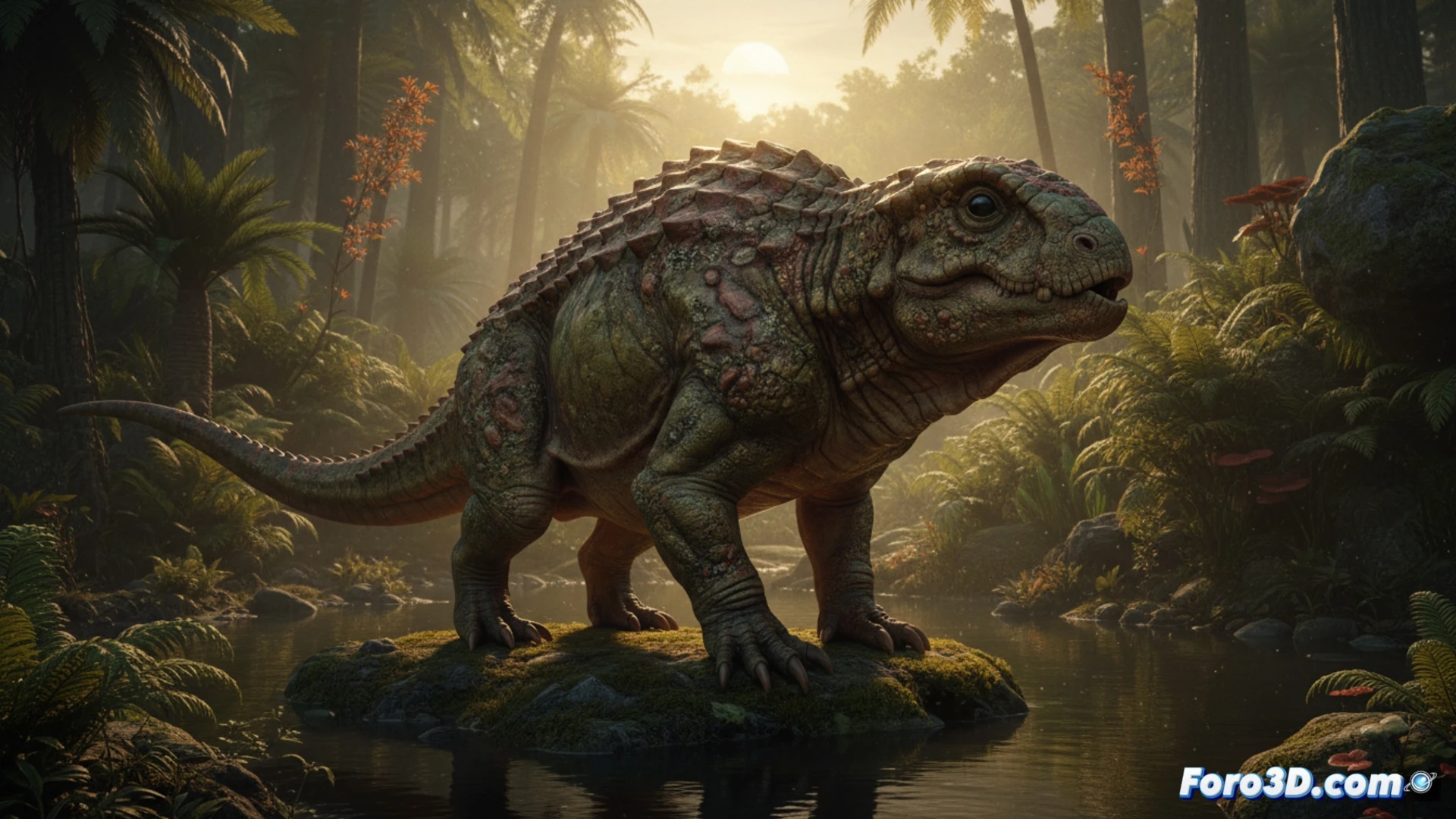
Digital reconstruction of an enigmatic anatomy 🦴
In the face of discoveries like the isolated jaws of Tanyka, techniques of 3D modeling and photogrammetry are key. From fossil scans, a precise digital model can be generated to analyze its feeding biomechanics. How did it use that lateral dentition? Computer simulation allows for hypothesis testing. Furthermore, by integrating the model into a reconstructed 3D lacustrine environment, we can visualize and understand its possible ecological niche, giving context to its strange adaptation.
Beyond the rock: interactive outreach 🖥️
3D visualization transforms complex data into accessible resources. An interactive model of Tanyka, usable in augmented reality or on web platforms, allows researchers and the public to explore this primitive lineage from any angle. This capability not only enriches paleontological study but is also a powerful tool for communicating the importance of discoveries that rewrite chapters in the history of life on Earth.
How can 3D scientific visualization techniques, such as photogrammetry and volumetric reconstruction, be integrated to create an interactive and anatomically precise model of the living fossil Tanyka amnicola that serves both paleontological research and public outreach?
(PS: fluid physics for simulating the ocean is like the sea: unpredictable and you always run out of RAM)