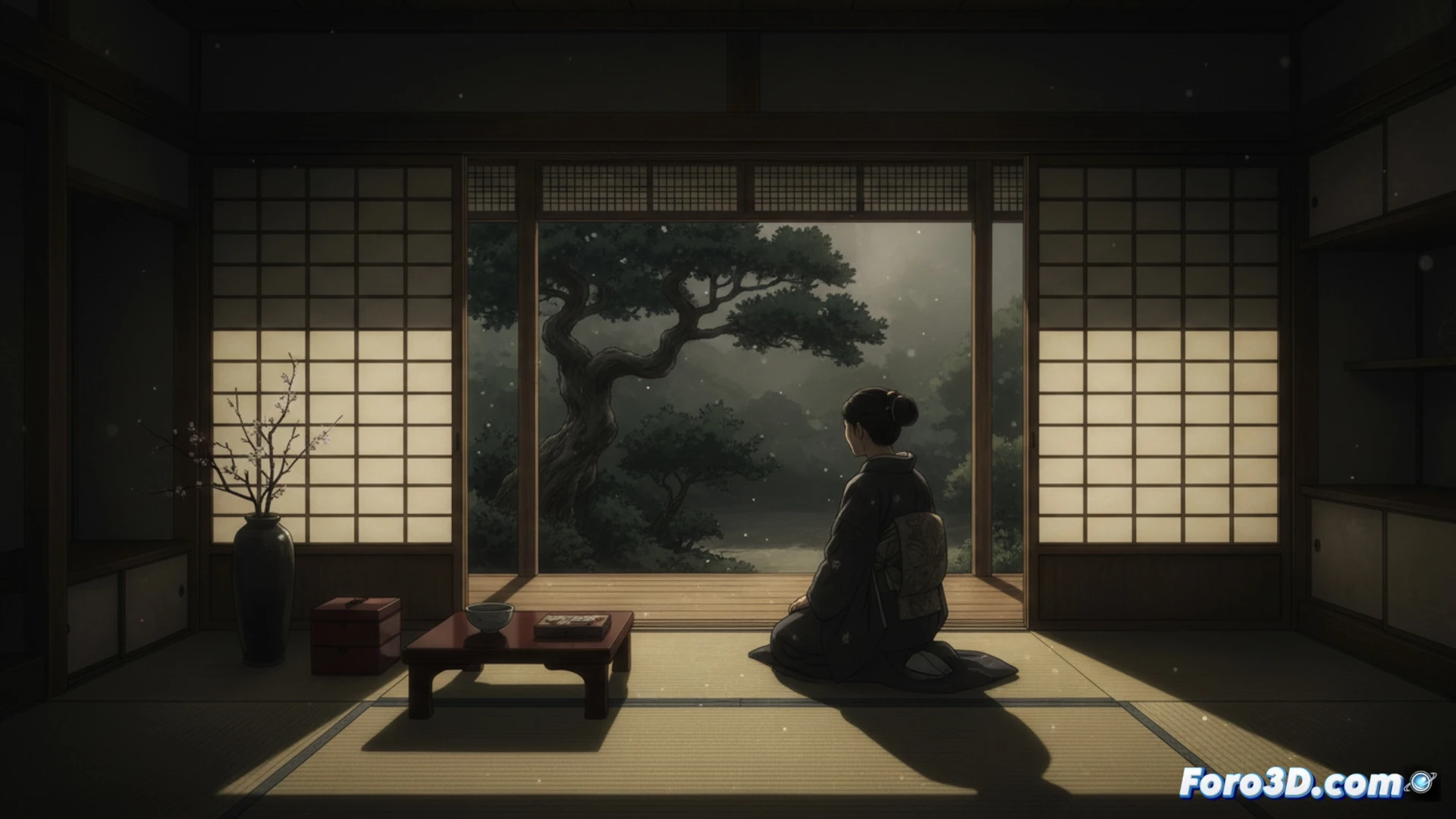
Junichirō Tanizaki's essay, In Praise of Shadows, examines the foundations of traditional Japanese aesthetics. It contrasts the Western pursuit of clarity and brightness with an Eastern appreciation for penumbra, nuance, and imperfection. For Tanizaki, beauty does not reside in total exposure, but in suggestion, in what darkness veils and half-reveals. This concept transcends the artistic to become a perceptive philosophy.
User Interface and the Design of Penumbra 🎨
In software development and UI/UX design, the metaphor of shadow is both literal and figurative. Literal in the use of shadows and layers to create visual hierarchy and depth. Figurative in the principle of progressive disclosure: not saturating the user with data, but showing the essential and allowing exploration. A context menu that appears on right-click is a functional praise of shadows. Lazy loading prioritizes visible content, leaving the rest in a waiting space. It is a constant battle against the glare of information overload.
Debugging Code by Candlelight 🕯️
Let's imagine applying Tanizaki's precepts to our development routine. Programming with the screen at minimum brightness, in a room barely lit by the blinking of a router. Writing functions that, like dark lacquer, hide their complexity in an elegant opacity. Bugs would not be errors, but aesthetic features, unexpected nuances that enrich the experience. The error report would be sent on parchment paper, with tea stains obscuring the less relevant parts. Surely the client would appreciate the depth of the gesture.