A team of researchers from Skoltech has presented a breakthrough in additive manufacturing. They have developed a viable method for producing aluminum bronze components via laser powder bed fusion 3D printing. This material, known for its mechanical properties, presented significant technical obstacles that limited its laser processability.
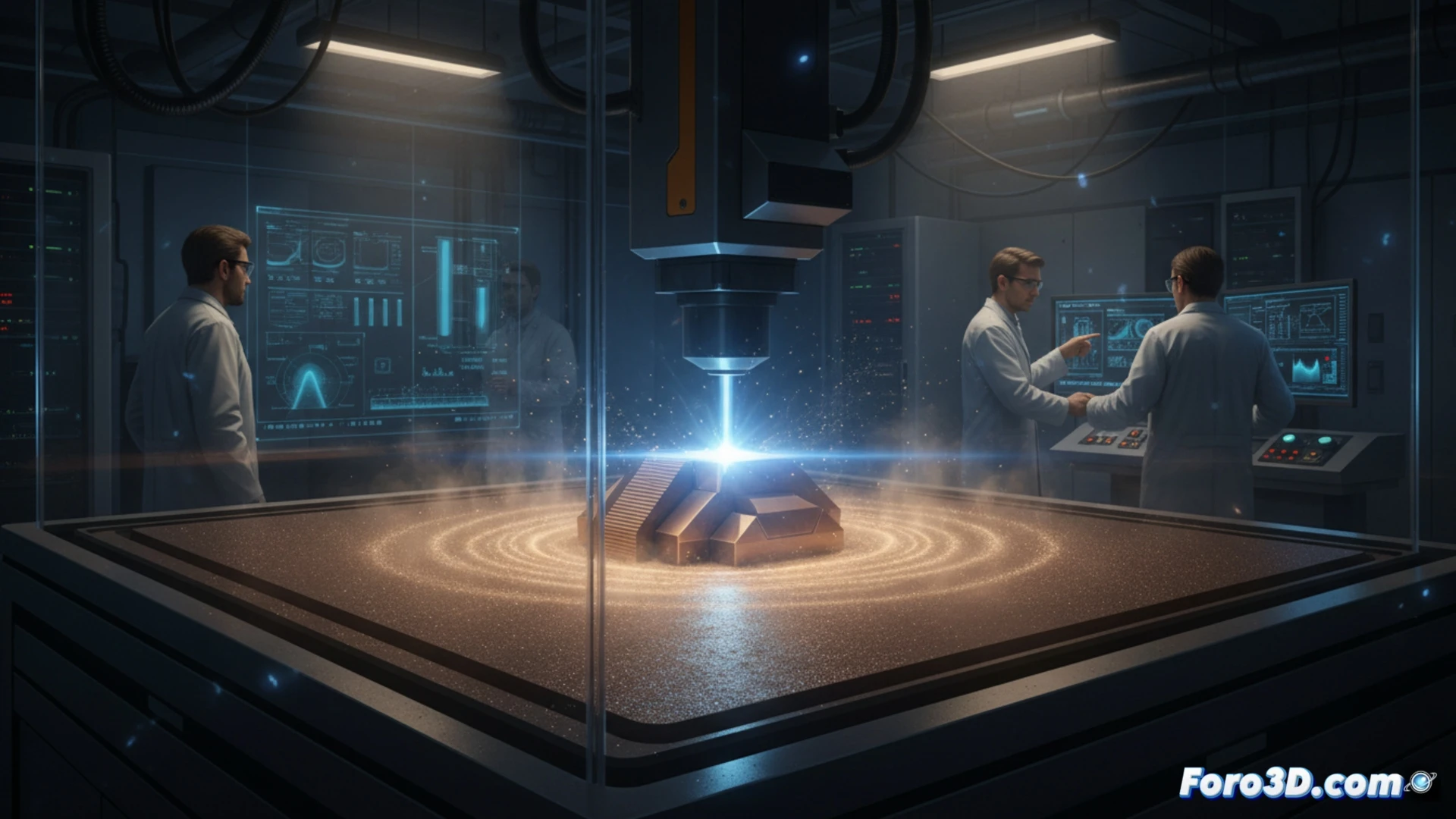
How to Tame a Material that Repels Heat and Light 🔥
The main challenge of aluminum bronze lies in its high reflectivity and its ability to dissipate heat rapidly. These characteristics prevented the laser from melting the powder uniformly and stably. The team's solution involved precisely adjusting process parameters, such as laser power and scanning speed. This allowed for the creation of a controlled melt pool, overcoming reflectivity and managing thermal conductivity.
When Your Favorite Material Bounces the Laser Back Like a Mirror 😵
Imagine the frustration: you have a metal powder with ideal properties, you aim a high-power laser ready to melt, and the material, politely, returns most of the energy. It's like trying to melt an ice cube with a lighter, but the ice has a reflective shield. Thank goodness the Skoltech researchers didn't think of giving up, and instead, dedicated themselves to finding a way to convince the aluminum bronze to cooperate. In the end, it all comes down to insisting with the correct configuration.