The recent drill of Exolum's External Emergency Plan (PEE) in Almodóvar del Campo, with 50 deployed personnel, not only evaluated human reaction capacity. This type of exercise highlights the need for advanced visualization tools. The integration of digital twins and 3D modeling allows emergency teams to anticipate leak or explosion scenarios with millimeter precision, optimizing real-time decision-making.
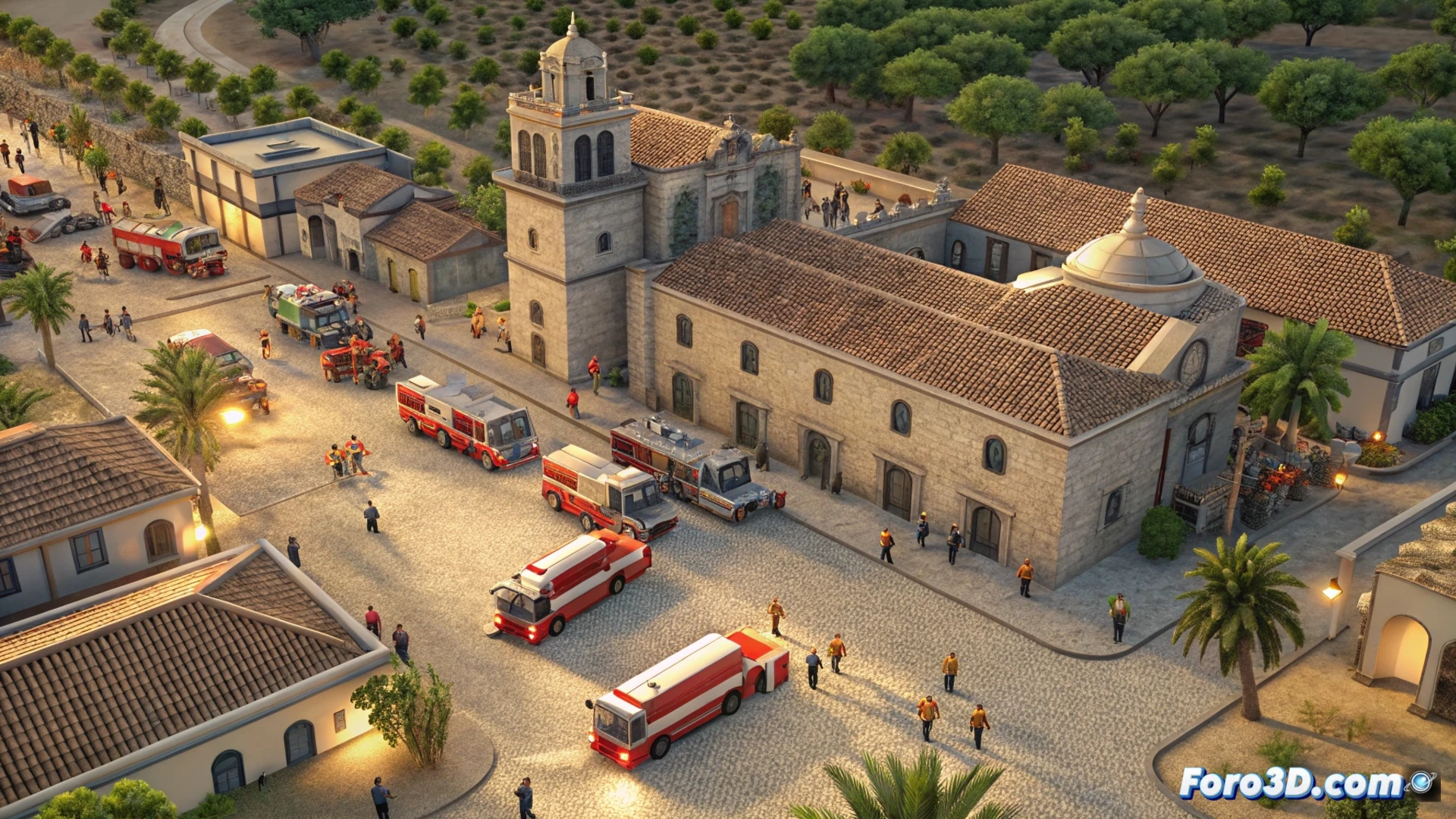
Digital twins and simulation of critical scenarios 🚀
In practice, a traditional drill relies on 2D maps and radios. However, for an industrial facility like Exolum's, 3D technology offers an undeniable tactical advantage. Using volumetric models of pipes and tanks, the dispersion of a toxic cloud or the blast wave of an explosion can be simulated. This allows for the creation of dynamic evacuation routes and the deployment of personnel in blind spots that traditional blueprints do not reveal. Visualizing the distribution of the 50 personnel in a synchronized virtual environment improves coordination between Civil Protection and firefighters, reducing critical response times.
Towards an immersive prevention culture 🛡️
The final reflection from this exercise points to a paradigm shift. The success of a PEE no longer depends solely on team discipline, but on the fidelity of the prior simulation. Adopting virtual reality technologies and parametric 3D models allows local authorities in Almodóvar del Campo to visualize the real impact of an incident without putting the population at risk. The future of industrial disaster management lies in training in the digital world to execute with precision in the real world.
How can 3D simulation and real-time visualization optimize the coordination of the 50 deployed personnel during an emergency drill like Exolum's in Almodóvar del Campo?
(PS: Simulating disasters is fun until the computer crashes and you are the disaster.)