A new study employs three-dimensional radiative transfer simulations to analyze kilonovae, luminous events following neutron star mergers. The models compare ejecta and equations of state with the observation AT2017gfo, revealing that the expelled material reproduces many spectral features, although differences in line shifts persist. The research aims to clarify the synthesis of heavy elements in the universe.
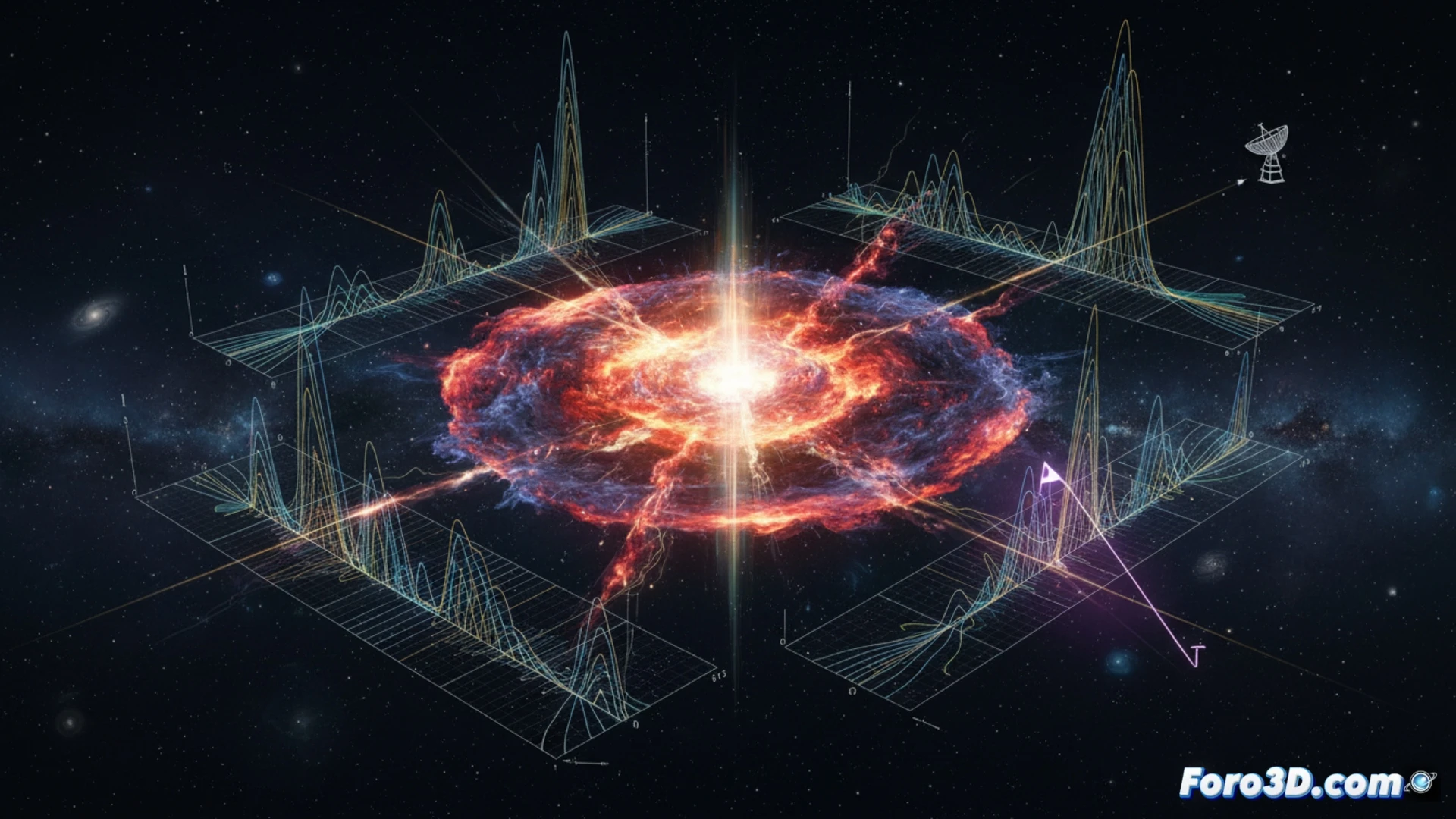
3D Modeling Reveals Limits and Successes in Merger Physics 🔭
Researchers developed detailed simulations integrating hydrodynamics and opacities to track the spectral evolution of kilonovae. They compare dynamic and disk ejecta, using different equations of state. The results align well with AT2017gfo in early phases but show deviations in late spectral lines. This suggests that the models capture key processes but require including viscous or wind ejecta for greater precision and physical completeness.
Kilonovae: The Universe Still Fails Physics Class 🤯
It seems the universe, despite its resume, still flunks the nuclear physics exam. The simulations manage to mimic much of AT2017gfo's spectrum, but the spectral lines shift as if the cosmos has its own agenda. It's as if neutron stars are saying: yes, we give you gold and platinum, but don't expect us to make it easy. Scientists will have to refine their models or resign themselves to the universe always keeping an ace up its sleeve.