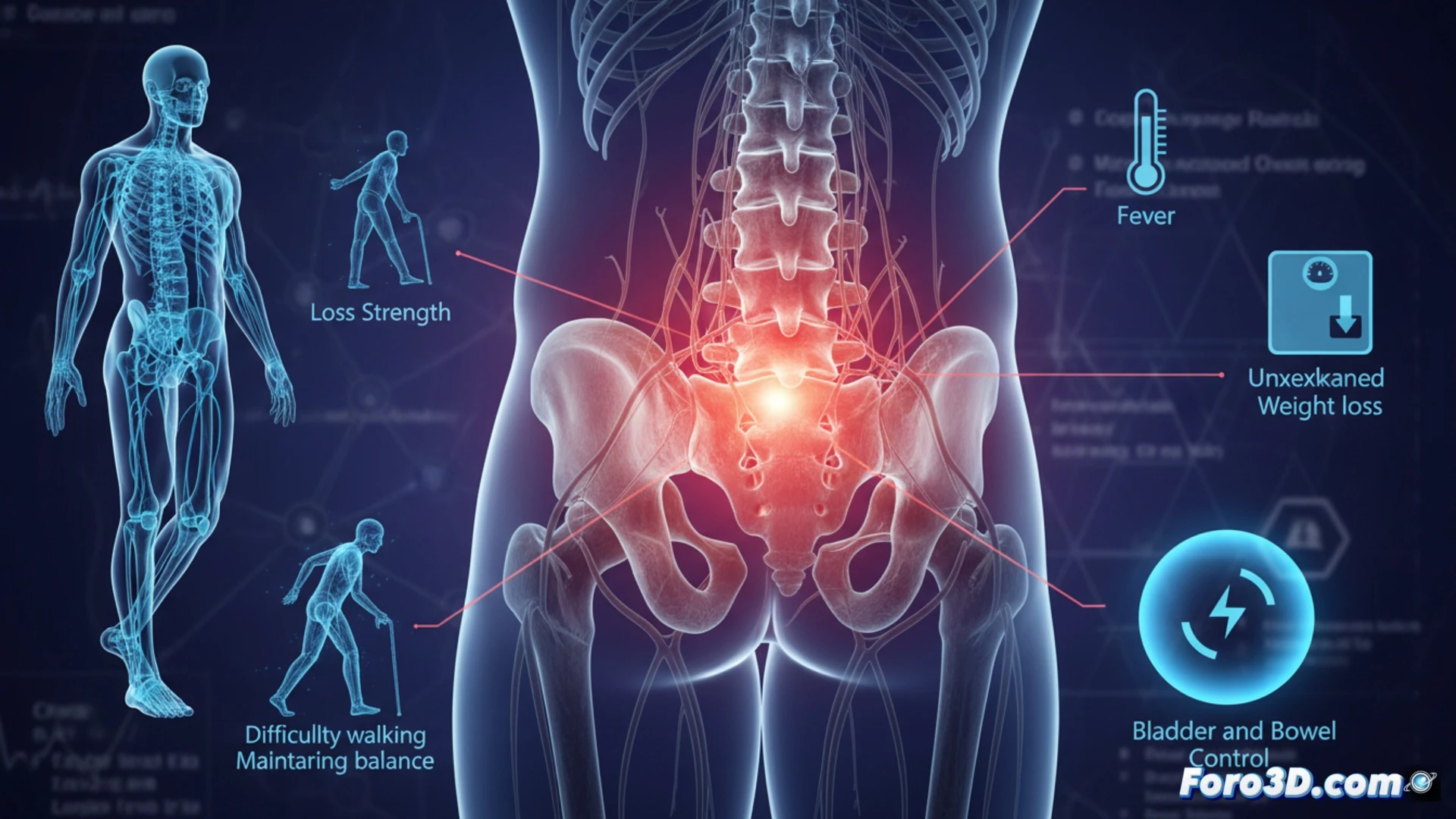
Low back pain is a common discomfort affecting millions of people, but in most cases it resolves without surgery. However, certain symptoms indicate it is time for a surgical evaluation. Severe pain that does not improve with physical therapy or medication, loss of strength in the legs, difficulty walking or maintaining balance, and problems with bowel or bladder control are red flags. Also, fever or unexplained weight loss may suggest infection or tumor.
Innovation in diagnosis: 3D imaging and predictive models 🧠
Current technology allows for a more precise analysis of low back pain. MRI with 3D reconstruction offers detailed views of discs and vertebrae. Artificial intelligence systems analyze this data to predict the progression of injuries such as herniated discs. This helps surgeons decide when an intervention is necessary, avoiding unnecessary procedures. The development of surgical simulators allows planning minimally invasive approaches, reducing recovery times and associated risks.
Back pain and the wisdom of the couch 🛋️
Of course, before rushing to the operating room, most people opt for the favorite conservative treatment: lying on the couch watching series until the back complains louder. Then comes the phase of blaming the mattress, the office chair, or the cat that sits on the lower back. If after two weeks of self-diagnosis and selective rest it still hurts when you sneeze, maybe it's time to leave the couch and visit the specialist.