The recent addition of the 115 HP 1.0 TSI engine with DSG transmission to the SEAT Ibiza is not just a commercial novelty. For 3D professionals, it represents a case study on the integration of complex systems. Every component, from the electronic management of the powertrain to the advanced standard ADAS, has been previously modeled, simulated, and validated in virtual environments before its physical production, a process where 3D design tools are fundamental.
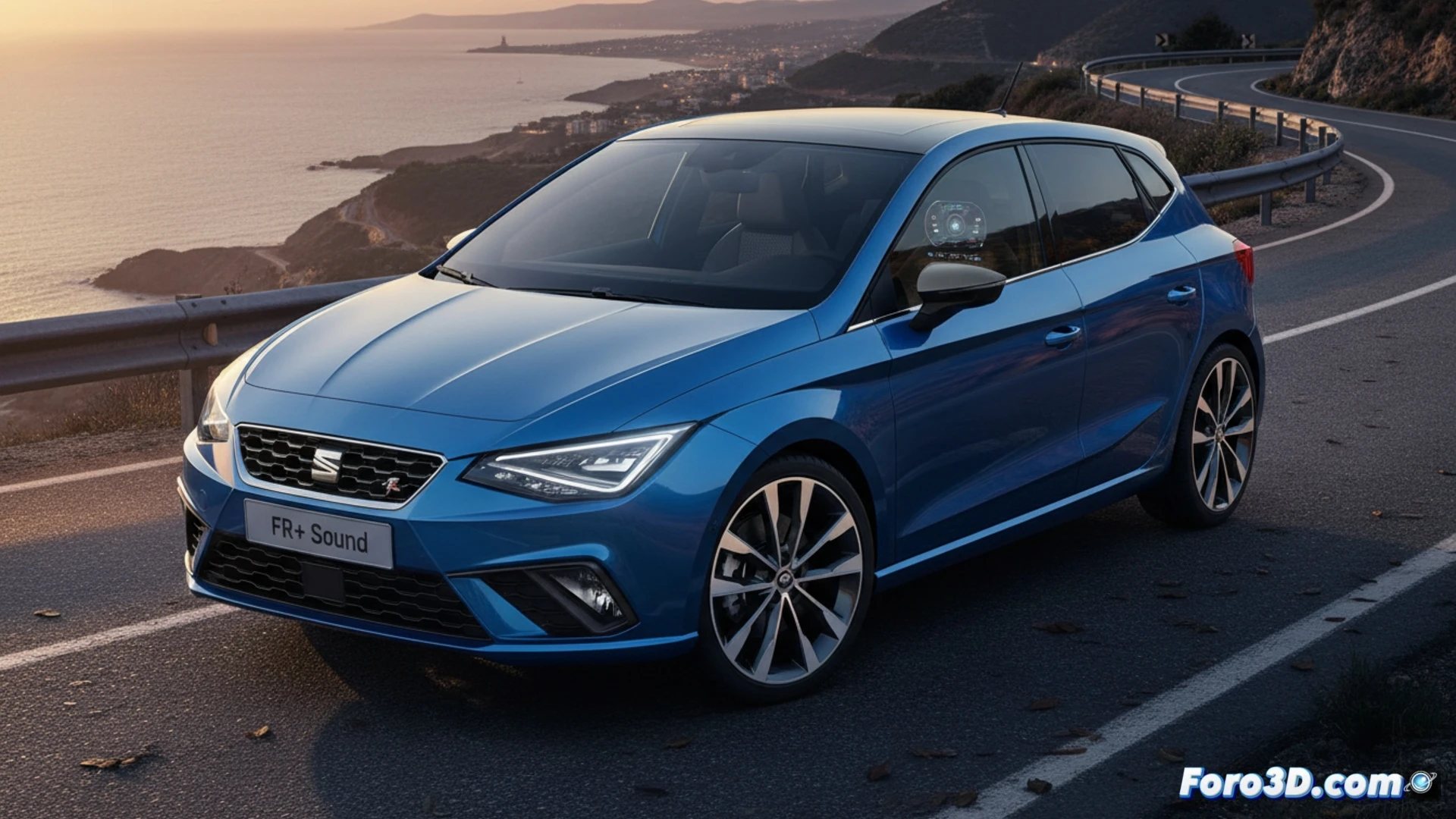
Virtual Modeling of ADAS and the Ibiza's Electronic Architecture 🧠
Systems like adaptive cruise control or city automatic emergency braking are not implemented directly in the vehicle. First, their sensors, actuation logic, and interaction with other control units (ECU) are simulated in detail. Using 3D engineering software, virtual environments are created where these systems are tested against millions of scenarios, from adverse weather conditions to unforeseen road events. Likewise, the integration of the ECU that manages the TSI engine and the DSG gearbox, and its communication with the 10.25-inch digital cockpit, is validated in virtual architectures that ensure its robustness and synchronization before final assembly.
Digital Prototyping: The User Interface as a 3D Experience 👨💻
The driver's experience, centered on the touchscreen and digital cockpit, is also born in the realm of 3D. Before manufacturing a single component, the graphical interfaces and their usability are prototyped and tested in digital models of the cabin. This allows for optimizing the layout of information, response times, and touch interaction, creating a coherent and safe user experience. Thus, 3D technology not only shapes mechanical parts but also the digital interaction that defines modern driving.
How can the integration of the 1.0 TSI engine with the DSG transmission be modeled and simulated in 3D to optimize response and efficiency in the SEAT Ibiza? 🚗
(PS: simulating an ECU is like programming a toaster: it seems easy until you ask for a croissant)